

In 2018, Beach House released their seventh album, aptly titled 7. In the Bandcamp album notes, they described the record as a deliberate break from their earlier working methods, with fewer self-imposed constraints related to performing the songs live.
The result is a darker sounding album with denser arrangements and more layered sounds. Black Car was released as the fourth single from the album and is one of the tracks that reflects the darker sound of 7 most clearly.
This article looks at the synths and production used in Black Car. It has an updated version of an earlier remake, which used older versions of Arturia Mini and Prophet that are no longer available. This updated article replaces those patches with the newer Mini V4 and Prophet-5 V, and also substitutes the original Serum patch with DX7 V so that all presets are compatible with Arturia V Collection.
Firstly, here’s my updated remake of Black Car:
The dark and mysterious opening arpeggios from Black Car are one of the highlights from 7. Each note of the arpeggio is harmonized with a fifth interval (seven semitones up) which adds shifting harmonies, and an octave below, which adds low end.
Because the arpeggio moves largely in fifth and sixth intervals, the added fifth often repeats notes from the original line, creating some overlap between the lines. The result is that the simple up and down motion of the sequence becomes obscured once the fifth interval is added, giving the part a much denser and more complex feel than the source pattern suggests.

To create the arpeggio synth patch you’ll need a synthesizer capable of producing at least three sine waves, which rules out most analog synths. In my original remake I used Serum, but for this update I wanted to make the patches entirely for the Arturia V Collection, so I used Arturia DX7 V, which is a great source for sine waves. That said, I don’t think Beach House used a DX7 on the original recording.
To recreate the patch I set DX7 V to algorithm 32, which removes all FM routing and turns the synth into a simple additive instrument. Three operators are used, one at the base pitch, one an octave below, and one tuned up a fifth using the frequency fine control set to 50. All three operators share the same fast, plucky envelope, which is easy to manage by copying and pasting envelopes between operators.
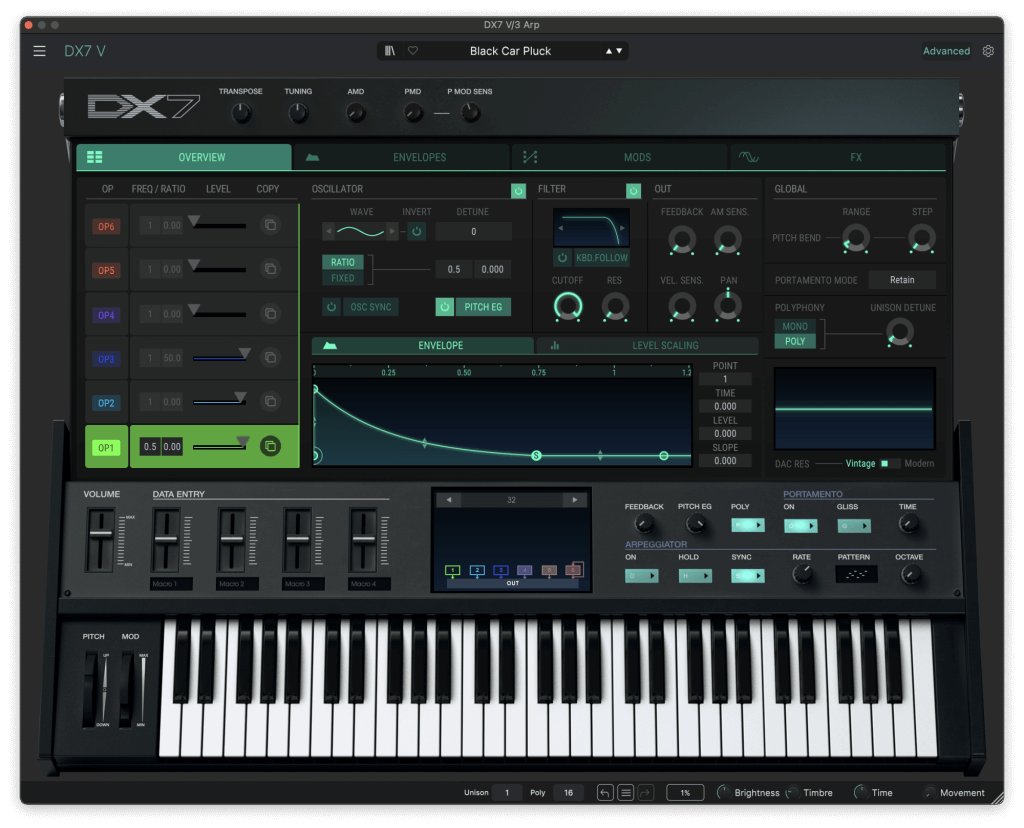
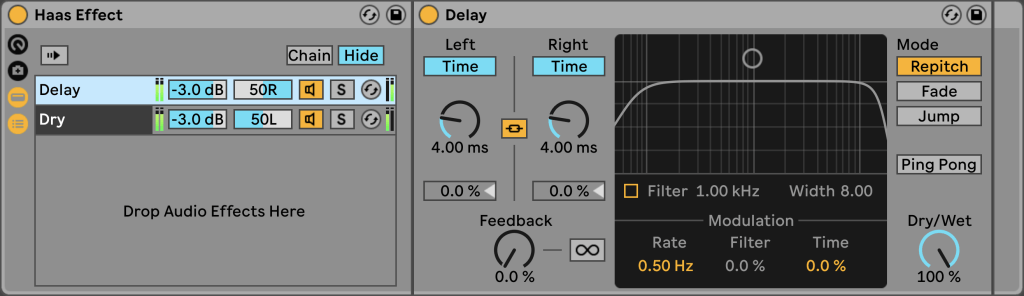
The arpeggios in the original song have a wide stereo sound, but the DX7 patch is mono, so it needs to be widened in the mix. I did this in Ableton Live by creating a simple Haas effects rack with two chains.
I turned both chains down by 3 dB and panned them hard left and hard right. On the right chain only, I added a 4 ms delay with no feedback and 100 percent wet, so it’s just a 4 ms offset on one side, which creates the stereo width. The other chain has no effects so just passed the dry signal.
After that, I added a very light amount of Soundtoys Decapitator to introduce some of the gritty dirt present in the original track.
The arpeggios are then accompanied by sustained chords that slowly fade in and sit behind the arpeggio. In the final mix I also used some gentle EQ cuts to tame a few resonant frequencies and keep the sound from building up too much in the mids.
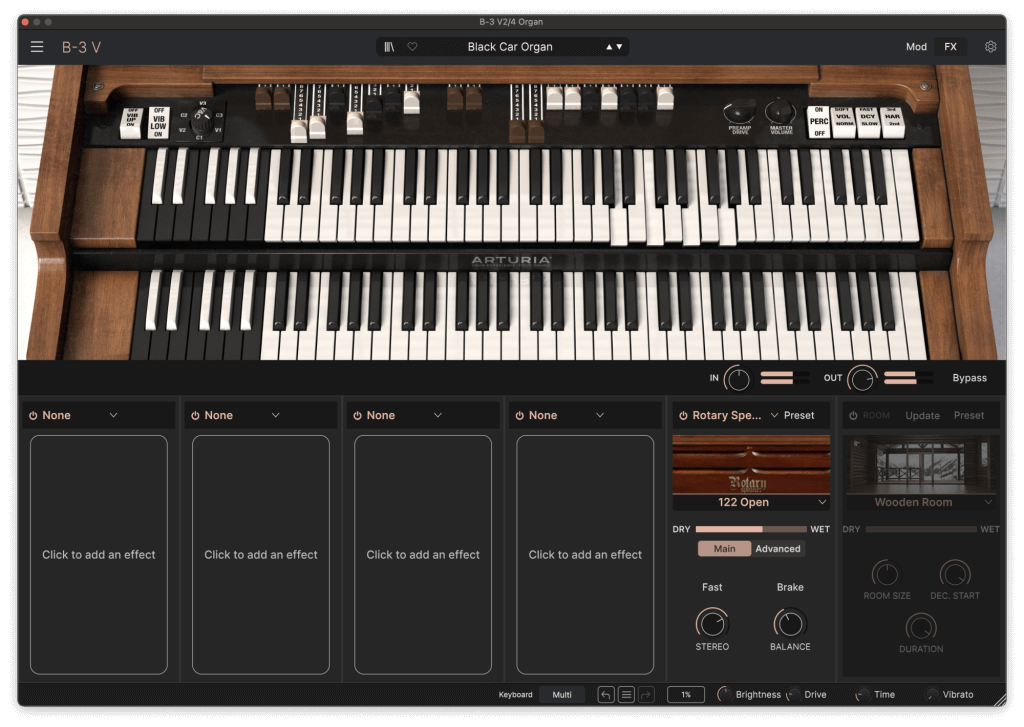
To recreate the chord sound, I built a custom patch in Arturia B-3 V starting from a blank init preset. I recreated the sound by setting the left-hand drawbars by ear to sound in the original track.
The built-in rotary speaker effect (enabled by default) provides some modulation, though I turned the mix amount down to halfway. I then added additional chorus and widening in Ableton Live using the Chorus-Ensemble device after the synth with the amount set to 30%, and Utility with the stereo width set to 180%.
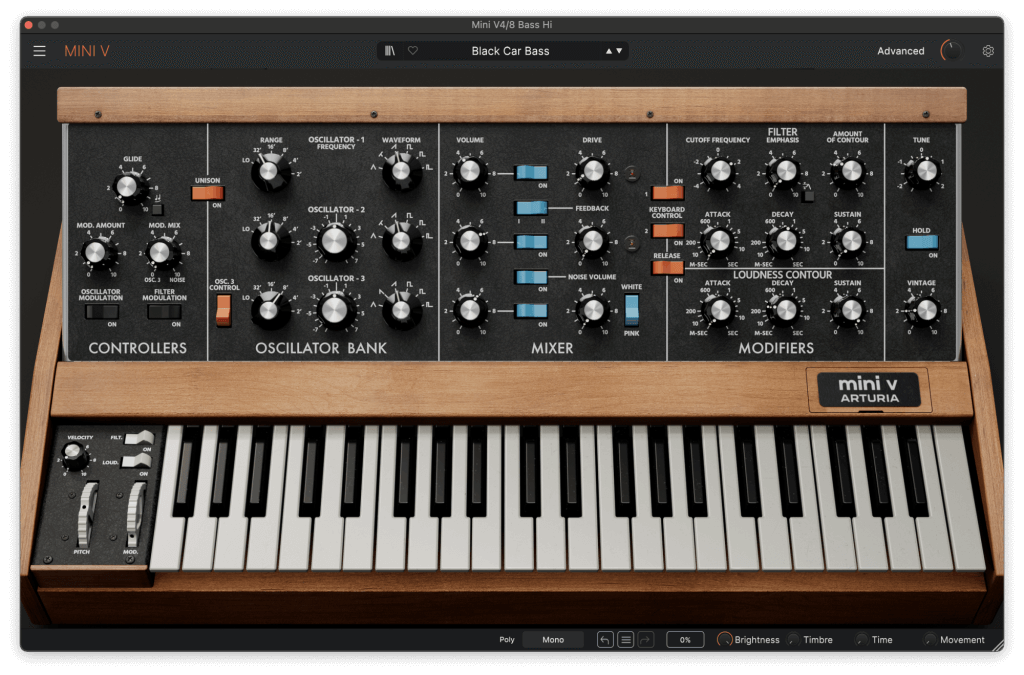
The bass part has a dramatic, slightly overdriven sound. I recreated this using two Arturia Mini V4 patches: a main bass sound accompanied by a sub bass patch. For the main bass patch, I used two detuned sawtooth oscillators with one set an octave higher.
The filter cutoff is set relatively high at around 2.5 kHz, with a small amount of envelope modulation applied by setting the Amount of Contour to 3. The filter envelope has a long decay of just under five seconds and no sustain, so the sound slowly darkens as each note is held.
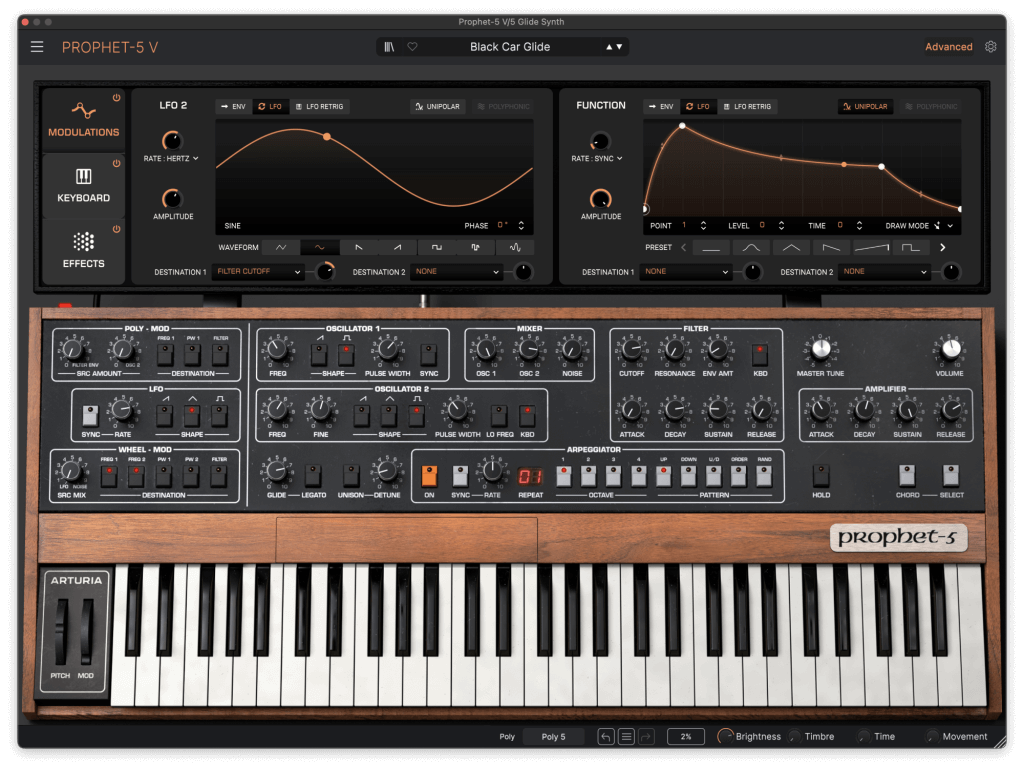
Towards the end of the song, a gliding synth line appears playing creatively detuned chords. I recreated this sound using Arturia Prophet-5 V. The key features of this patch are polyphonic glide between notes, a subtle but fast tremolo, and occasional pitch movement controlled with the mod wheel.
My patch uses pulse wave oscillators, with one pitched up an octave to add brightness. The glide time is set to just over half a second, allowing notes to slide smoothly into one another, while the LFO, accessed via the Advanced panel, runs at 10.6 Hz and modulates the filter gently. The tremolo is more of a textural effect rather than a rhythmic effect, so keep the modulation amount low.
A quiet background element later in the arrangement is the acoustic guitar arpeggios. The main harmony, established by the organ and bass, is Am7 | Cmaj7 | Fmaj7 | Dm7.
Over these chords, the guitar repeatedly plays a three-note shape on the top three strings at the fifth fret, which forms an A minor triad. The only change occurs over the C chord, where the top note moves up from A to B.
Because of this, the guitar part effectively lays superimposed shapes over the underlying harmony:

The guitar part plays a descending three-note picking pattern as continuous sixteenth notes. Because 3 sixteenth notes don’t fit neatly into a bar (that contains 16 sixteenth notes), the pattern takes three bars to fully reset at the start of a bar.
It also results in the pattern being offset in alternate bars: the first bar starts on the highest note, the second bar starts on the middle note, the third bar starts on the lowest note.
Because the main loop is actually 8 bars long (each chord change takes two bars) and the guitar picking pattern is 3 bars long, it takes a total of 24 bars for the chords and picking pattern to realign. This trick is a great technique for writing hypnotic-sounding guitar parts, and was also used to great effect in Weird Fishes/Arpeggi by Radiohead.



Header artwork by Olya Makar
Article Comments