

The Social Network soundtrack remains one of the most distinctive film scores of the 21st century. Composed by Trent Reznor and Atticus Ross, its combination of dark electronic beats and emotional piano writing set a new standard for modern film music.
I previously looked at In Motion, one of the more rhythm-driven pieces from the score, in an article covering its modular synths, FM sounds, and chiptune influences. This time, I wanted to explore another highlight from the soundtrack, A Painted Sun in Abstract.
This track shares much of its DNA with In Motion, using many of the same instruments and sound design techniques, but it’s a synth-only piece with no drums. The sounds are familiar, with more modular sequences, piano and chiptune arpeggios. This may be a result of working with the same instruments, wanting to give the soundtrack a cohesive palette of sounds, or simply the byproduct of working to a tight deadline.
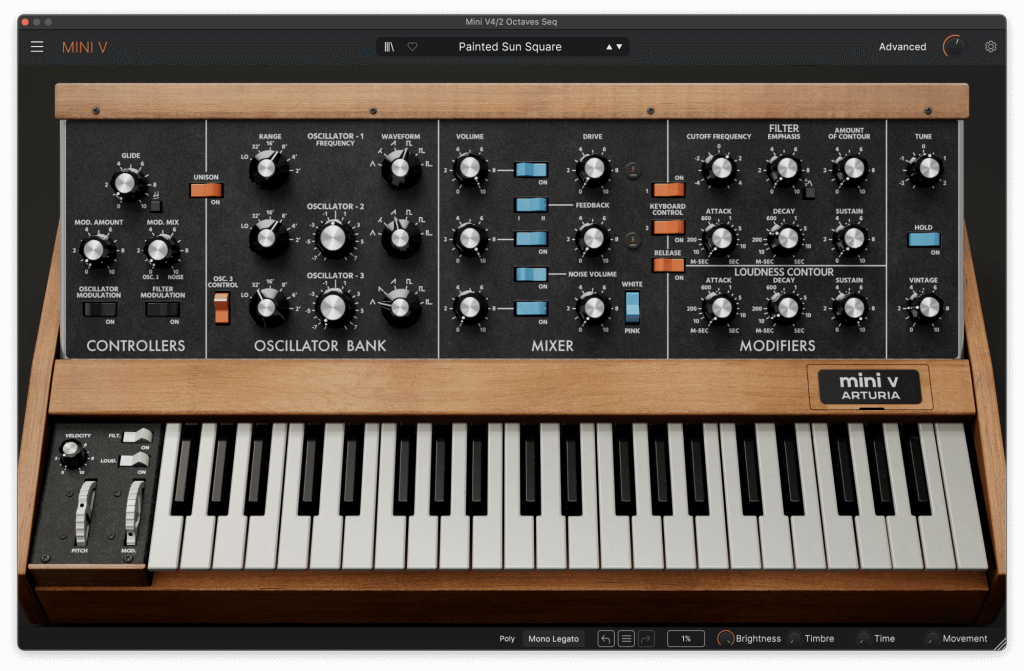
The track opens with a simple octave-jumping synth sequence that outlines a descending chord progression. I recreated this sound using Arturia Mini V4 with a single square wave oscillator and the filter set to 1240 Hz. The filter doesn’t track the keyboard, which helps give the sound an even tone across the octaves.
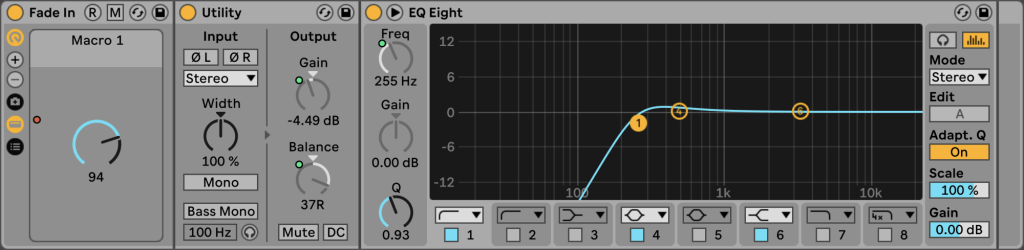
During the intro, the sequence fades in gradually. It also starts with a high-pass filter that gradually lowers, and starts panned hard right before moving to the centre. I automated all three parameters together in Ableton Live by mapping them to a single macro control inside an Effects Rack for easy control.
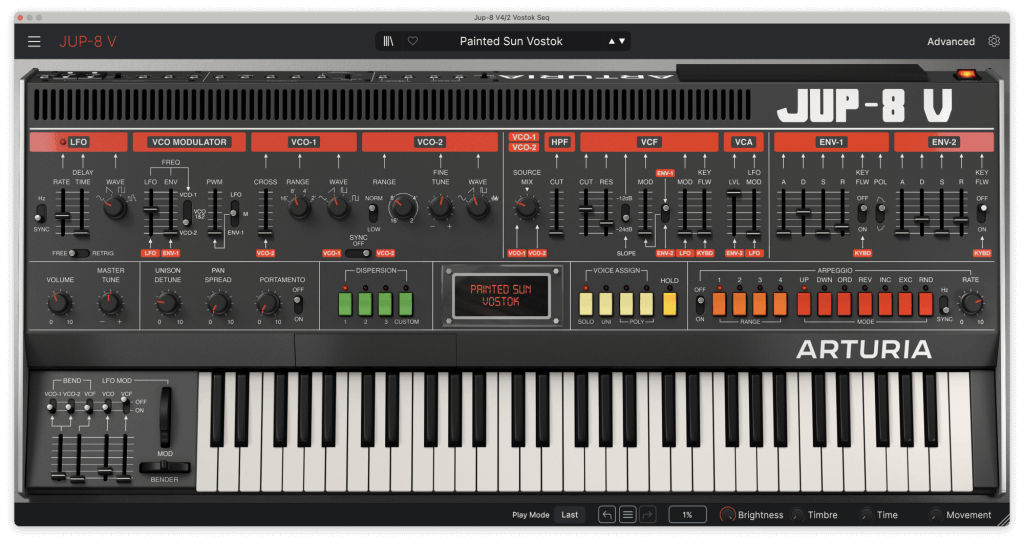
The second sequence enters later, and sounds very similar to the “Vostok” modular sequence used in In Motion. I used the same Jup-8 V4 patch I built for that article as a starting point, opening the filter a bit and removing the envelope modulation from the VCO modulator.
This sequence repeats the same D–C–D figure throughout the first half. In the second half, it doubles the Mini V4 octave sequence, but plays 1/16 notes rather than 1/8th notes.
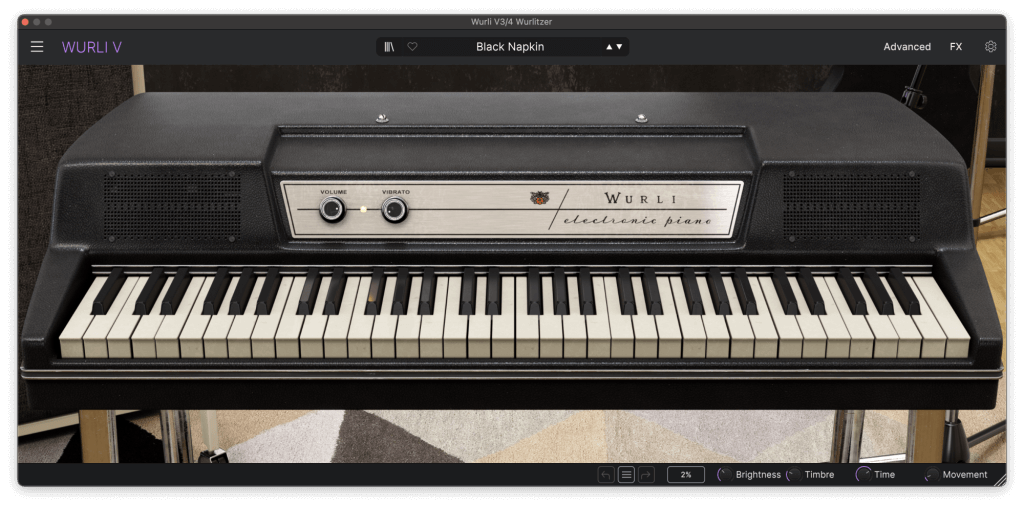
After the initial sequences are established, piano and electric piano parts are introduced, which play chords and a basic melody. The main chords are played on a Wurlitzer piano, an instrument that Trent Reznor uses frequently, for example, in his Sound City jam with Dave Grohl and Josh Homme. In my remake I used Arturia Wurli V3 with the Black Napkin factory preset.
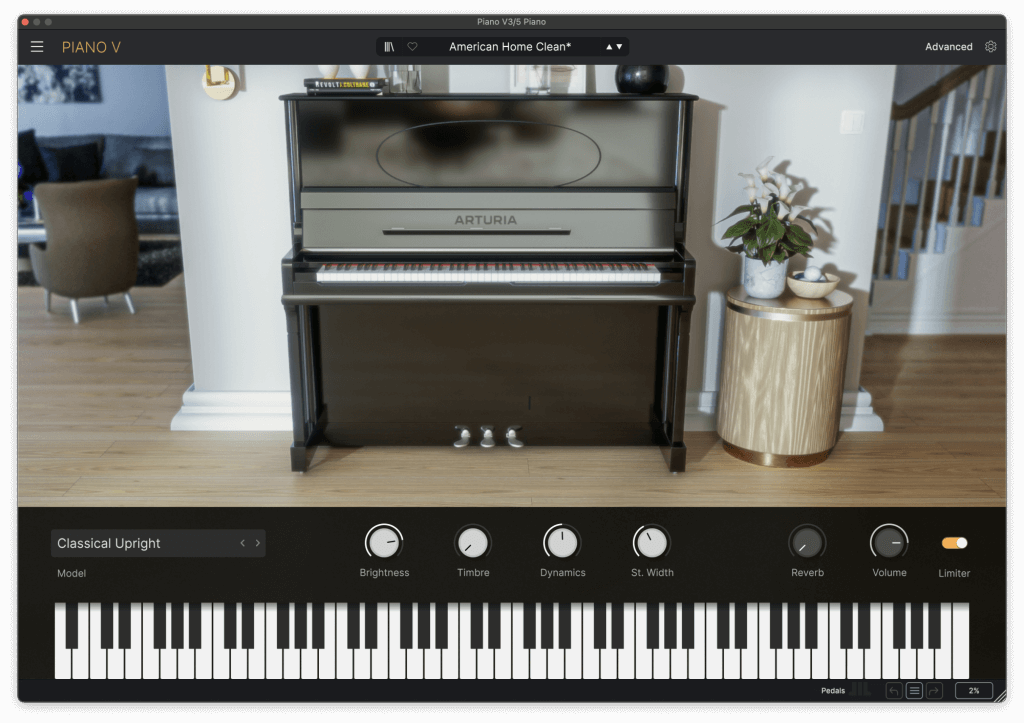
The piano plays a single-note melody for the first half and octaves in the second. I used Arturia Piano V3, starting from the default preset and changing the Model to Classical Upright for a more intimate sound.
The sounds in Arturia’s Wurli V3 and Piano V3 are stereo by default. In the original soundtrack, both instruments are mono, so I used Ableton’s Utility device after each plugin to collapse them to mono.
The Wurlitzer introduces harmony, and in typical Trent Reznor fashion, there are some subtle chord changes that make things sound a bit more interesting.
The first half of the piece uses the chords D | Csus2 | G5 | F. This is in the key of C major, but the first chord has been swapped from a D minor (which belongs in the key) to a D major. There’s only one note difference – the F♯, but that small change is enough to catch the ear and make it sound more interesting than if it were diatonic. Because it’s the first chord that’s altered, it creates an unexpected brightness right at the start.

Switch between notation and MIDI view.
Halfway through, there’s a key change to E♭, with a chord sequence of F | Bbadd2 | Eb | Ab. The F chord is played on the Wurlitzer without a 3rd, but the major third appears in the chiptune-style arpeggiators, giving us the full F major sound. This is the same trick as before: the F chord should be F minor in the key of E♭, but it’s again changed to major. In both cases, it’s the ii chord that has been altered.

One of the most distinctive sounds in A Painted Sun in Abstract is the detuned lead, which comes from the Dewanatron Swarmatron, a rare synthesizer featuring unison oscillators and a ribbon controller. Trent Reznor demonstrated the Swarmatron in the Social Network bonus DVD, saying:
“It’s a strange instrument. Why I like it is that it’s controlled by these ribbons, and you can change the pitch, so getting a melody is sometimes a chore because there are no real markings — you kind of have to feel your way around. It’s a cluster of notes that can spread apart, creating this strange, beehive-like kind of sound.”
“What we do with this instrument is treat it almost like part of an orchestra. We’ll multitrack performances and come up with a rough idea, then I’ll start to orchestrate the pad — the enveloping kind of space where it sits. Usually we record multiple passes; Atticus is over there recording it, and the end result becomes this weird, hypnotic setting for things to happen.”
For my remake, I used five tracks with Arturia Prophet-5 V, each with a slightly tweaked version of the same patch. The patch uses a single sawtooth oscillator in unison mode with a high detune amount (around 2.7) and the filter set between 800–1400Hz.
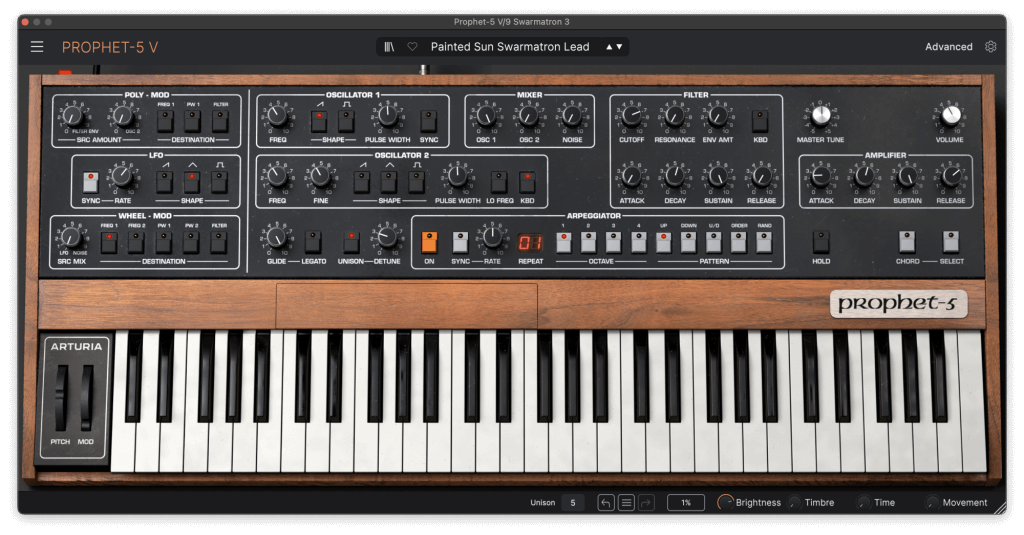
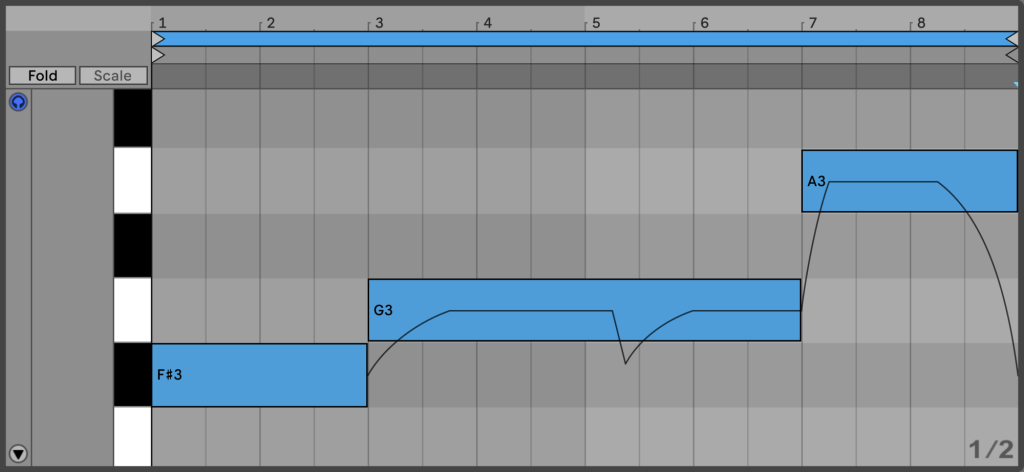
To simulate the Swarmatron’s ribbon-controlled pitch glides, I used Prophet-5 V’s glide settings with the maximum glide time on some tracks. For more expressive parts, I enabled MPE mode and used Ableton’s note expression for more detailed manual pitch changes.
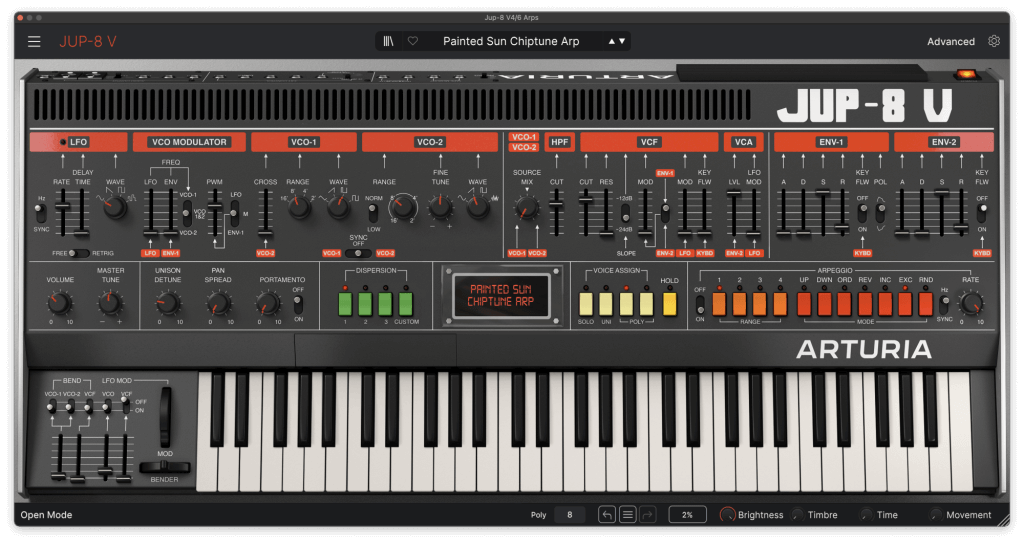
The final element is the high-speed arpeggio, a chiptune-inspired sound that likely came from the Elektron SidStation, as I covered in In Motion. Instead of playing chords, it cycles through single-note arpeggios at extreme speed, creating the illusion of chords.
While I used Plogue Chipsounds in my In Motion remake, I wanted to stay within Arturia’s instruments for this project, so I used Jup-8 V4. The sound uses a pulse wave with a 66% pulse width, which gives a thin digital tone, and I filtered both the high and low end to leave only midrange. The arpeggiator is set to exclusive mode (up+down) and the arp rate is set to 41.6 Hz.


Header artwork by Olya Makar
incredible, thanks for the article!
You’re very welcome!
HOLY HECK what a well-researched, thoughtful article. Apex elegantly presented too. Really appreciate the dual view of the notation/MIDI side-by-side, what a brilliant way to show both — helped me understand the chord analysis, sometimes I can play and like what I hear but don’t have words for it.
I also really liked “This may be a result…” I suppose it’s convenient when resourcefulness translates to cohesion! I recently watched this video which Venndiagrams the same topic: https://www.youtube.com/watch?v=TbKPGnfJGWE