
How Daft Punk Made Aerodynamic
May 19, 2026

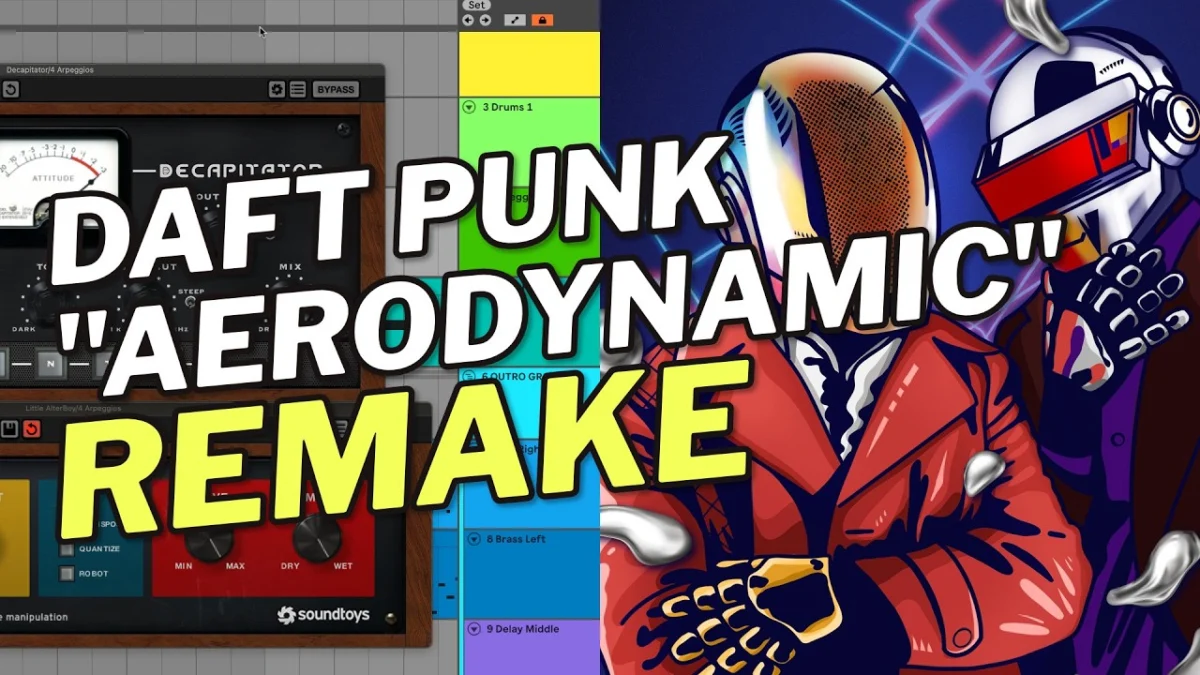
Aerodynamic is one of Daft Punk’s most eclectic productions, blending French house with funk and featuring one of the most recognisable “guitar” solos in electronic music. It was released as the second single from Discovery in 2001, right after One More Time. In this article, I’ll have a go at recreating all of the sounds from Aerodynamic. First, here’s my full remake:
The Funk Sample
The backbone of Aerodynamic is a sample from Sister Sledge’s Il Macquillage Lady, specifically the instrumental section before the verses, at around 20 seconds. Aerodynamic runs at exactly the same tempo as the Sister Sledge original, so this sample was almost certainly the seed that Aerodynamic was built around.
I’m not sure which sampler Daft Punk used, maybe an Akai S-series sampler or MPC, but the Sister Sledge sample remains stereo and multiple slices get triggered simultaneously.
To recreate the sample chopping, I loaded the sample into Ableton’s Simpler, switched to slice mode, and set it to slice by eighth notes. You can also try slice by transient, though that needs manual adjustment either way. Every eighth note gets its own slice, and they are then triggered in a completely different order to the original recording.
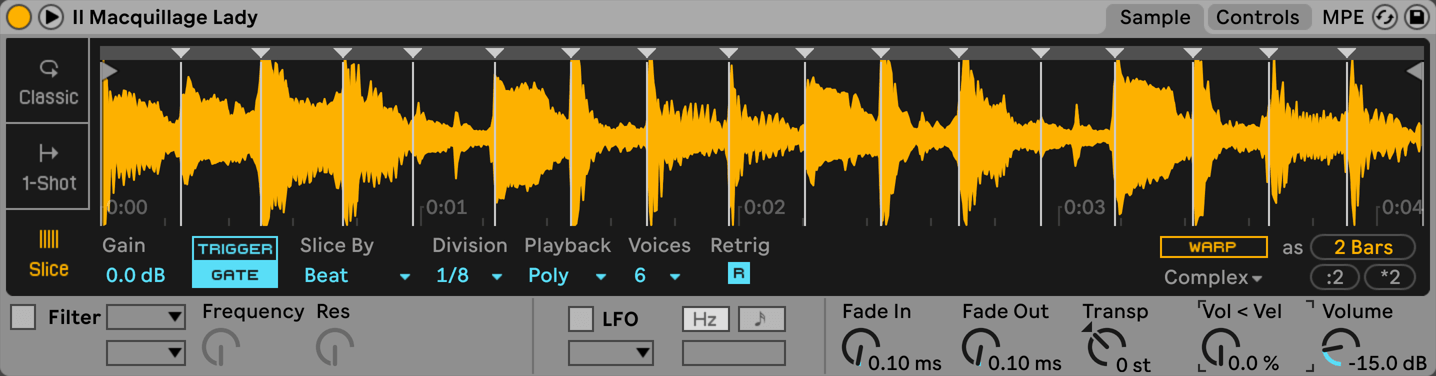
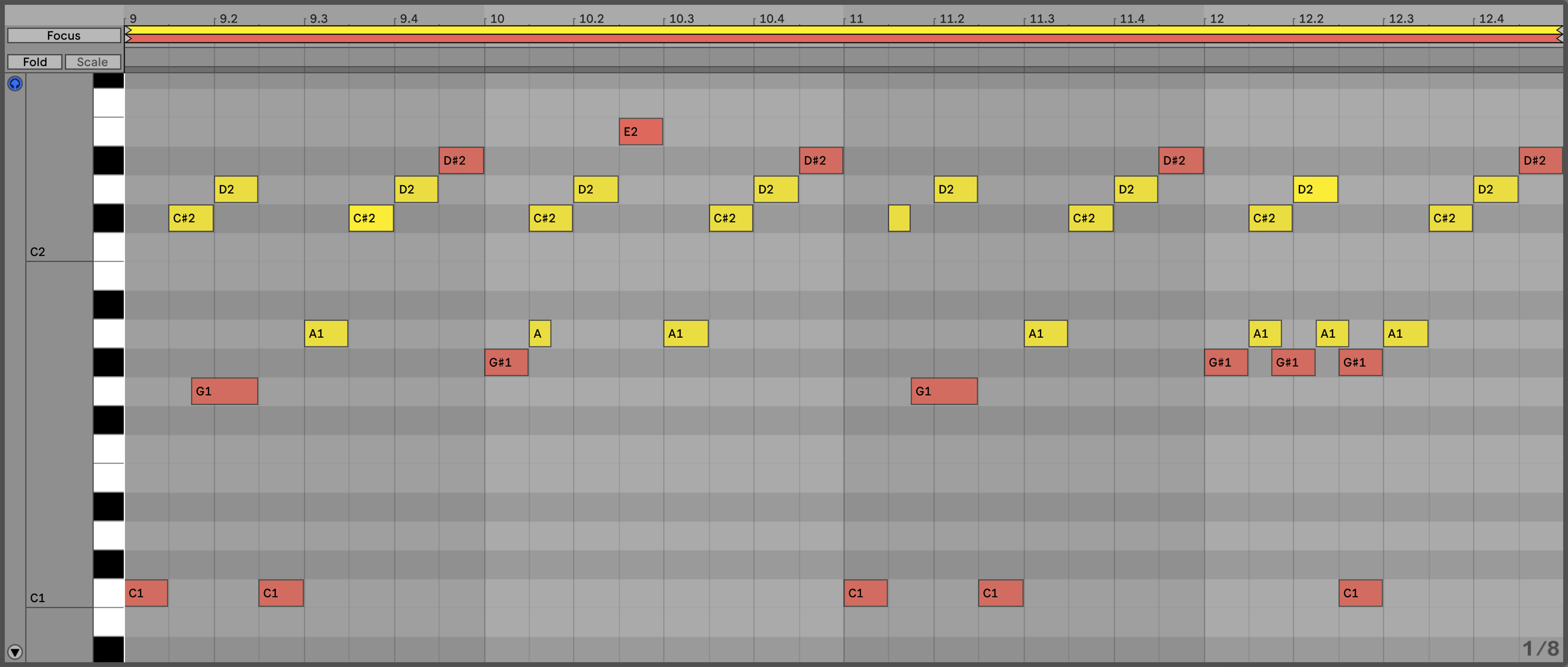
What’s happening in Aerodynamic is that Daft Punk picked out the bass hits from ‘Il Macquillage Lady’ to create a new bassline outlining Bm → G → Em, with chopped-up guitar hits layered between them. The loop repeats every four bars, but the second half slightly varies the pattern: the bassline returns to B instead of E, and the guitar chops become noticeably busier. Here’s the isolated bass hits, the guitar parts, and everything put together:
- Bass Slices 00:16
- Guitar Slices 00:16
- Full Sample Chop 00:16
When the sample first enters around 15 seconds, the bass has been quite heavily cut, resulting in a thinner sound. Then at 30 seconds, some additional harder-hitting drums come in and the bass cut gets removed. There’s also some sidechain compression on the sample to make those additional drums hit even harder.
- Clip 1 00:17
The "Guitar" Solo
After a minute of the funky Sister Sledge sample, everything drops out and we get an extended solo. This is commonly believed to be a tapping-style guitar solo, but to me, it doesn’t sound like a guitar was actually used. The biggest giveaway is the phrasing: guitar tapping is legato and the motion between notes is completely smooth. The “Aerodynamic” solo is slightly staccato, with tiny gaps between every note.
There’s a lot going on sound-wise in this solo. The instrument, whatever it was, was almost certainly mic’d through a speaker cabinet, with heavy distortion and pitch shifting layered on top. Let’s break it down!
Source Instrument
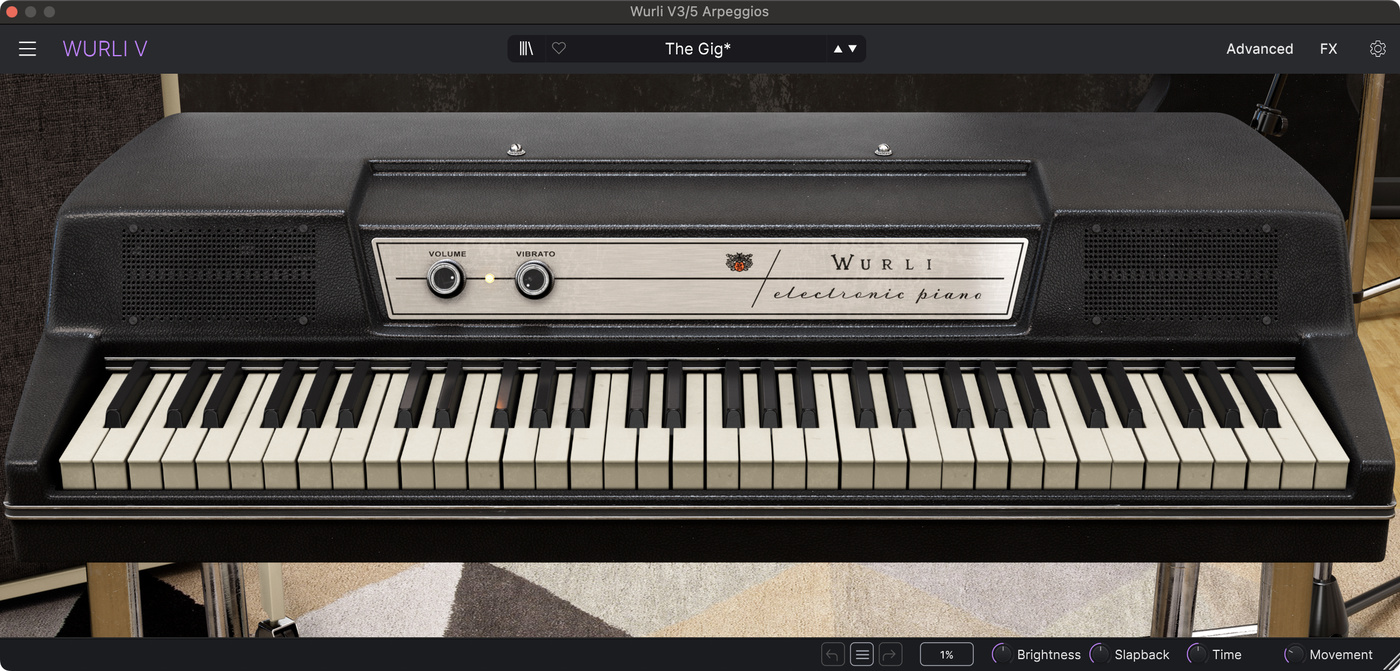
With so much distortion and the fact it was mic’d up, it’s near impossible to really identify the original instrument. For my remake, the closest match ended up being a Wurlitzer electric piano, especially in the higher register. I experimented with synth patches and guitar samples first, but they didn’t have the same roughness and high-end hollowness as the Wurli. Daft Punk owned a Wurlitzer by the time they recorded Discovery; they used it on the bridge of “Digital Love”. My guess is that they sampled individual Wurlitzer notes and sequenced the arpeggios via MIDI.
For my remake, I used Arturia Wurli V3, specifically the default The Gig preset, though I turned off the vibrato and all the built-in effects.
- Wurtlizer Dry 00:17
Amplification and Distortion
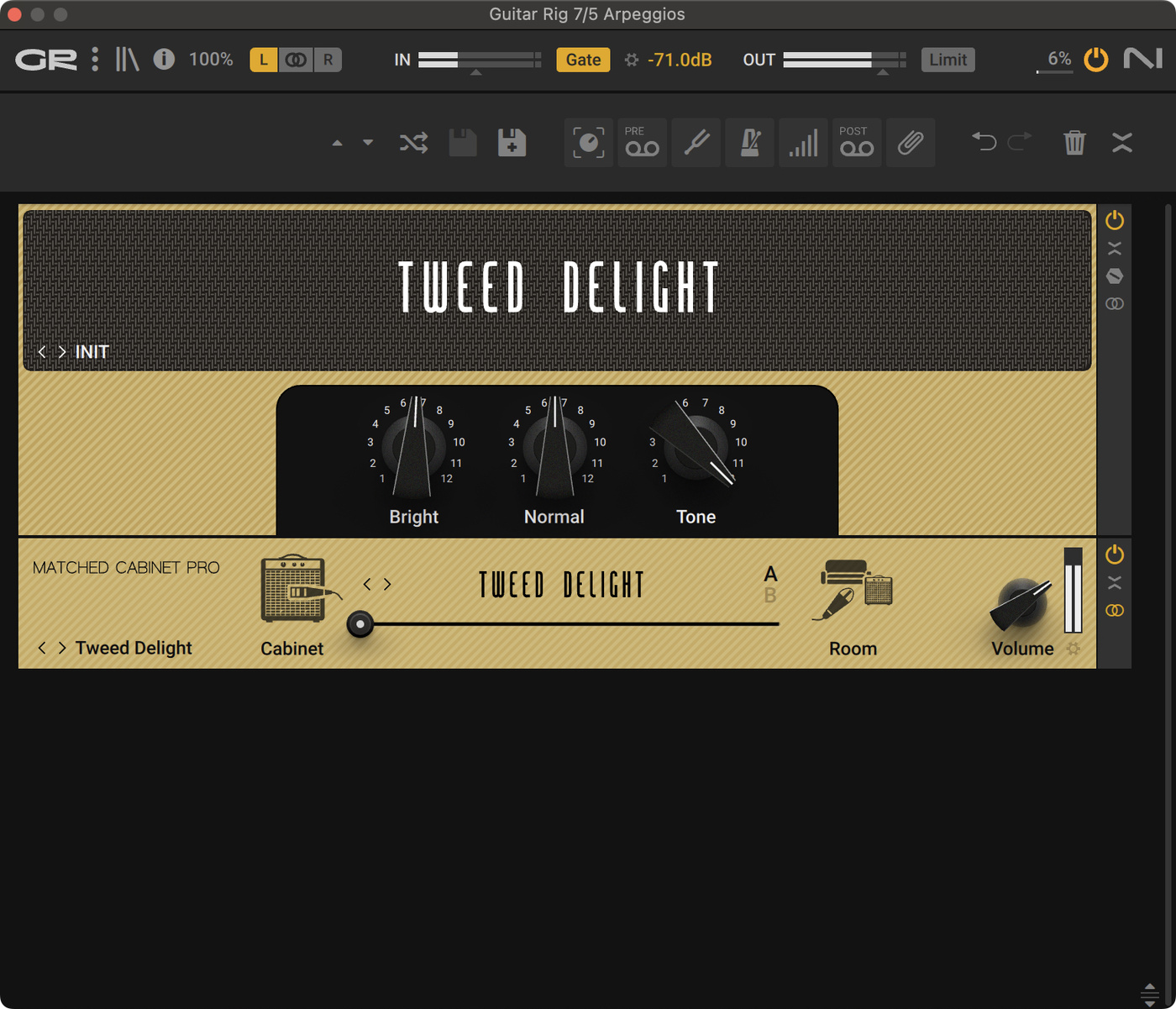
The original arpeggio sound has a big frequency spike around 3.9kHz, which is consistent with the kind of upper-mid emphasis you get from a close-mic’d guitar cabinet. I used Guitar Rig 7‘s Tweed Delight model with the bright and normal knobs at halfway and the tone knob at full so it’s not filtering anything. The matched cabinet is set to 100% with no room mic bleed.
- Guitar Rig 00:17
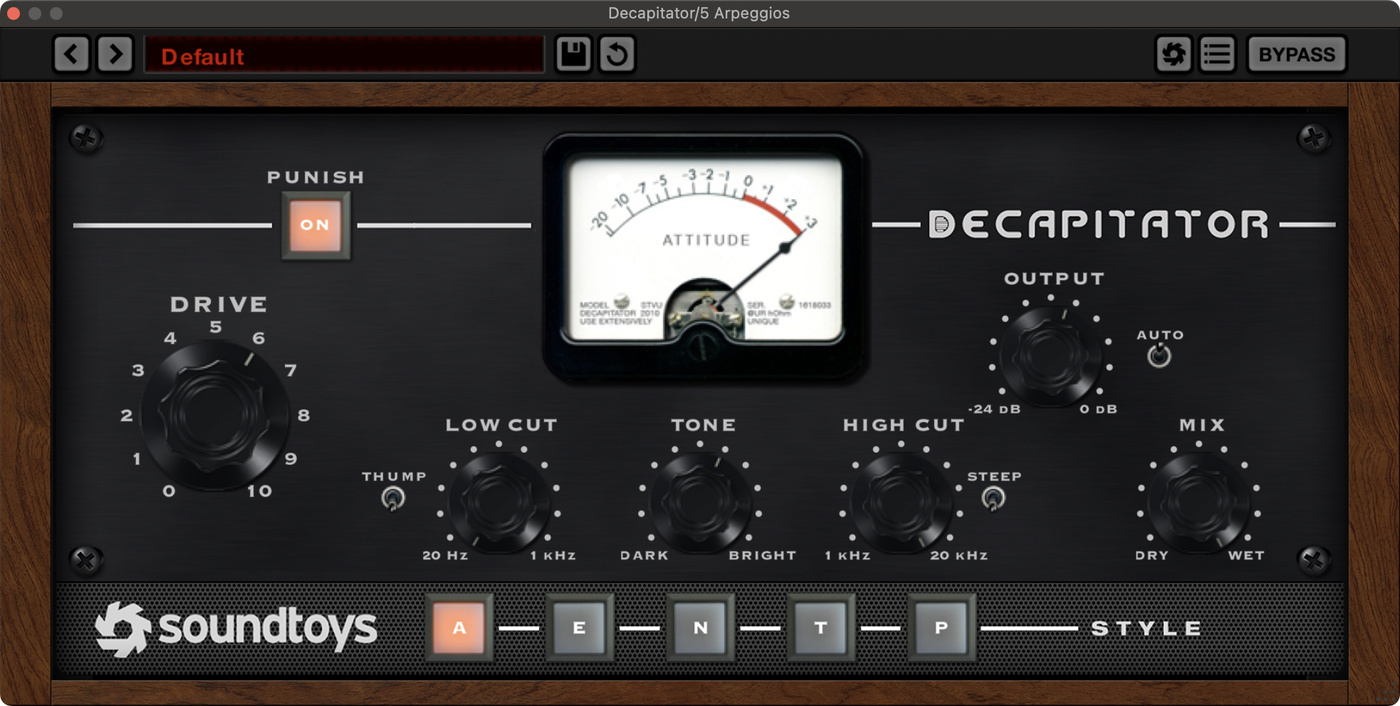
For distortion, I used two instances of Soundtoys Decapitator with some EQing between them. Both instances of Decapitator have drive set to 6, and the first one is in Punish mode, which really ramps up the distortion. The EQ has a very aggressive low cut at 500 Hz, a boost at 630 Hz, and a high boost. Working with two instances of Decapitator like this gives more control than just using one instance.
- Decapitator 00:17
Pitch Shifting
The arpeggios begin dominated by a lower octave before gradually shifting upward over the next four bars. But if you listen closely, you can kind of hear the lower and higher octaves almost fighting each other for attention. It’s not a clean octave jump, it’s more like a gradual shift where both pitches exist simultaneously for a moment. That glitchy, slightly unstable quality strongly suggests a digital pitch-shifting effect, and it sounds like the kind of early digital rack effects Daft Punk would have been using at the time.
For my remake, I used Soundtoys Little AlterBoy, which is billed as a monophonic voice manipulation tool meant for vocalists, but works brilliantly on these arpeggios. The plugin has that slightly degraded, glitchy character when it’s pitch shifting, which is exactly what we need here.
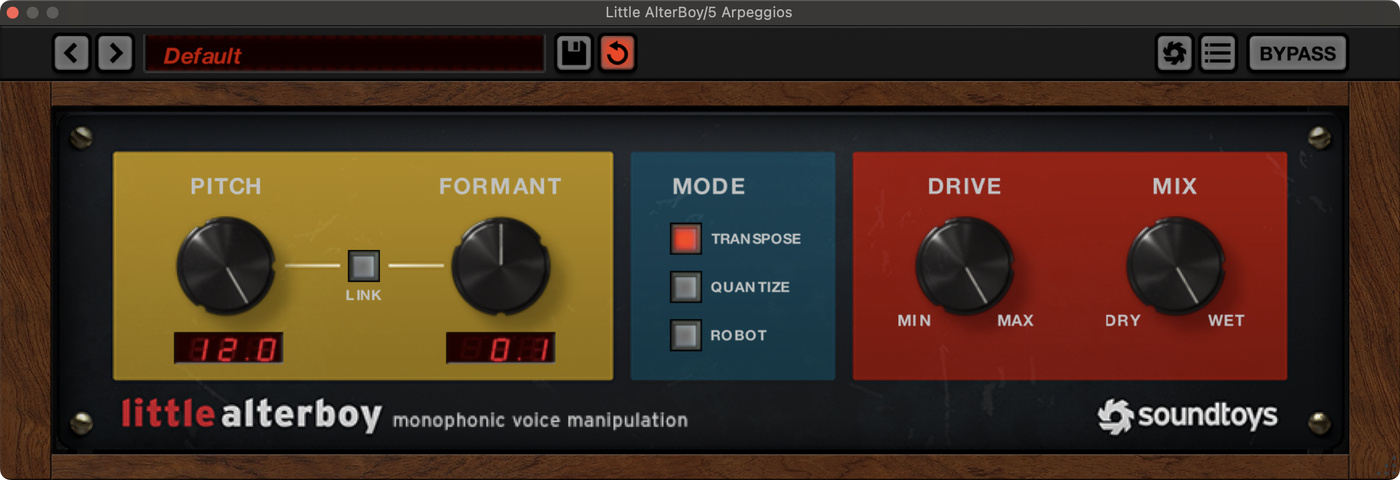
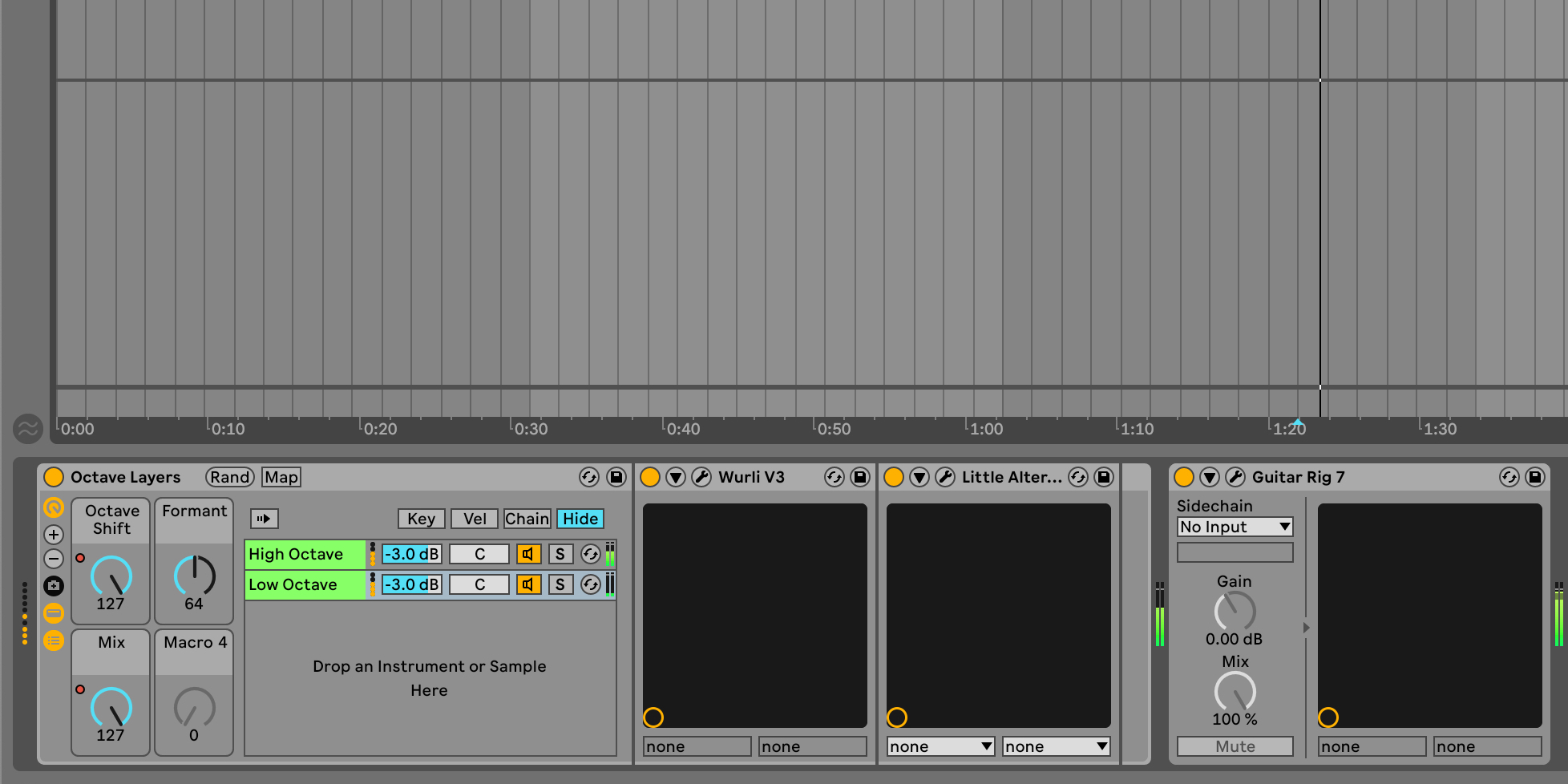
The tricky part is that in Aerodynamic, both octaves sound glitchy. Little AlterBoy only adds that glitchy character to the pitch-shifted signal, while the dry signal stays clean. So my solution was to use two instances of Wurli V3, separated by an octave, and each one is running through its own instance of Little AlterBoy. One instance pitches the lower Wurli up an octave, while the other pitches the higher Wurli down an octave. That gives me two octaves of repitched Wurlitzer, both with that glitchy quality, and they’re being fed by the same MIDI part and processed through the same distortion chain.
There’s also a 16th note delay effect; you can hear it carry over right at the very end of the solo when the arpeggios stop. The sound also uses a stereo reverb. Mic’ing a guitar cabinet, whether physically or through Guitar Rig, effectively collapses the signal to mono, so the reverb becomes the only true stereo element in the chain. I used Valhalla VintageVerb on a room setting for the remake.
- Alterboy Chain 00:16
- Alterboy + Distortion 00:16
- With Delay + Reverb 00:16
Chord Theory
Musically, the arpeggios outline a Bm | G#dim | Em | A progression. The unusual chord here is the G♯dim. That diminished sound gives the solo its slightly classical, almost Baroque feel, the kind of harmonic movement you might hear in a Bach keyboard prelude. It isn’t a totally outside chord: B and D still belong to the key, only G♯ falls outside it, but that outside note creates tension that resolves naturally into the following Em → A movement. You can also think of the G♯dim (G♯ B D) as implying an E7 chord (E G♯ B D) without the root note.

This article can be viewed with either accompanying music notation or MIDI piano roll diagrams.
Outro Sequence
The outro follows the same harmonic progression as the solo arpeggios, but with a really clever stereo arrangement. There are two synths and a delay, all panned separately.
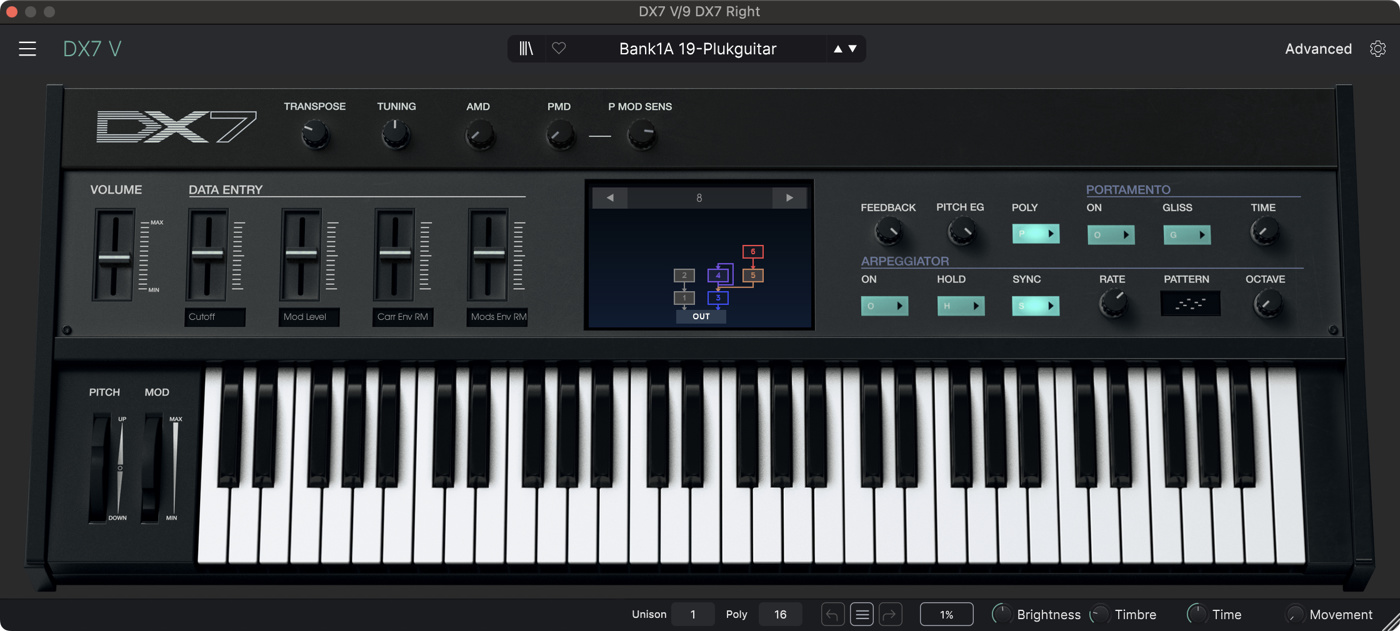
On the right channel, there’s a Yamaha FM synth patch. I used the Bank 1A Plukguitar preset from my free DX100 Factory Set pack. The DX100 is all over Discovery: it’s the harp sound in Voyager, for example. This plays the high sequence.
- DX100 outro 00:17
Hard left, there’s an analog synth playing a lower inversion of the same sequence. Both synths are playing arpeggios in a ‘thumb up’ pattern outlining Bm | G#dim | G | A. The two synths play different chord tones rather than simple octave doubling. It’s essentially the same progression as the solo, but swapping the Em for G.
- Analog synth 00:17
- Both synths harmonised 00:17

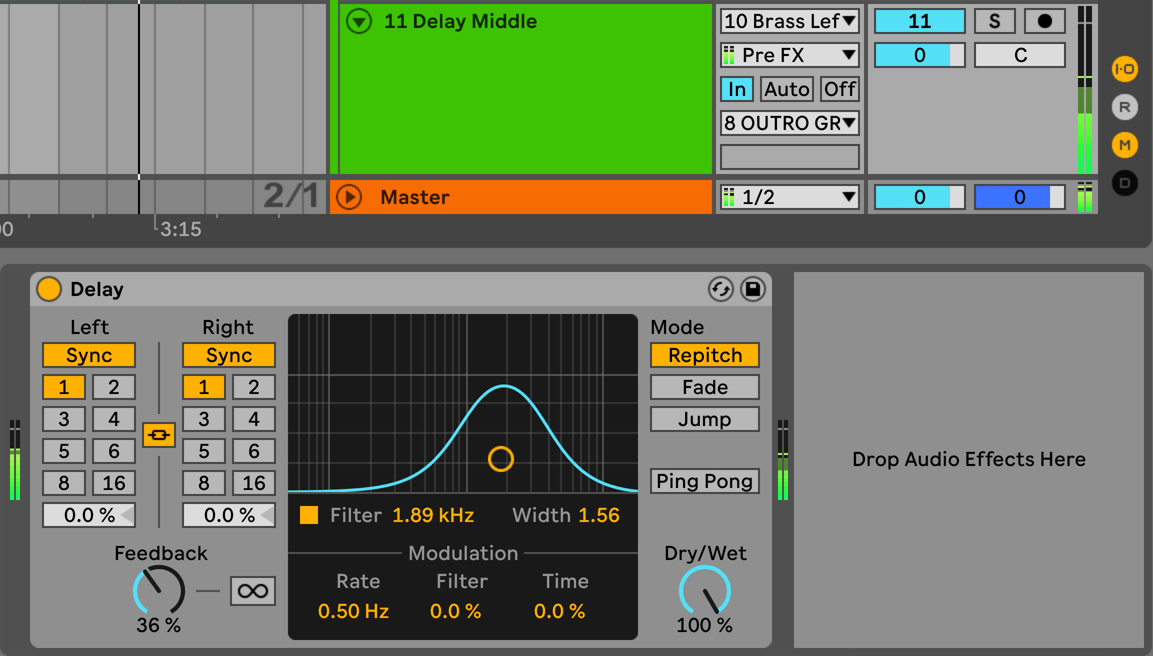
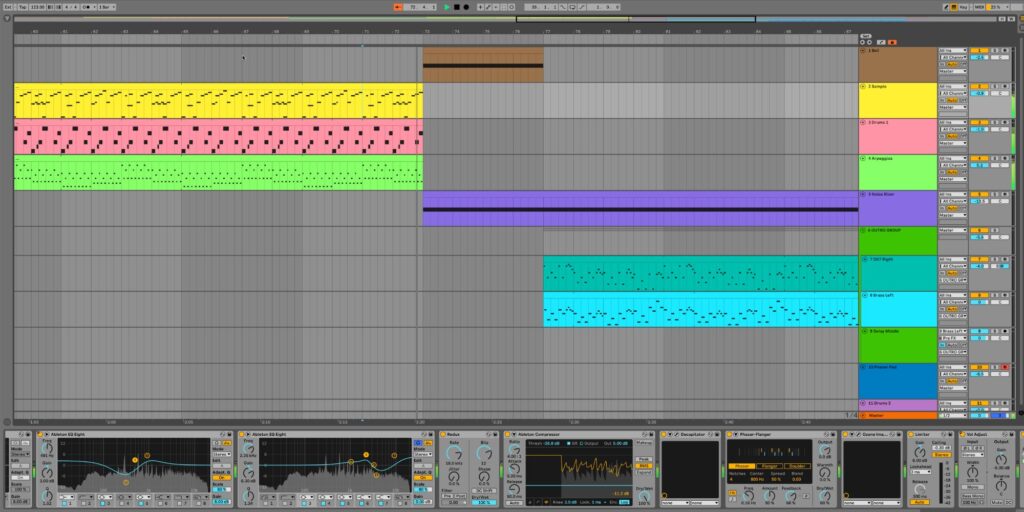
The interesting part is the delay. There’s a 16th note delay applied to the analog synth, but it’s coming down the centre of the stereo field. To set this up in Ableton Live, I put the delay on its own audio track with the input set to the left-hand synth in pre-FX mode. This audio track then has a Delay device set to 100% wet, and is the only sound coming from the centre channel, so you get this really wide stereo sequence as a result.
- Full Synth Arrangement 00:17
Putting It All Together
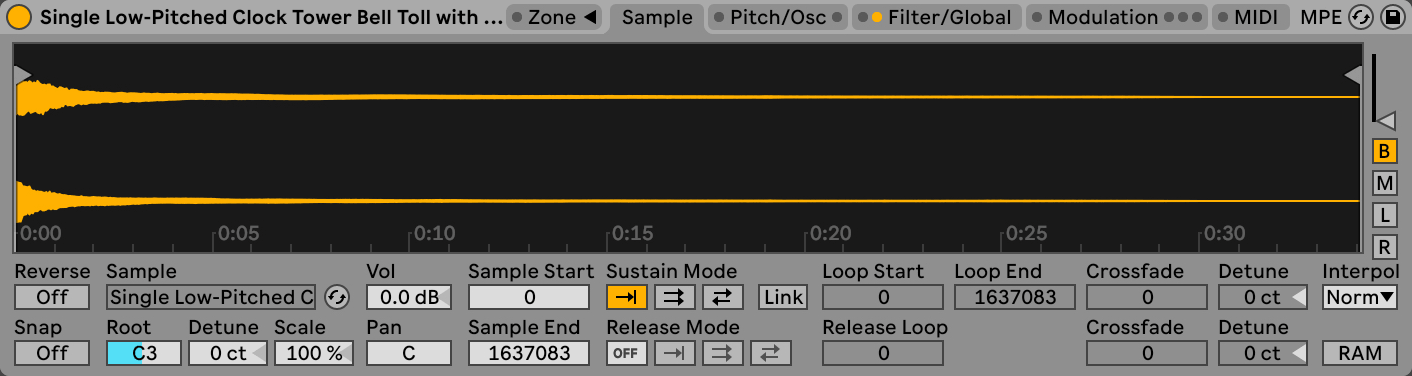
Aerodynamic opens with four instantly recognizable bells. Daft Punk used a stock sound-effect sample from Hollywood Edge’s Premiere Edition Volume 1 library, which was first released in 1990. Specifically, they used the “Single Low-Pitched Clock Tower Bell Toll with Long Ring-Off” sample. The Sound Effects Wiki page lists just about every TV show, movie, and video game this sample has appeared in, including the Avengers films, where it appears whenever Mjolnir hits Captain America’s shield. In Aerodynamic, it’s been pitched down by five semitones.
- Bell Original Pitch 00:04
- Bell Detuned 00:04
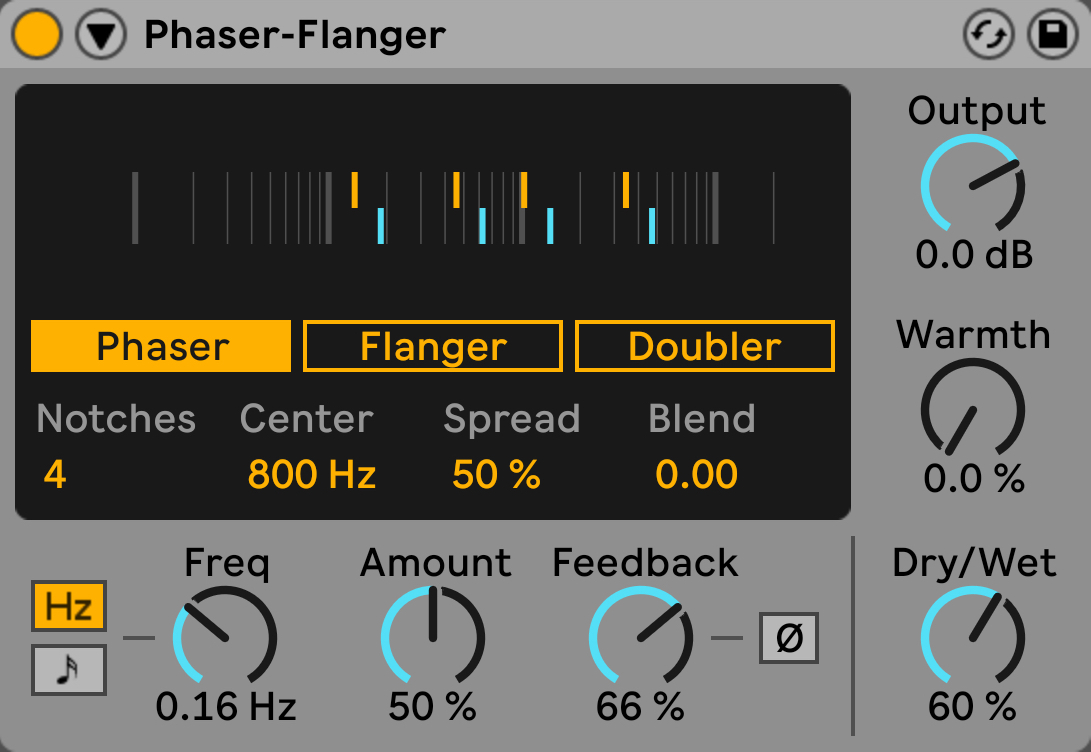
There’s also a phaser effect all over Aerodynamic, which likely came from a hardware multi-effects unit such as the Ensoniq DP/4. For my remake, I used Ableton’s Phaser-Flanger in phaser mode with a slow unsynced rate around 0.20 Hz. I used the default settings on the funk sample and outro synths, but for the outro chord track I used a much heavier phaser sweep with high feedback and a lower centre frequency.
One final detail: the original recording is also tuned roughly 25 cents flat relative to concert pitch. For this remake I kept everything at standard tuning to make the software instruments easier to work with.

Amazing breakdown, love this
Thanks, glad you enjoyed the breakdown!
Wow you killed it dude
Thanks, this was a fun one to recreate.