
How Daft Punk Created Short Circuit
April 15, 2026

Short Circuit is the ninth track on Daft Punk’s 2001 album Discovery, but the first half of it dates back to the Homework era. That origin gives it a slightly different character to the rest of Discovery, and it was even performed live as early as 1997, before the album was released. The song has a chopped, sample-driven energy that feels closer to their earlier work. However, the second half wasn’t part of those early live versions.
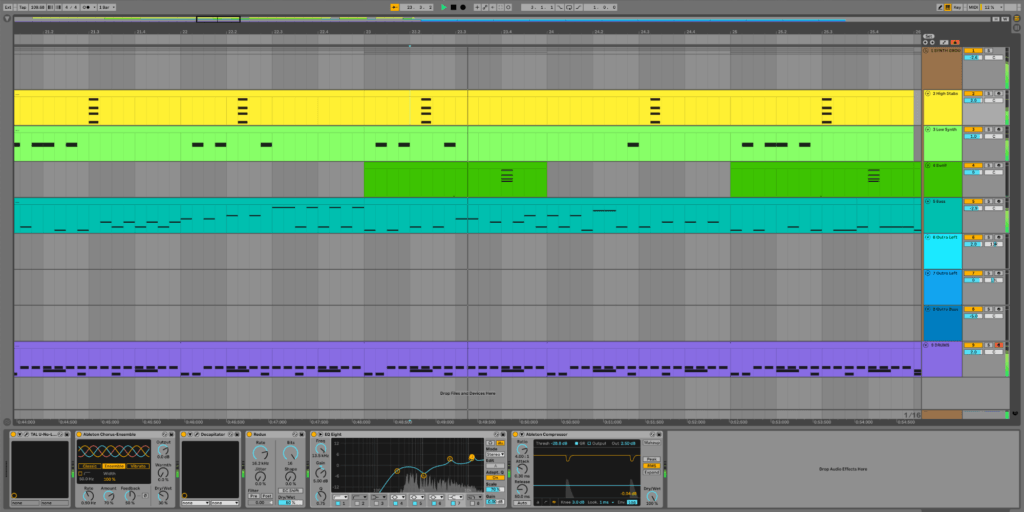
In this article, I’ll look at how Short Circuit was created. This is an updated version of a remake I covered in my original Discovery Synth Sounds article. The remake itself hasn’t changed dramatically, but I wanted to go into more depth on each element. Here’s the full remake:
Drum Machine Groove
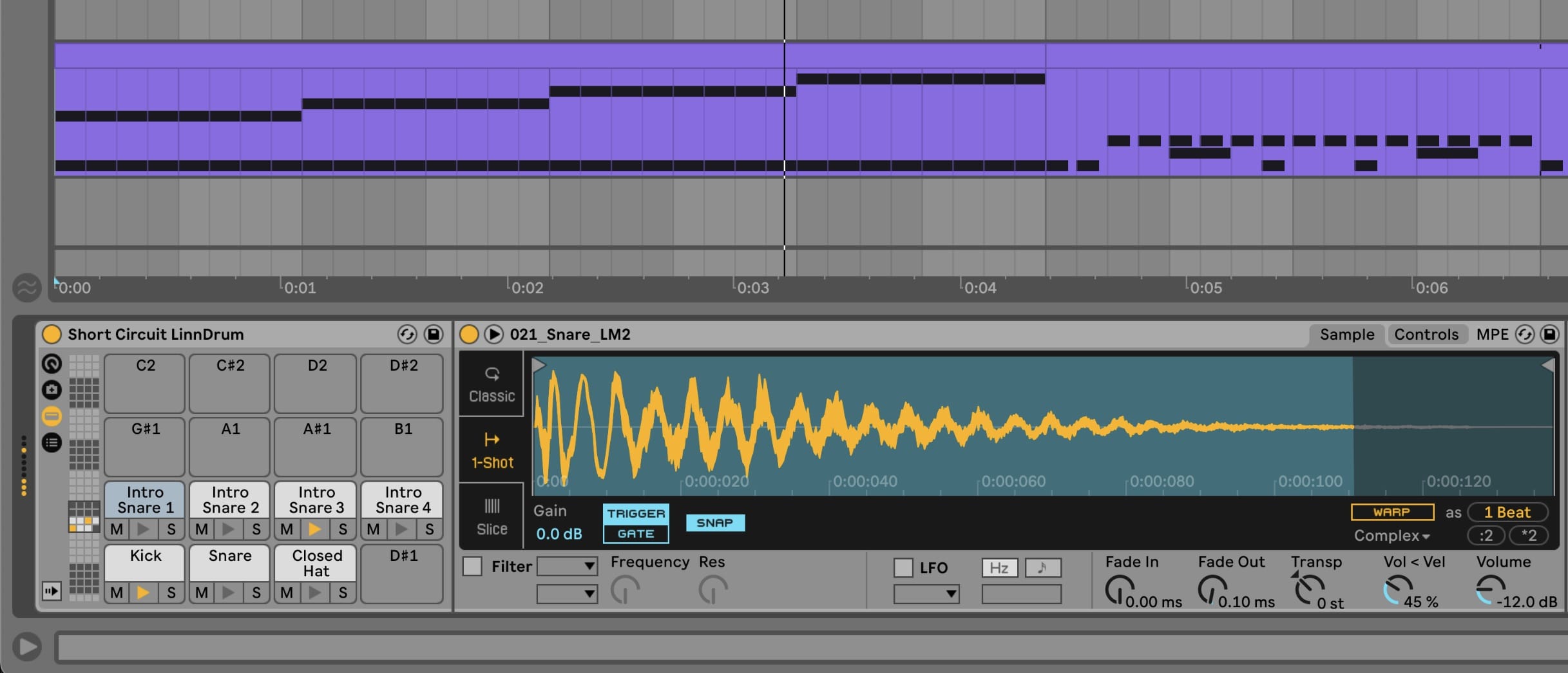
The first thing you hear in Short Circuit is the drum machine, which starts with a 1/16th note snare roll that’s pitched down every two beats. You can really hear the distinctive crunch of a sample-based drum machine in the lower pitches.
In a 2001 interview with Remix Magazine, Daft Punk said that they used a Sequential Circuits DrumTraks for the drums on Short Circuit. However, to my ears, it sounds more like a LinnDrum, which they have confirmed was used elsewhere on Discovery. I went with LinnDrum samples for my remake, but below you can hear both versions and judge for yourself.
- LinnDrum Samples 00:14
- Drumtraks Samples 00:14
Sampled Synths
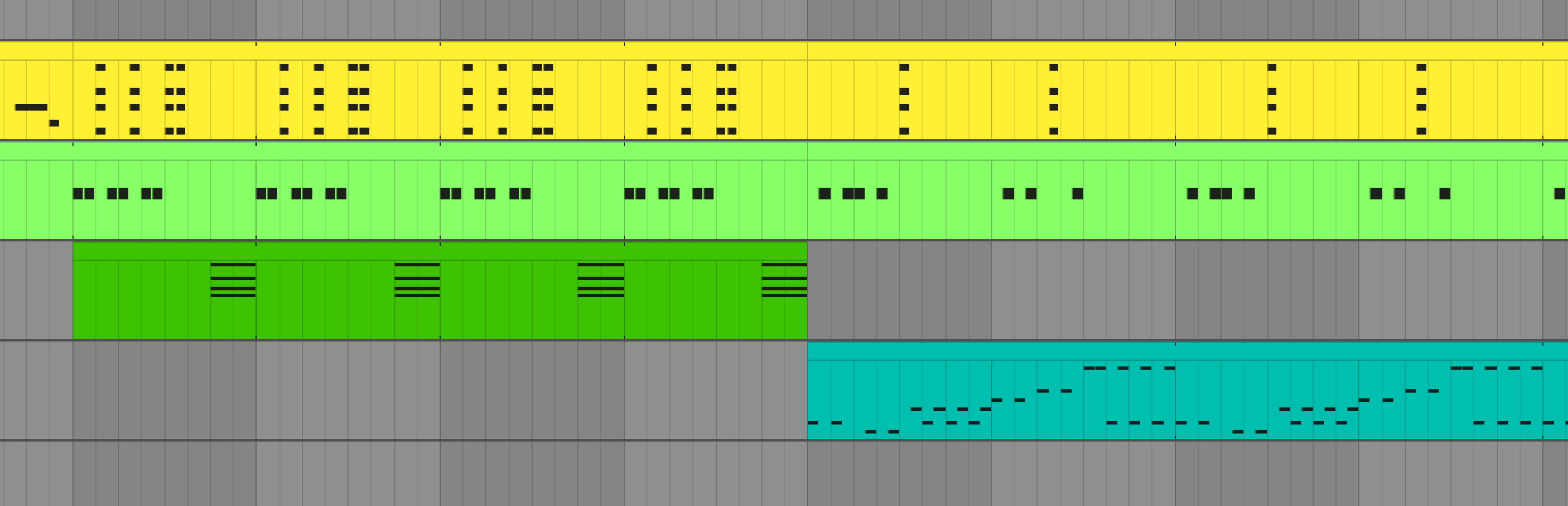
Going back to that Homework connection, Short Circuit is put together in a more sample-based way than most of the other songs on Discovery. Rather than layering parts, the track is built by sequencing separate synth phrases one at a time, so you never hear more than one element playing simultaneously. This gives the groove its chopped-up, interlocking feel.
A simple way to think about it is that each synth part exists as its own phrase, which is then triggered from a sequencer rather than layered together. For my remake, I kept everything as soft synths instead of sampling the parts, but the approach is still the same.
High Stabs
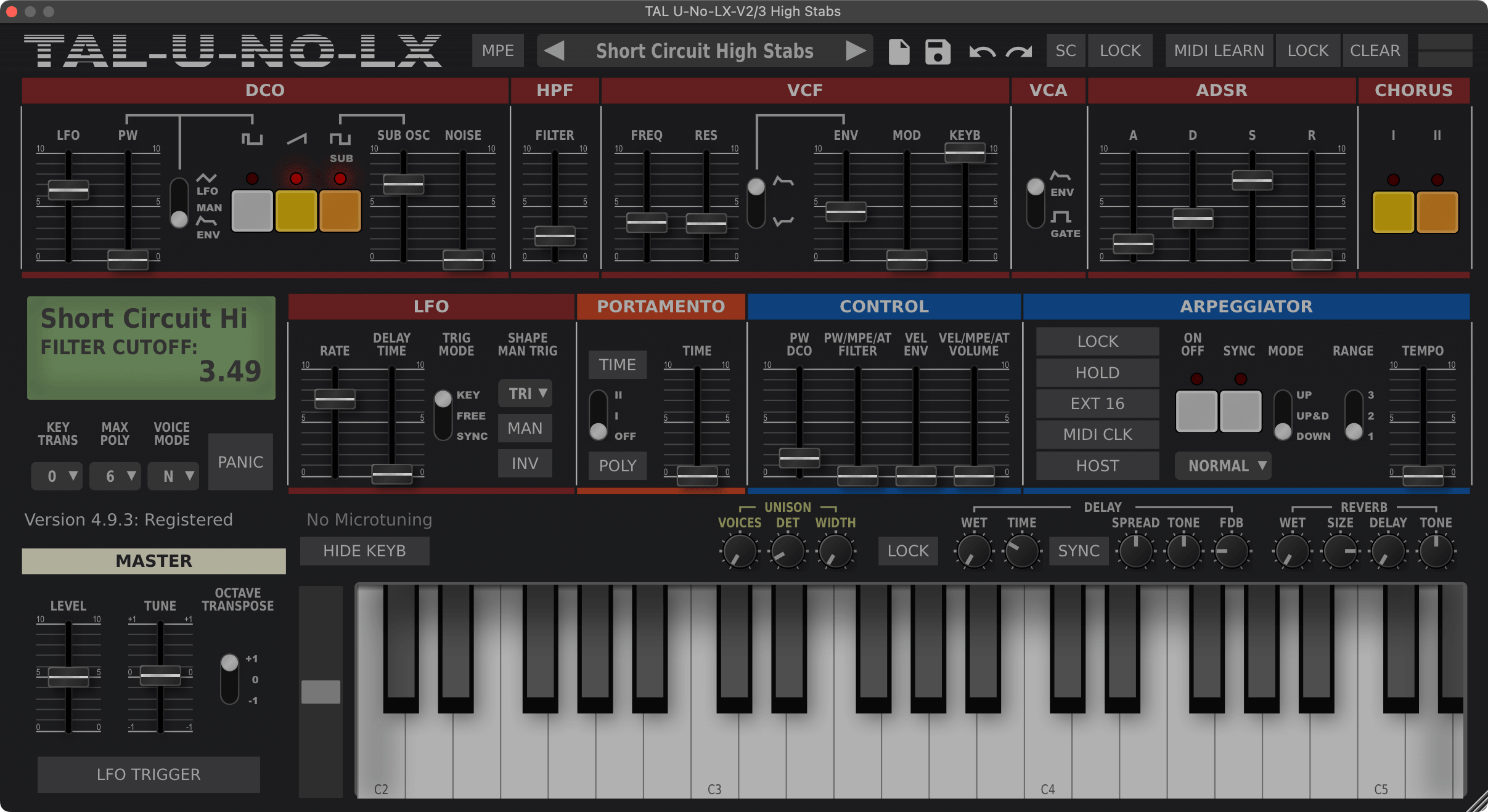
One of the main phrases in this sequence is the high stab sound. Since Short Circuit dates back to Homework, the synths most likely came from the Roland Juno-106. The main chord patch is a bright sound with a delayed vibrato that you only hear at the end of the phrase, during the single-note line.
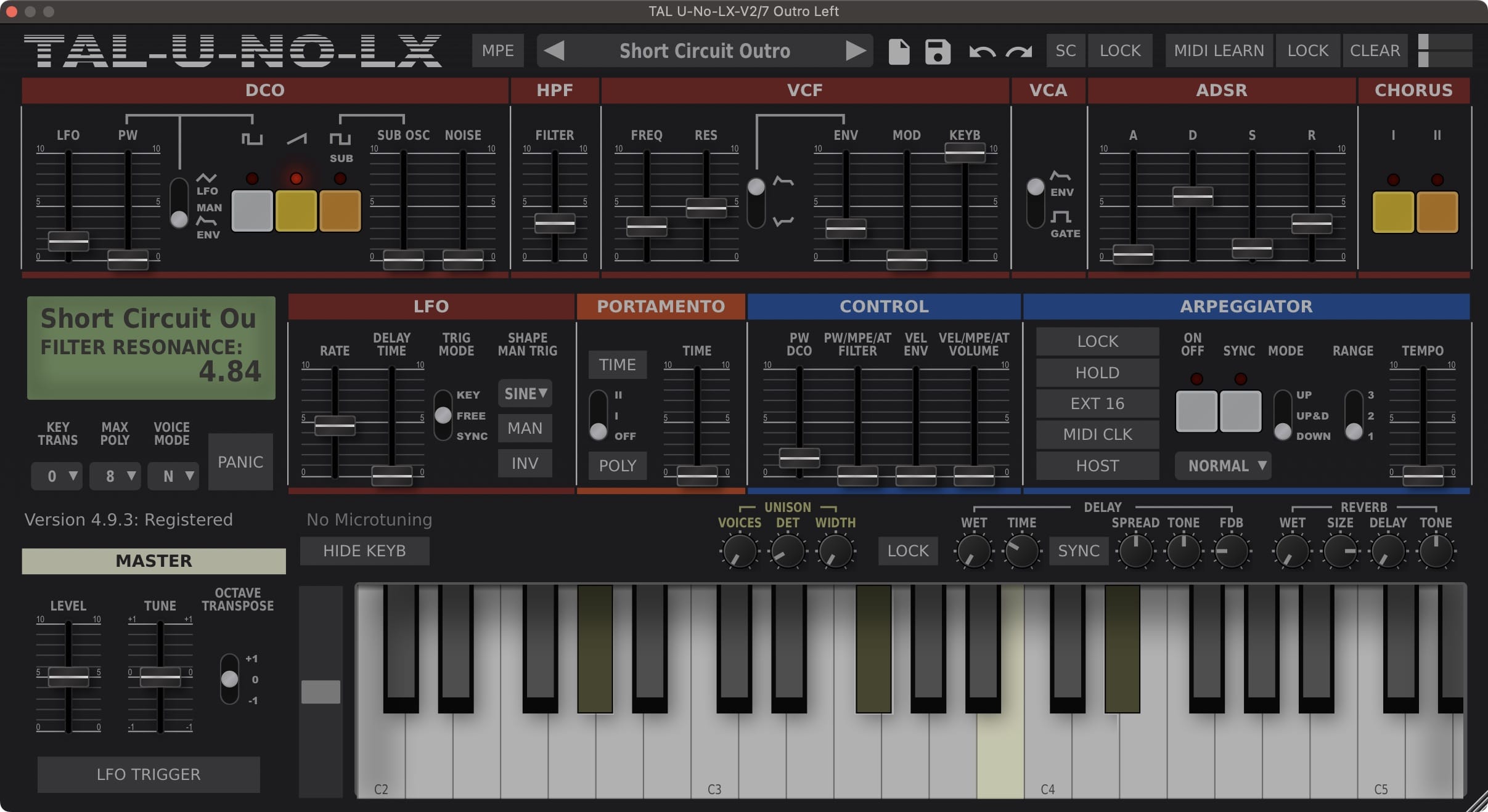
To recreate it, I used TAL U-NO-LX with the sawtooth and sub oscillators, with the sub set to 7. For the vibrato, set the LFO rate to a fast 7.24 Hz and the DCO LFO fader to 6.5, which results in a fast, wide vibrato. The LFO delay only needs to be around 0.02, just enough of a fade-in to avoid affecting the short stabs while still fully kicking in on the longer notes.
- High Stabs 00:13
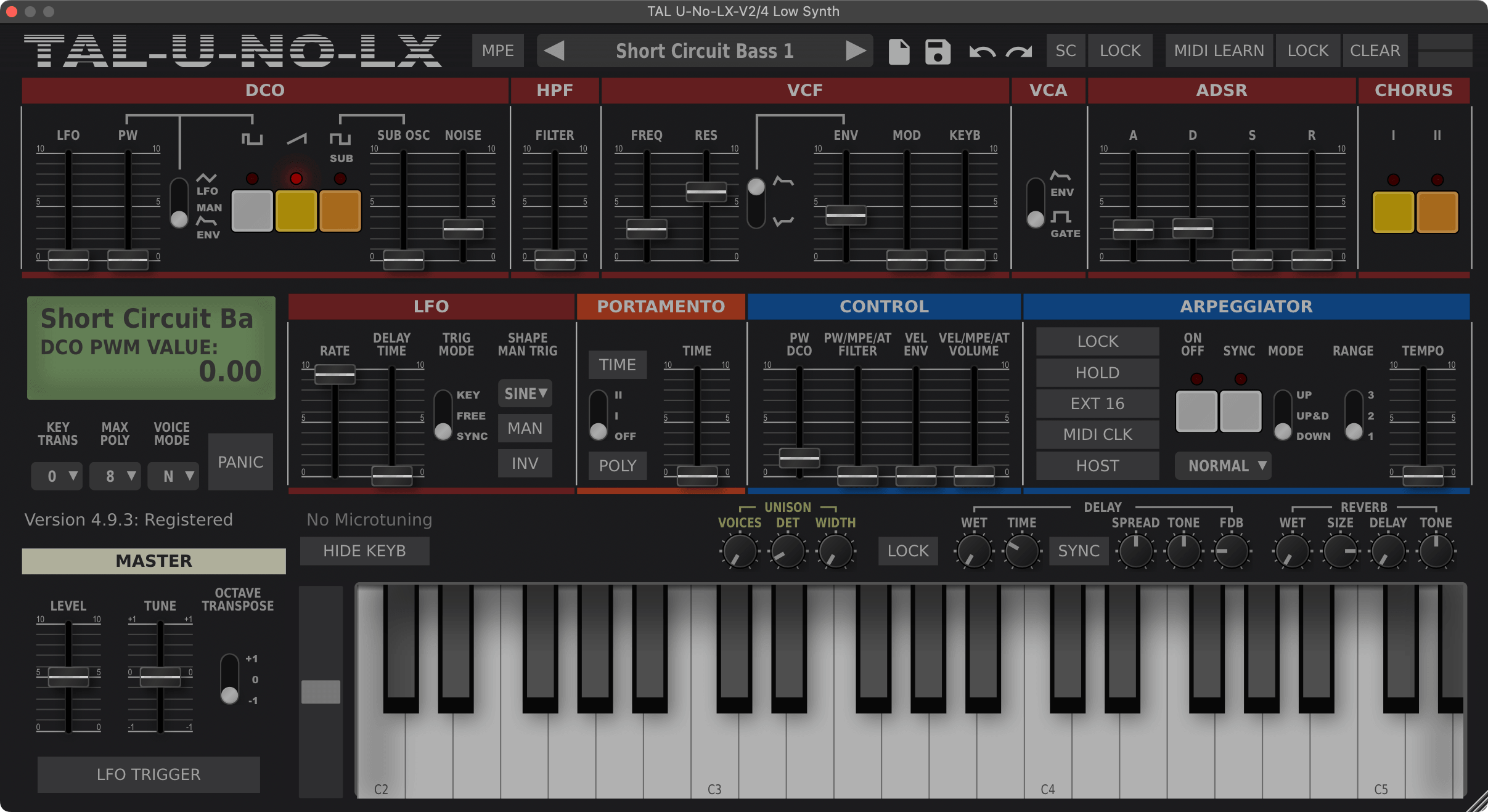
The low stabs use a similar approach, with a resonant filter stab. It’s a simple sawtooth patch with high resonance, moderate envelope modulation, and a fast attack and decay with no sustain. The resulting notes have an auto-wah style effect. I also added some saturation to this track from Soundtoys Decapitator.
- Bass 1 00:13
Swell
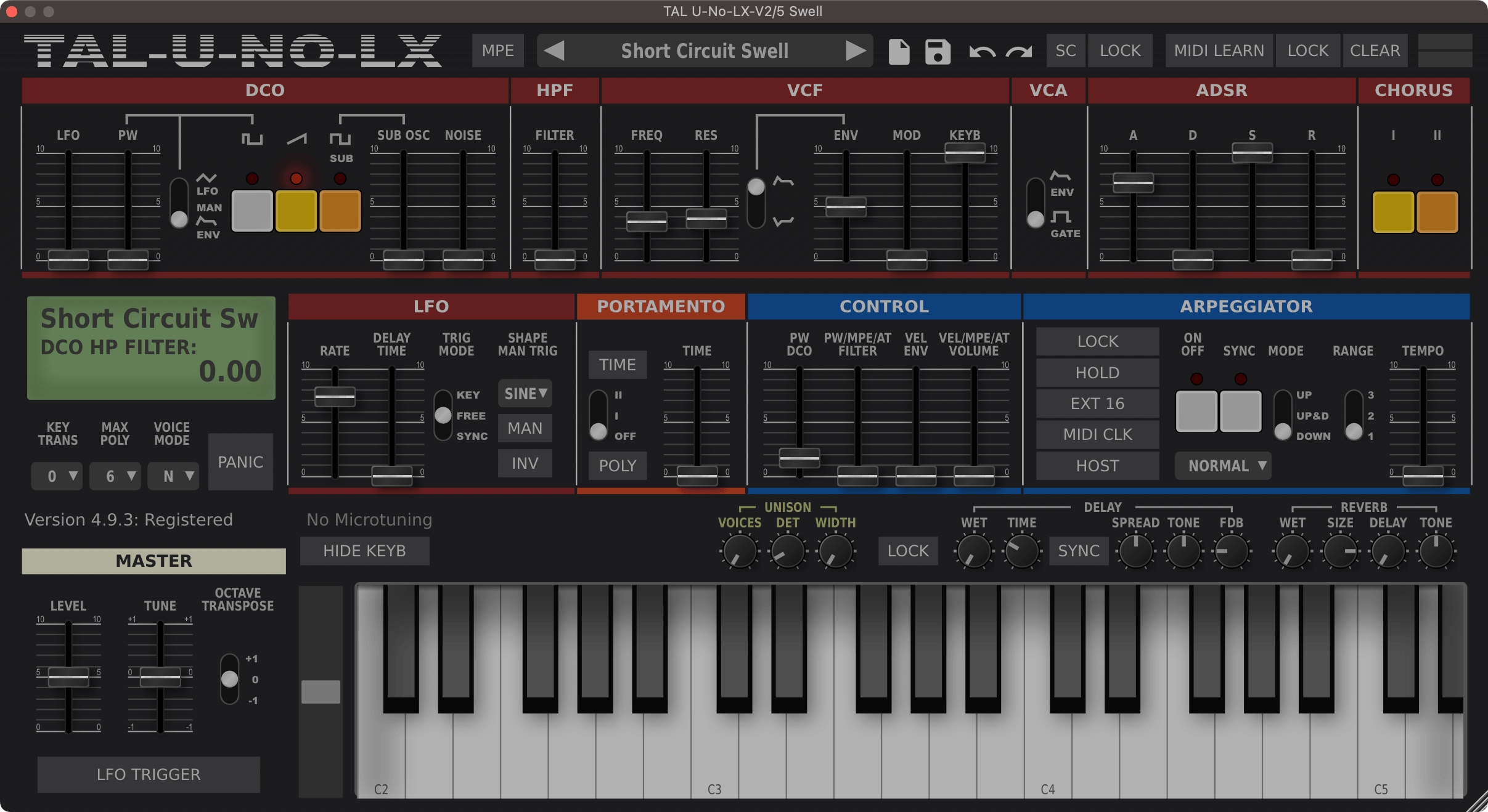
The swell patch is the simplest patch of the bunch. To create it, start with a single sawtooth oscillator with no chorus and set up a filter envelope with a long attack. In TAL U-NO-LX, the filter frequency is at 3.5, resonance at 3.8, envelope amount at 5, and the attack time is 7.2.
Sometimes it plays for a full beat, where the filter fully opens. Other times it’s just a 1/16th note, so the filter barely has time to open.
- Swell 00:12
Bassline
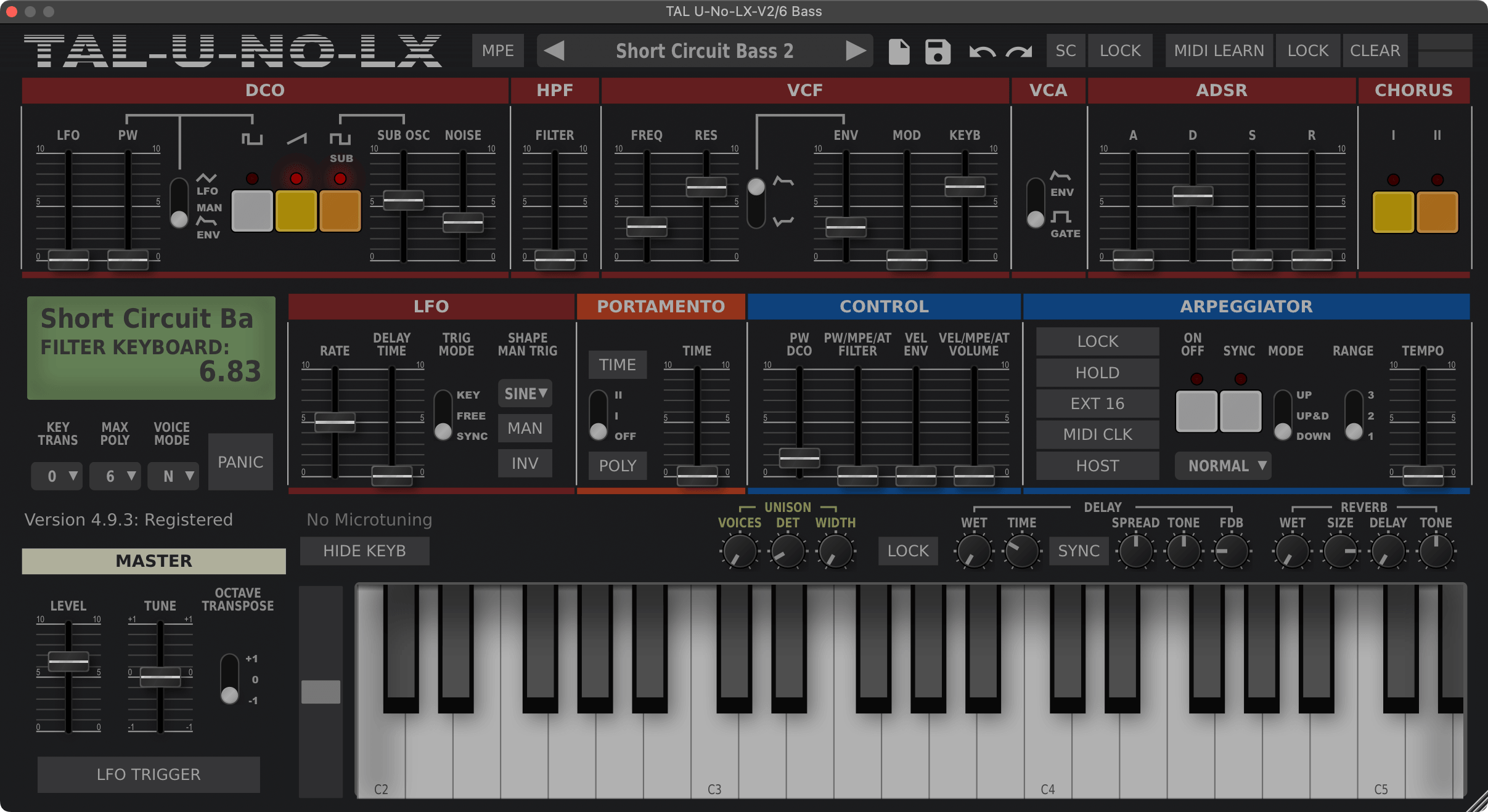
The main bass sound joins the song at the 30 second mark, and has a chunky sound with lots of low end. My TAL U-NO-LX patch uses the sawtooth wave alongside the sub oscillator with the sub volume set to 5.5. The main key to this sound is high filter resonance, which I set to 6.5. The filter is set fairly low at 3, with a small amount of envelope modulation and a medium decay.
I also added some white noise to this patch, which works nicely with the high resonance to add some grit to the sound; in this case I set the Noise oscillator to 3.5.
- Bass 2 00:14
Outro Synths
At the 1:38 mark the song takes a sharp turn, the funky, chopped-up synths giving way to a woozy four-bar chord progression that carries the rest of the song. The chords have a melancholic, sophisticated quality to them.
The first is a G#m7, already more interesting than a simple minor triad, and the second, F#add4, has a semitone clash between the 3rd and 4th that creates a sweet kind of tension. The last bar is the most interesting, a ii-V turnaround in B major that never actually resolves to B major.
- Music Theory 00:20

One thing I missed in my original article is that the outro synth is actually a subtly stereo sound. There are slightly different sounds and notes playing in the left and right channels, though they’re not hard panned. It’s a small detail but it contributes to the woozy, slightly unstable quality of the section.
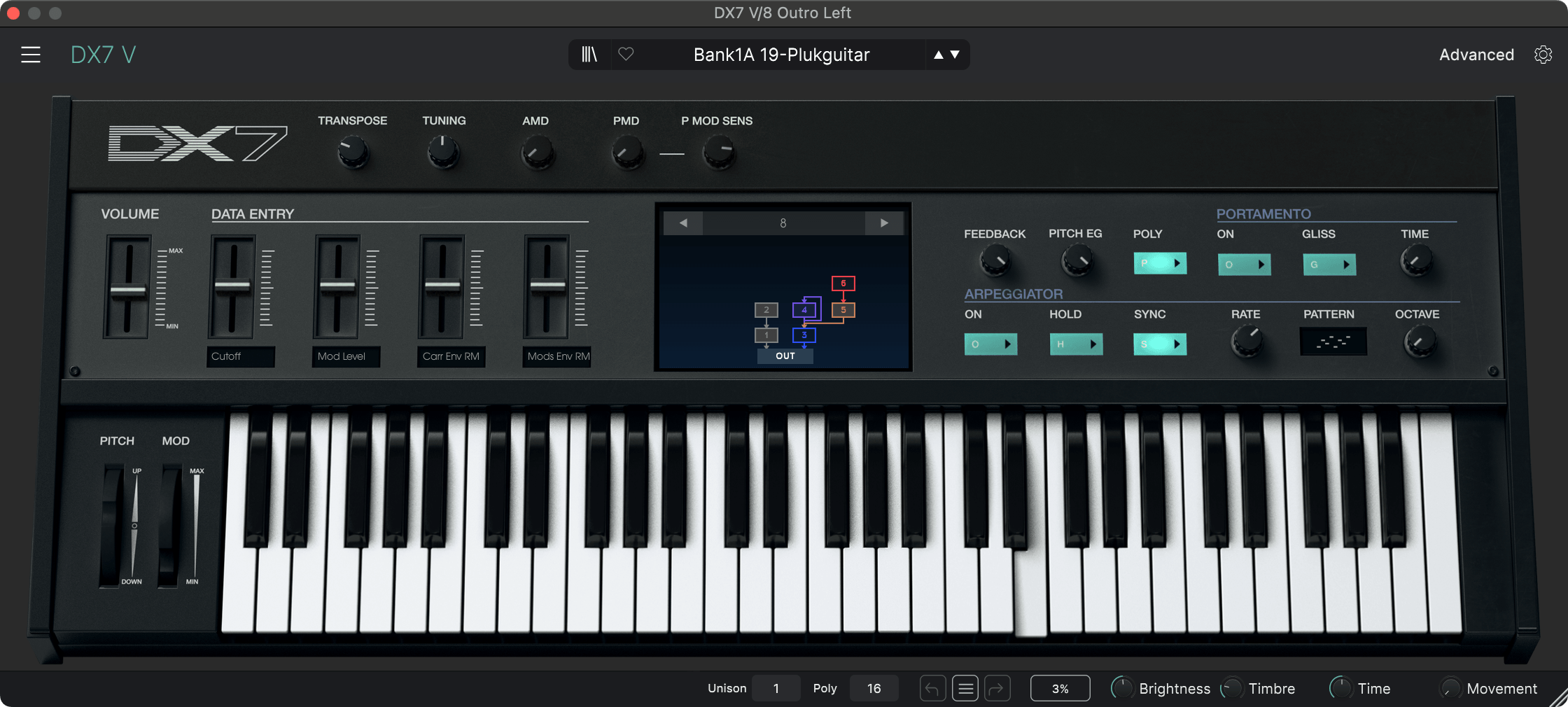
I layered two synth sounds for my remake. The first is the Bank1A 19 Plukguitar patch from my DX100 Factory Set free preset pack. This is a Yamaha DX100 factory preset, which I used because I’ve found a few other DX100 sounds on Discovery, such as the harp sound in Voyager and the flutes on Veridis Quo. I’m not 100% sure this patch was used in Short Circuit as the layering makes it difficult to hear, but it sounded close enough for my remake.
- Short Circuit DX7 00:18
The other layer is a Juno patch with a slow, wide vibrato, with the LFO amount set to 1.74 and the rate at 2.7 Hz. When layered with the DX patch, which has no vibrato, it creates a subtle chorusing effect which is further enhanced by the stereo panning between the two layers. I also rhythmically offset the two patches by moving the MIDI data in the DX7 track a few milliseconds behind the Juno track. Finally, I layered in a simple sawtooth bass patch using TAL U-NO-LX.
- Juno Patch 00:18
- Layered w/Bass 00:20
Downsampler Outro
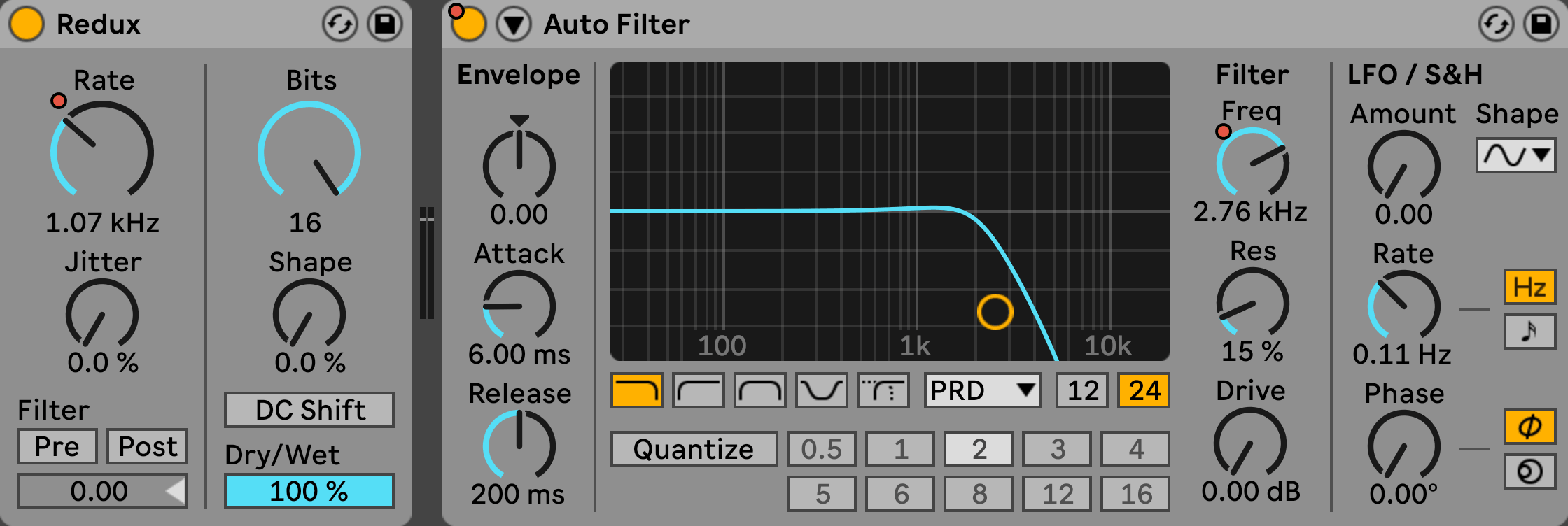
Short Circuit ends with a downsampling effect that slowly degrades the whole track into a crushed, robotic sound as it fades out. A downsampler works by reducing the audio’s sample rate, which causes it to lose high frequency detail and take on a coarse, digitally degraded quality.
I recreated this using the Redux device in Ableton Live on the master channel, so it affects the drums as well as the synths. I only automated the sample rate, lowering it gradually, and left the bitcrusher untouched. A separate low-pass filter after Redux handles the gradual high-end rolloff.
- Redux without filter 00:36
- Redux with filter 00:38

Discussion
Be the first to comment