
How Daft Punk Created Something About Us

Something About Us is one of the more introspective, soulful tracks on Daft Punk’s Discovery. It’s built around a soft Rhodes chord progression and a smooth, laid-back groove. It’s a slower song compared to much of the album, with a warm, melancholic tone replacing the house beats. It was released as the sixth and final single from Discovery, where it’s full title is Something About Us (Love Theme from Interstella 5555), the album’s corresponding animated film.
In this article, I’ll look at how Something About Us was created. Firstly, here’s my full remake of the song, which doesn’t use any samples from the original:
Chord Theory
Something About Us opens with an eight-bar chord progression played by a Rhodes electric piano that carries the harmony through the entire track, apart from a short break when the vocals come in. The chord progression is:
- Chord Progression00:00

This is effectively a four-bar progression that is altered the second time to add variation. The main change is in the second chord, which shifts from a minor seventh (Am7) to a dominant seventh (A7). Only one note changes, C to C♯, but the effect is noticeable. Am7 has a mellow, relaxed sound, while A7 is brighter and more dramatic. The A7 functions as a secondary dominant that resolves neatly into the following chord, A7 resolving to Dm11.
The final two chords also change slightly on the repeat. They keep the same basic harmony but use different extensions to add colour.
Another thing to note is that the Rhodes part plays rootless voicings, with the bass guitar handling the root notes. Rootless voicings create a lighter and more open sound, which suits the track’s laid-back feel.
Rhodes
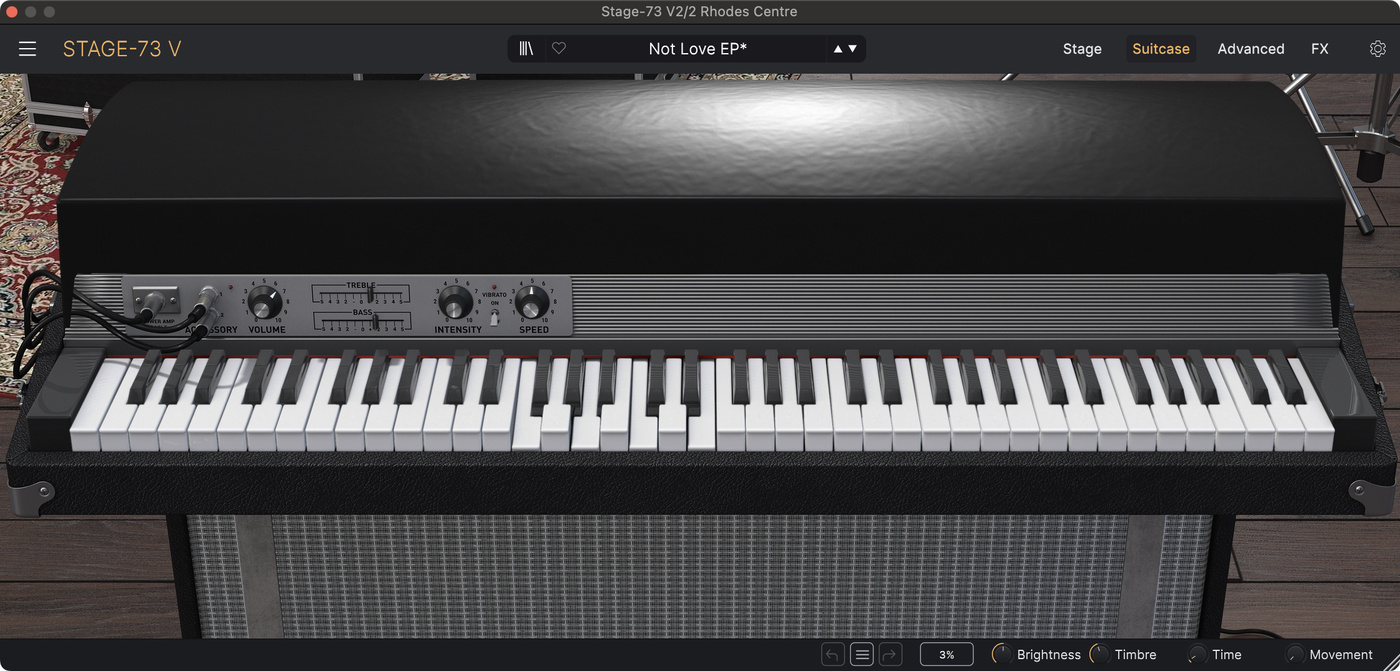
To recreate the Rhodes sound in my remake, I used two instances of Arturia Stage-73 V2’s Not Love EP factory preset. I disabled all built-in effects and, in the Advanced panel, switched the model to the more mellow Mark V A version.
The original song has a wide stereo sound, and I think the Rhodes uses two layered tracks: one mono and one stereo widened. For my remake, I used the free iZotope Ozone Imager 2 to widen the sides track.
To keep the tone soft, play with a light touch, or if programming MIDI, use low velocity values. In Ableton Live I also added gentle low-pass and high-pass filters to shape the sound.
- Rhodes Centre Track00:00
- Rhodes Side Track00:00
- Rhodes Layered00:00
Auto Wah Guitar
When the drums come in, they’re accompanied by a percussive bass line and a funky guitar part with a vocal vowel-like tone. Contrary to popular belief, this wasn’t recorded with a talkbox. Although talkboxes can create vowel-like sounds, they don’t have the same resonance or smooth movement as the sound on Something About Us.
It’s more likely that an auto-wah effect was used, an effect which Daft Punk have used a lot. You can hear a similar sound with a less resonant setting in Make Love from the next album Human After All.
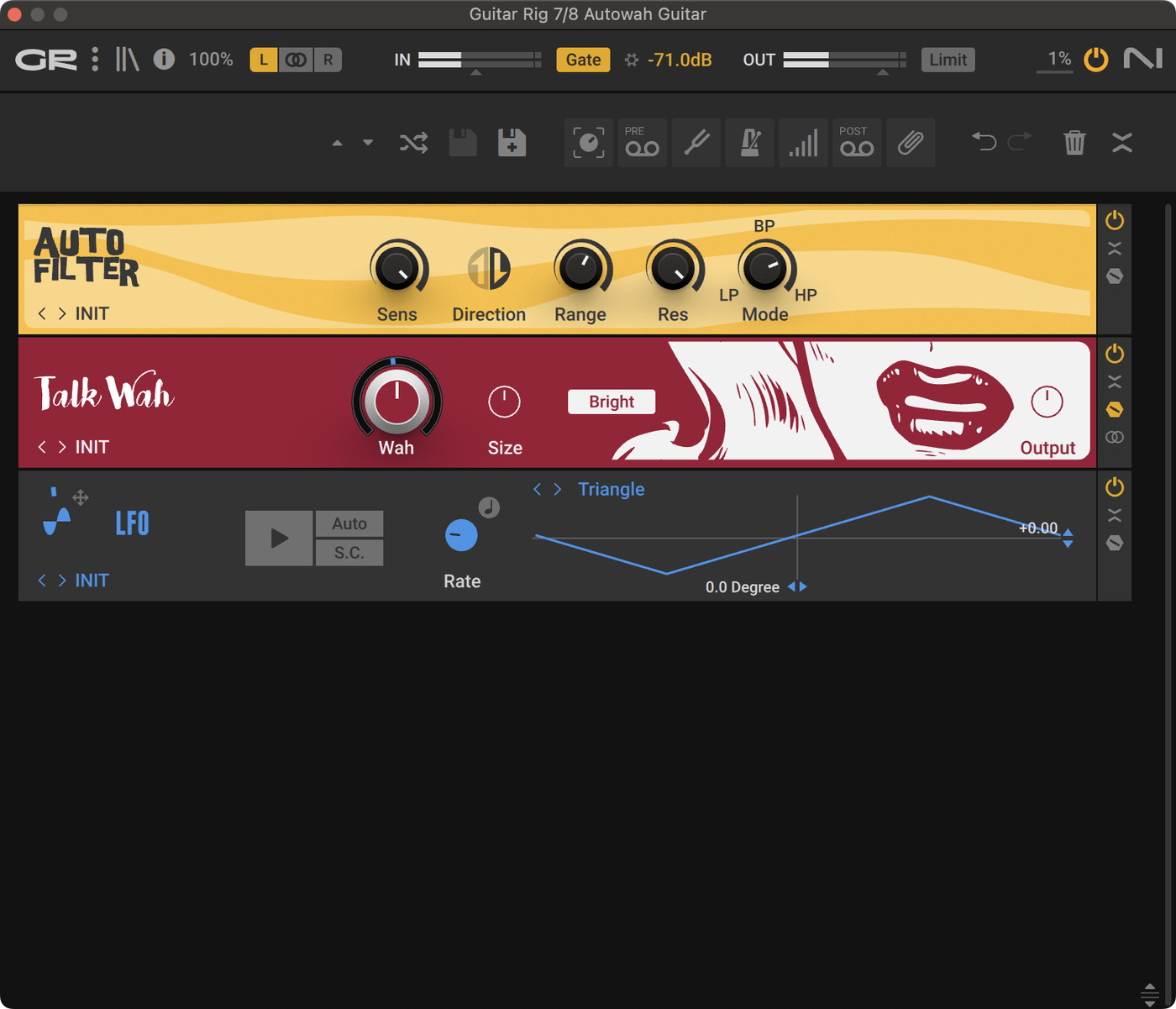
Not all auto-wah pedals sound the same; some are tuned specifically for vowel-style tones. For my remake, I used Guitar Rig 7 by Native Instruments with the Talk Wah effect. I mapped a slow LFO to the main Wah control so it automatically sweeps up and down. I also added the Auto Filter effect before it to make the effect more pronounced. Listen to my dry guitar compared to the auto-wah sound here:
- Guitar Dry00:00
- Wah Effect00:00
Synth Horns
The main synth sound in Something About Us is a brass-style patch that plays an ascending, then descending melody. The trick to recreating it is to use high filter resonance and heavily high-pass the signal to remove all low-end, including the fundamental.
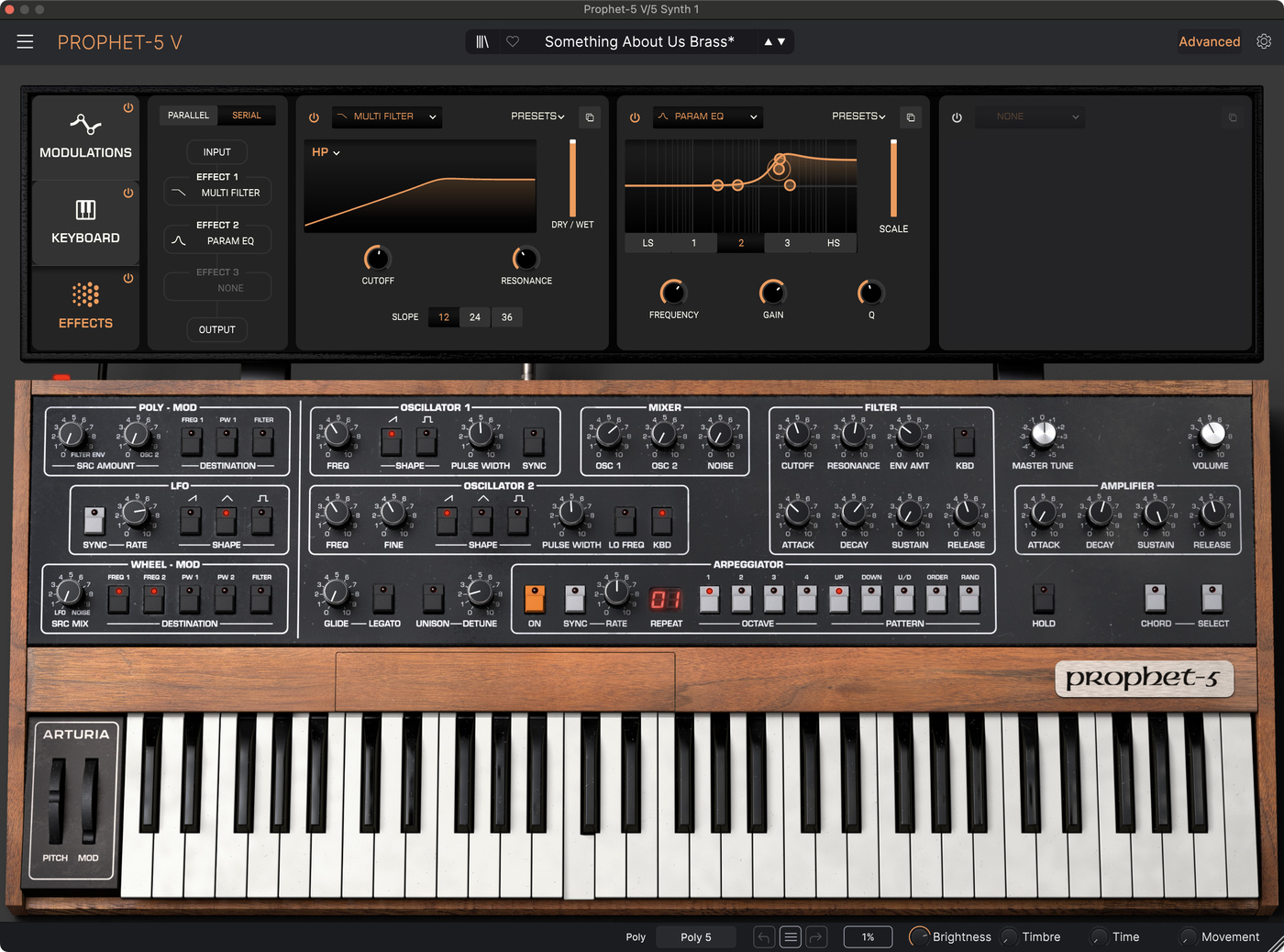
I recreated the sound in Arturia Prophet-5 V using a single sawtooth oscillator. The filter is set to 140 Hz with resonance at 4.7 and envelope amount at 3.25, with no keyboard tracking. The filter envelope has a soft attack of 72 ms and a long decay around 1.7 seconds. I used the Multi Filter effect in Prophet-5 V for the high-pass filter, set to 985 Hz.
The synth part is harmonised, and I used two tracks to play the separate lines. This allowed me to fine-tune things like setting the higher line slightly louder in the mix and adjusting the resonance and envelope amount on each part.
For the delay effect, I used Ableton Live’s Delay device set to eighth-note triplets and an 18% mix.
- Synth Track 100:00
- Synth Track 200:00
- Harmonised w/Delay00:00
Stabs
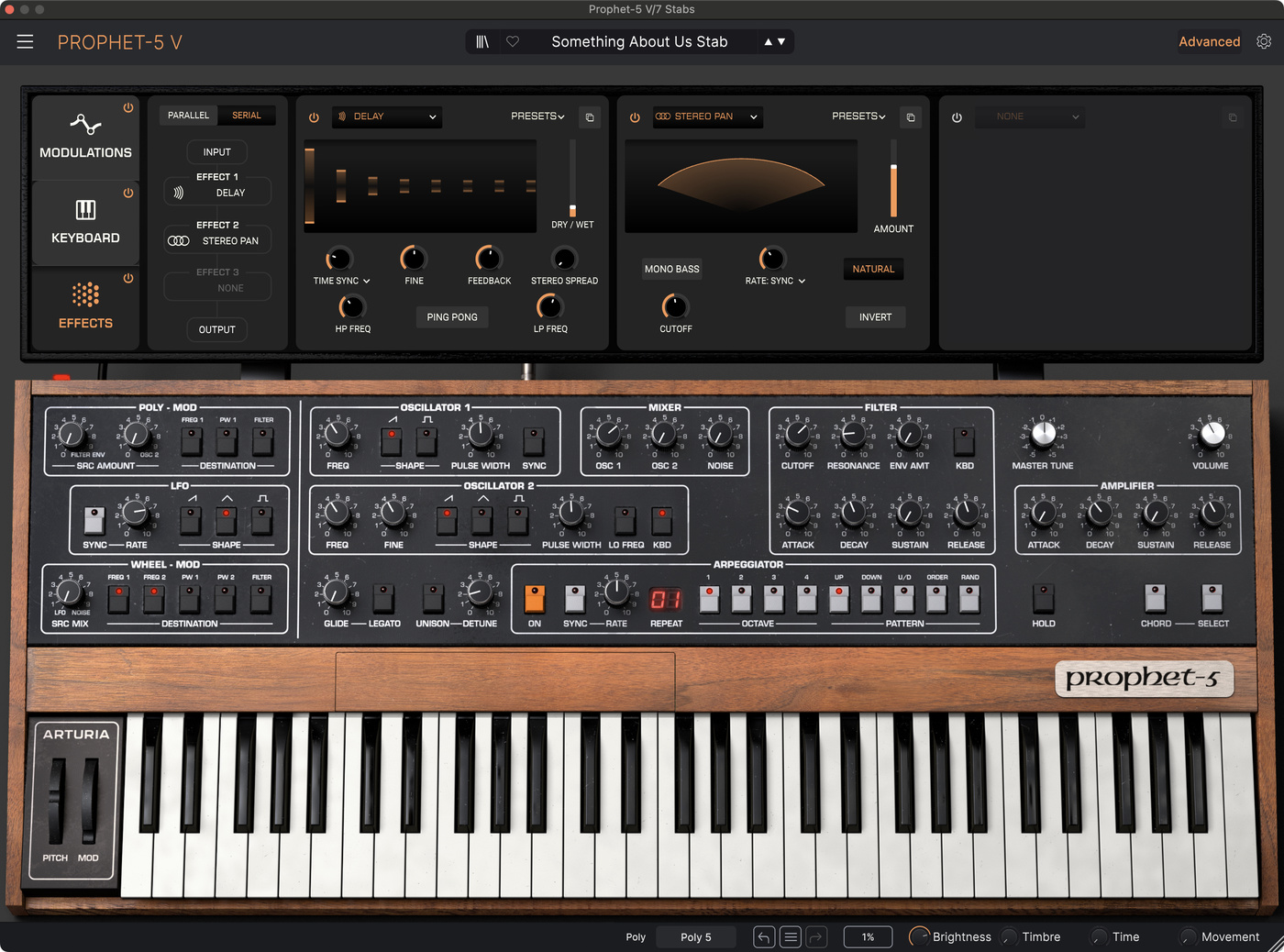
There is a short stab effect with an eighth-note delay that plays occasionally throughout the song. This might have originally been a sample, but I recreated it using Prophet-5 V. The patch uses a single sawtooth wave with a very short envelope decay of around 187 ms and no sustain. I used Prophet-5 V’s Delay effect set to a 10 percent mix with the feedback set high at 50 percent, and the Stereo Pan effect to add some slow panning movement.
This is an airy sound, so I used Ableton Live’s EQ Eight to cut low-end below 1.10 kHz, boost around 2.11 kHz, and add a wide high shelf of 7.8 dB. The result is a thin, bright texture that sits more naturally as a background element.
- Stab Dry00:00
- Stab w/EQ00:00
Guitar Melody
The last element to enter is a jazzy guitar melody that plays through to the end of the song. The trick to this dark jazz guitar sound is to use the neck pickup, roll the tone knob all the way down, and play without vibrato. For my remake, I used my Les Paul with the tone knob set to 0. It still wasn’t quite dark enough, so I added a low-pass filter in Ableton Live set to 1.25 kHz.
- Guitar Melody00:00
Free Presets
 Thanks for reading! You can download the Arturia Prophet-5 V patches used in this remake below. For more Discovery remakes, check out my previous article covering Voyager.
Download Presets
Thanks for reading! You can download the Arturia Prophet-5 V patches used in this remake below. For more Discovery remakes, check out my previous article covering Voyager.
Download Presets
Plugins Used
The following plugins were used in this article. Some links are affiliate links, which help support Reverb Machine.
- Arturia Prophet-5 V
- Arturia Stage-73 VProphet-5 V and Stage-73 V are both included in Arturia V Collection Intro.
- iZotope Ozone Imager 2 Free plugin.
- Native Instruments Guitar Rig 7
- Soundtoys Decapitator
- Soundtoys LittlePlate
- Valhalla VintageVerb
Remake Project

Explore the complete Ableton Live project behind this remake, including the synth design, MIDI, arrangement, and mix decisions behind the track.
Requires Ableton Live 11+ and third-party plugins. All tracks are frozen, so you can still explore the projects even if you are missing plugins. See below for the full plugin list.
Get the full Ableton Live project for this remake, including stems and MIDI plus access to a full year of remake projects on Patreon.
Get the Project
I always wondered how they made the “Auto-Wah Guitar” i thought they used a Talk Box. I wanted to make a cover of “Something About Us” but i don’t have a talk box, i was doing research everywhere but i coulden’t find anything. Thank you 🙂
Same! I even bought an MXR Talk Box while working on this remake, but it sounded nothing like the guitar effect.