
How HOME Created We’re Finally Landing

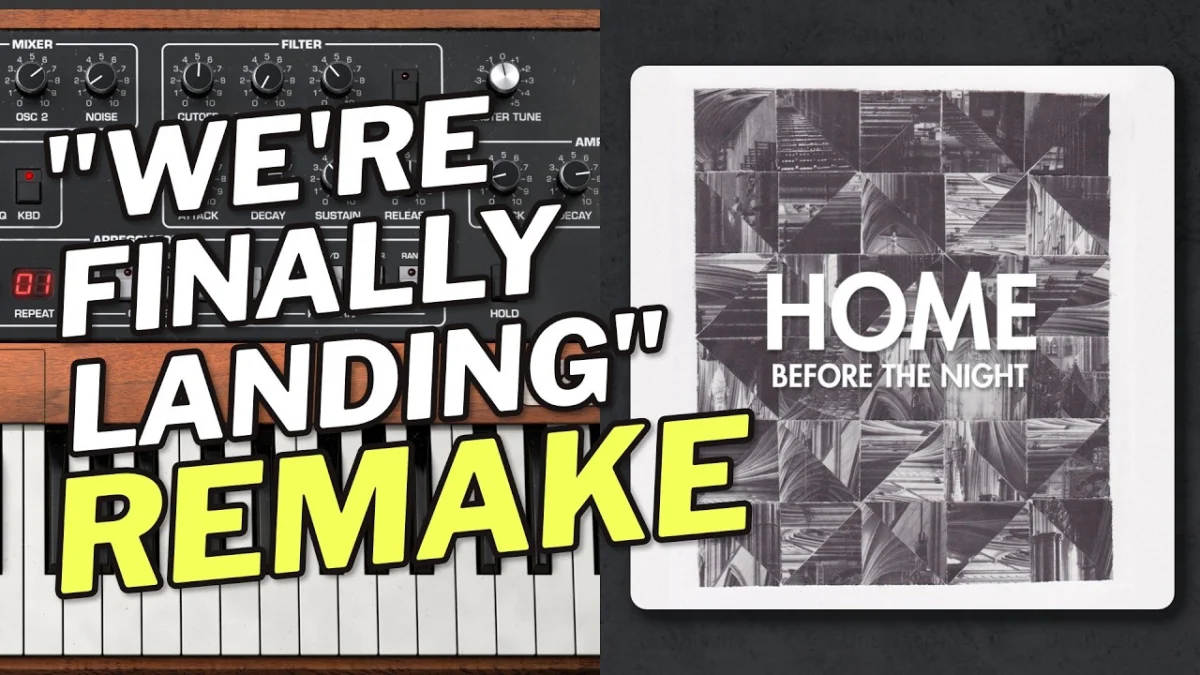
We’re Finally Landing is a track by the synthwave artist HOME, the project of Randy Goffe, from his 2014 album Before the Night. The album was released the same year as his debut album Odyssey, which features his best-known track Resonance.
HOME’s music leans toward the chillwave side of synthwave, using lo-fi textures, mid-paced beats, and nostalgic chord progressions to create a hazy, dreamlike atmosphere. Goffe has mentioned using Arturia synths in the past, particularly Arturia Mini V3, as well as printing tracks to cassette and slowing them down to achieve that woozy lo-fi sound.
Firstly, here’s my remake, which doesn’t use any samples from the original:
Chord Theory
The whole song is built around an eight-bar chord progression of Dadd2 | Em | G | Gm, with each chord playing for two bars. This is a I | ii | IV | iv progression in the key of D major, with the final chord providing the main harmonic twist.
The final chord, G minor, is a borrowed chord taken from the parallel key of D minor. It introduces a dramatic, melancholy quality before the loop restarts, and you can also hear this IV → iv chord trick in songs like Creep by Radiohead, among many others.
In the last bar, the highest note plays an E over the Gm chord, making it a minor 6 chord. This chord has the dark quality of the minor 3rd with the brightness of the major 6th, creating a bittersweet sound.
- Chords00:00

This article can be viewed with either accompanying music notation or MIDI piano roll diagrams.
Brassy Synth
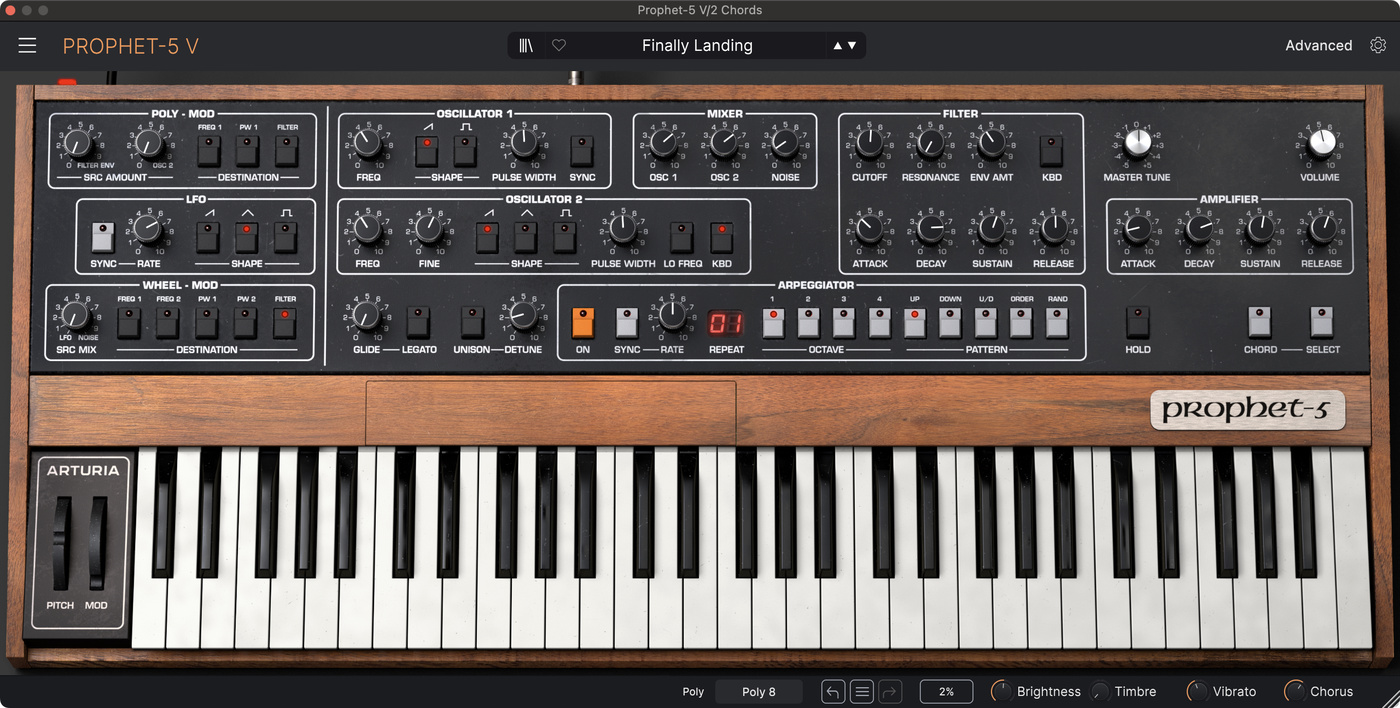
The chord progression opens the song on its own, played on a mid-range brass-style synth before the rest of the arrangement is introduced. I recreated it using Arturia Prophet-5 V, with the two oscillators detuned against each other. Oscillator 2 is fine-tuned to +10 cents, which creates a thick, slightly chorused sound.
There’s also some slow vibrato, which I recreated using the advanced modulation section in Prophet-5 V. The LFO rate is set to 2.48 Hz, which is on the slow side for a vibrato effect, and the vibrato width is quite wide, giving it a woozy, nostalgic feel. Both reverb and delay are fairly heavy on this sound, which I recreated using Valhalla VintageVerb with 20% wet and Ableton’s Delay device set to 16% wet.
- Brass00:00
The Arpeggiator
The second sound to enter is the rapid descending arpeggios, which are one of the most interesting elements in the song. The patch itself is straightforward: a single sawtooth wave with the lowpass filter set to around 2.5 kHz and resonance around 2. I used the onboard arpeggiator in the Prophet-5 V set to 32nd notes, with a second octave added and set to the ‘down’ pattern.
- Arpeggiator00:00
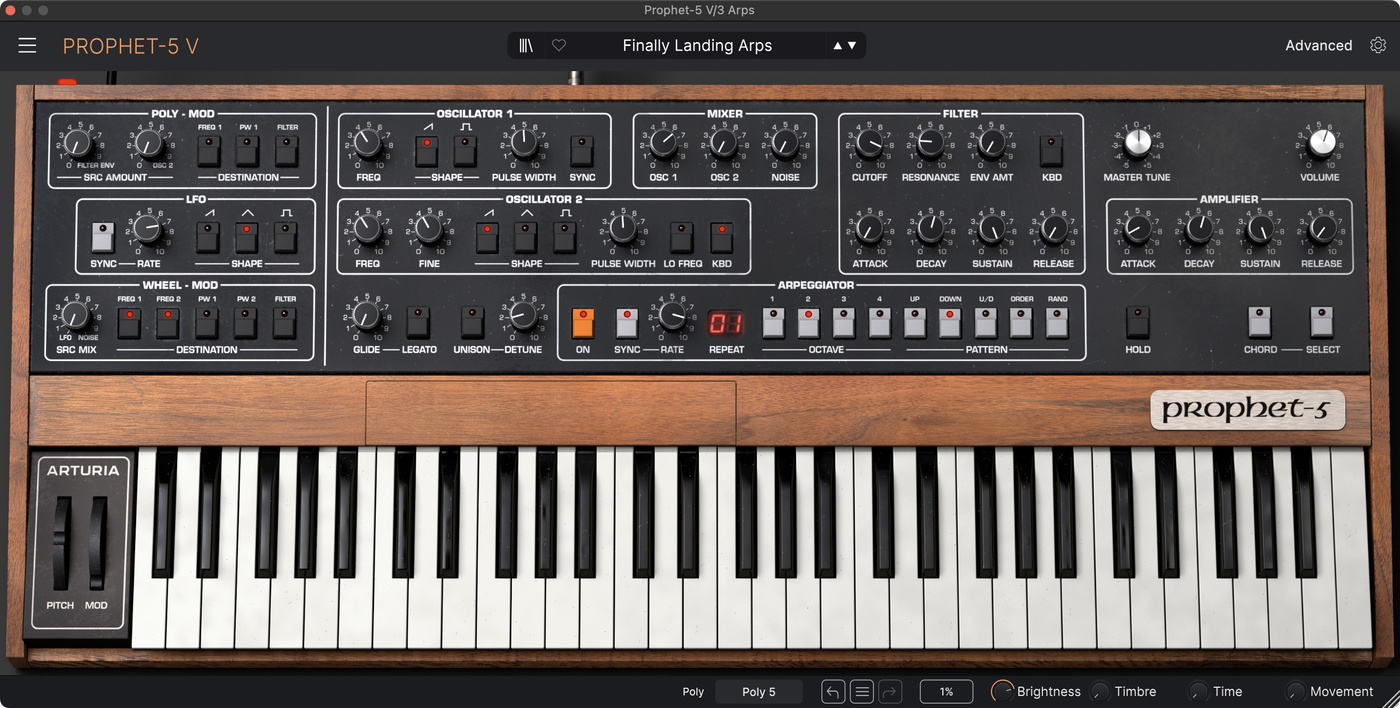
What makes this track clever is that it varies the number of notes in the arpeggio, which subtly shifts the rhythm. For the first three bars, the arpeggiator plays four-note chords across two octaves, giving eight 32nd notes per cycle, so the pattern resets every beat, which creates a steady 1/4 note rhythm.

In the final bar, the chord drops to three notes. Across two octaves, that gives six 32nd notes per cycle, which equals a dotted 1/8th note, introducing a slight syncopation and a sense of speeding up.

Lead Synth
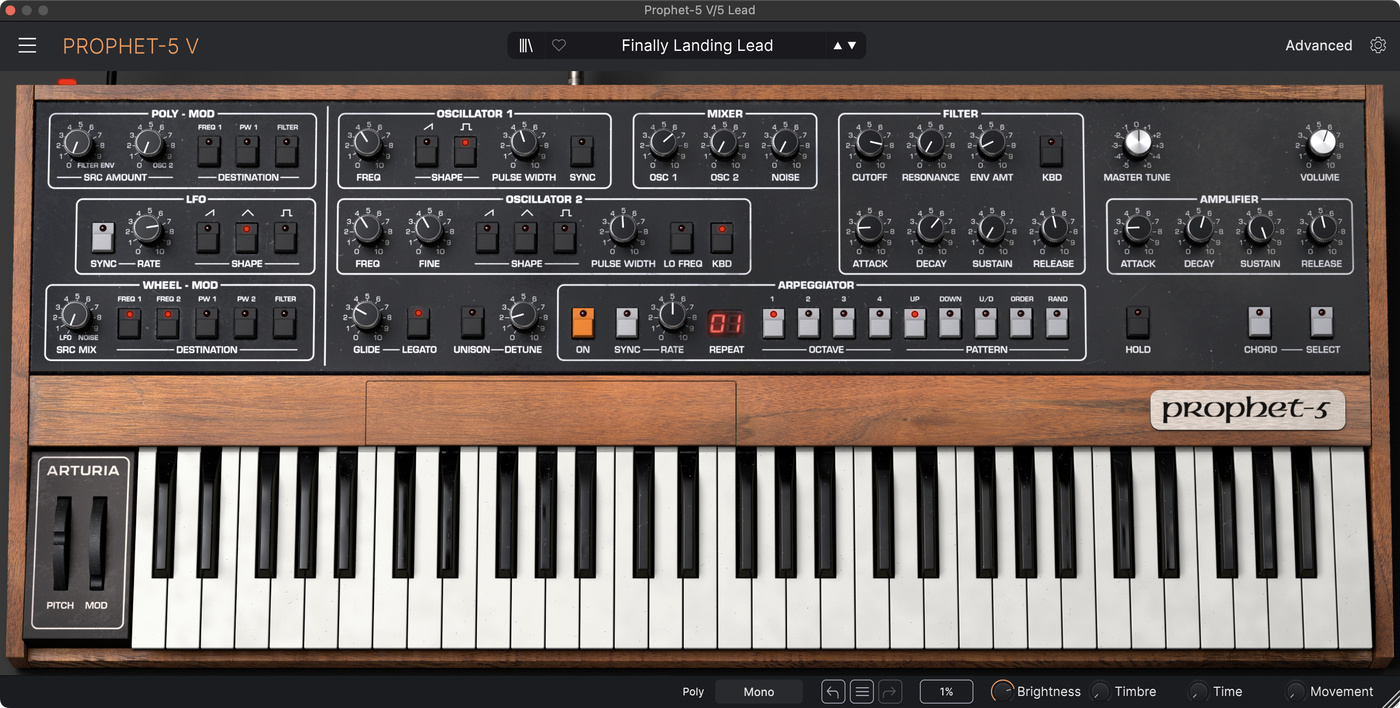
A square wave lead comes in around 1:46 and carries the main melody from that point. Square waves have a naturally hollow, mid-forward sound that sits differently in a mix compared to a saw, and this one is fairly bright. There’s a touch of glide applied, set to 0.05 seconds in Prophet-5 V, which is short enough that you only really hear it on wider interval jumps.
- Lead Dry00:00
This sound is absolutely swamped in delay and reverb and has a high-pass filter around 970 Hz to cut the bass and give it an airy sound. I used Ableton’s Delay device set to 50% wet and Valhalla VintageVerb also at 50% wet, so the dry signal and the effected signal are roughly equal in volume. At that level, the reverb and delay become part of the sound itself rather than just adding space. I added compression after the delay and reverb to help make the effects even more pronounced.
- Lead w/Effects00:00
Putting It All Together
The bass in my remake is a stacked square wave sound spanning two octaves, recreated using Arturia Mini V4. The envelope is a fast pluck on both the filter and the VCA, so it hits fast and gets out of the way. It’s also heavily overdriven using the drive knob on the front panel of the Mini V4, which gives it a gritty, saturated edge that helps it cut through the mix.
- Bass00:00
For the drums, I used my own DrumVerse R8 sample pack for the hi-hats, and Vengeance samples for the kick and snare. The snare got a little extra treatment, warmed up with Soundtoys Decapitator and a fair bit of EQ to match the original snare sound.
- Drums00:00
We’re Finally Landing has a particularly noticeable sidechain compression effect. When the drums kick in around the 1:05 mark, everything ducks noticeably, giving the mix that rhythmic pumping effect that’s common in this style.
I grouped all four synth tracks to a Group track in Ableton Live with sidechain compression to the kick drum on the Group track. The threshold is set quite deep with a fast attack and fast release, which is what creates that exaggerated, dramatic pump when the kicks hit.
- Sidechain00:00
Free Presets
 Thanks for reading! The presets created for this remake are available using the download button below. Have fun exploring the sounds and use them as a starting point for your own nostalgic, lo-fi productions.
Download Presets
Thanks for reading! The presets created for this remake are available using the download button below. Have fun exploring the sounds and use them as a starting point for your own nostalgic, lo-fi productions.
Download Presets
Plugins Used
The following plugins were used in this article. Some links are affiliate links, which help support Reverb Machine.
- Arturia Mini V4
- Arturia Prophet-5 VMini V4 and Prophet-5 V are both included in Arturia V Collection Intro.
- Soundtoys Decapitator
- Valhalla VintageVerb
Remake Project
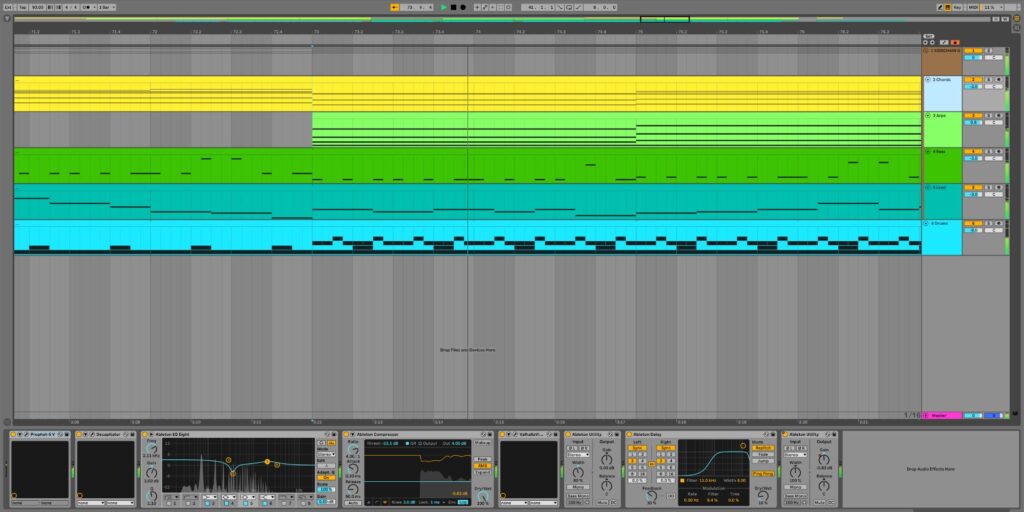
Explore the complete Ableton Live project behind this remake, including the analog-style processing, drum sounds and mixing.
Requires Ableton Live 11+ and third-party plugins. All tracks are frozen, so you can still explore the projects even if you are missing plugins. See below for the full plugin list.
Get the full Ableton Live project for this remake, including stems and MIDI plus access to a full year of remake projects on Patreon.
Get the Project