
How Trent Reznor & Atticus Ross Made In Motion
Updated June 1, 2026

The Social Network was released in 2010 and marked Trent Reznor and Atticus Ross’ first feature-length film score. Directed by David Fincher and written by Aaron Sorkin, the film would become the start of a long-running collaboration between Fincher, Reznor, and Ross.
The sound of The Social Network is dark and brooding, with emotive pianos often underpinned by electronic synth layers instead of a traditional Hollywood orchestra. The duo have since scored dozens of films and television projects, winning Oscars and Grammys for their work on The Social Network and Soul.
In this article, I’ll look at the sounds of the track In Motion, the song that plays during the beginning of the film as Mark Zuckerberg hacks Harvard’s databases to build Facemash. The track combines modular synth sequences, chiptune-inspired leads, and noisy guitars over a dance-inspired four-to-the-floor electronic beat.
Here’s my remake, which doesn’t use any samples from the original song:
A Synthetic Network
The roots of The Social Network soundtrack can be directly traced back to Ghosts I-IV, Nine Inch Nails’ 2008 instrumental album. When David Fincher reached out to them to score The Social Network, Fincher had already used material from Ghosts I-IV as a temp score to set his desired mood for the film. Two tracks from Ghosts I-IV were reworked for The Social Network soundtrack: Ghosts IV – 35 became A Familiar Taste and Ghosts II – 14 became Magnetic.
Well, the way this one worked is that with that 40 minutes of material he had created, he used the Ghosts material. From that I thought I could tell what he wanted us to do. I could also see that for a movie that is primarily people talking in a room, how important the emotion and tempo of the music could drive the film. – Trent Reznor (Drowned in Sound)
David Fincher also named Vangelis’ Blade Runner soundtrack, Tangerine Dream, and Wendy Carlos’ Tron soundtrack as reference points for the film’s sound, which guided Trent and Atticus to focus on synth-heavy compositions instead of taking the traditional orchestral route.
The multitrack stems for In Motion and On We March were released as part of an official remix competition in 2010. The stem names provide unusually strong clues about the instruments used on the soundtrack, revealing synths such as the ARP Odyssey, Korg MS-20, and Analogue Solutions Vostok.
Bass Synth
In Motion is built entirely around a 4-bar loop that repeats for the entire composition. It’s centred around a plucked bass synth which starts the track over a four-to-the-floor kick drum.
In the stems, the bass track is called Oddity, so this track was likely recorded using the GForce Oddity plugin, which is a software emulation of the Arp Odyssey. Trent Reznor mentioned Oddity in a 2005 Keyboard Magazine interview, where he called it one of his favourite softsynths.
The In Motion bassline is a layered sound with a main pluck and a quieter high melodic line. I recreated this patch using Arturia Jup-8 V4 using two sawtooth waves spread 19 semitones apart, so the higher oscillator plays an octave and a fifth above the lower oscillator. The original is also a wide stereo sound, so I used Jup-8 V4’s unison mode with three voices, maximum Pan Spread, and only a small amount of detune.
The high layer plays the major 3rd (+4 semitones) of each bass note, which combined with the fifth oscillator in the bass patch turns every bass note into a major triad chord. The melodic layer is low in the mix and panned to the left; it also doesn’t play on every single note.
- Bass Pluck 00:32

The kick drum and offbeat hi-hat come from the Roland TR-909 drum machine. This is a classic drum sound that instantly evokes ’90s dance music.
- Drum Beat 00:24
Odyssey Sequence
The next sound is an ascending synth sequence, which is called Odyssey in the stems, so it likely came from the Arp Odyssey. Interestingly, Trent used both the hardware Arp Odyssey and a software emulation of it on the same track.
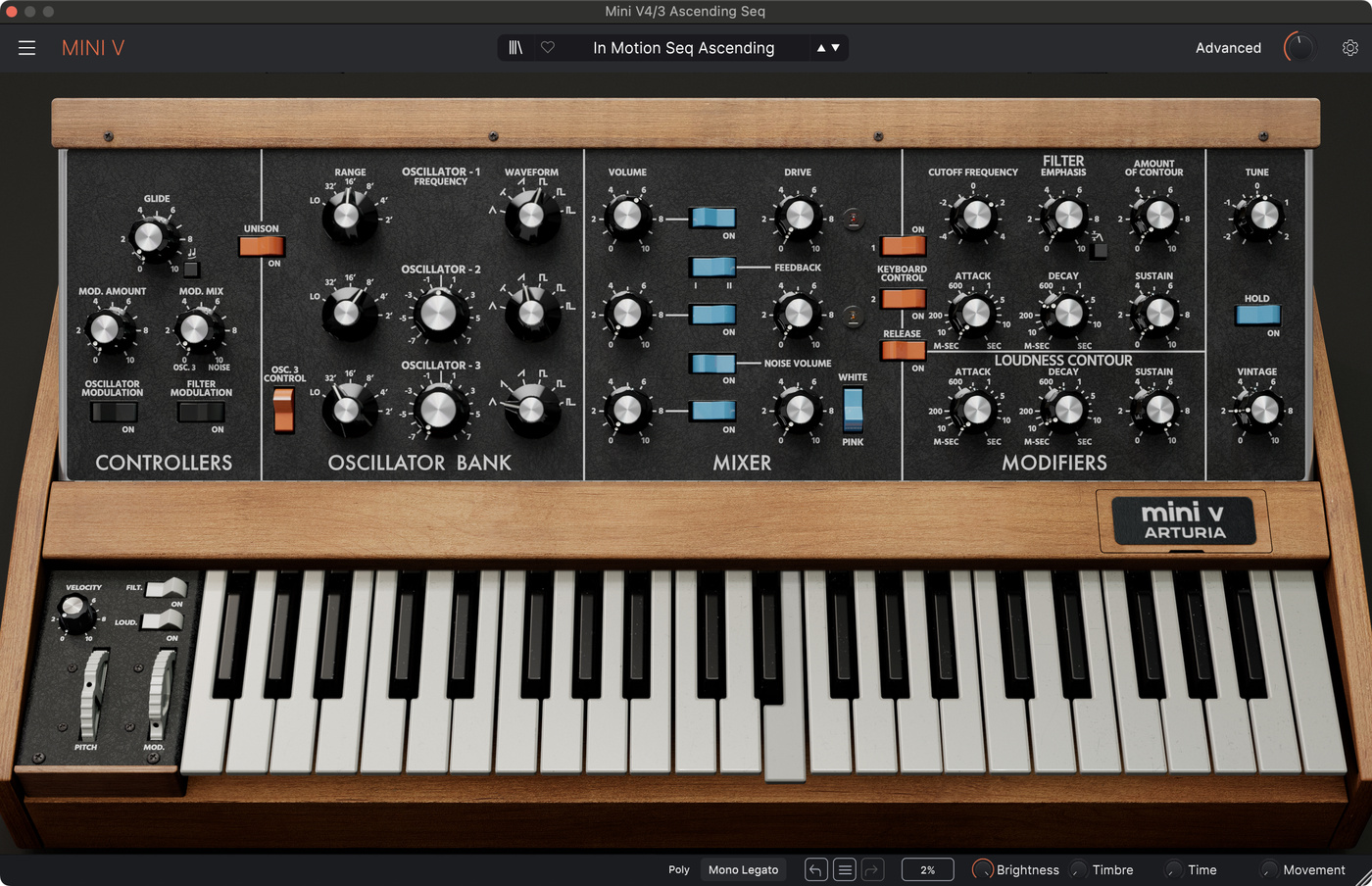
The patch is a simple square wave sound with the filter set to around 2000 Hz and no keyboard tracking. For my remake, I recreated the sound using Arturia Mini V4.
- Odyssey Arp 00:17
Vostok Sequence
The next synth is the first of two heavily modulated sequencer tracks in In Motion. The track in the stems is called Vostok, which means it came from Trent Reznor’s Analogue Solutions Vostok, a semi-modular analogue synth with a pin-matrix and a joystick, making it somewhat reminiscent of the EMS Synthi.
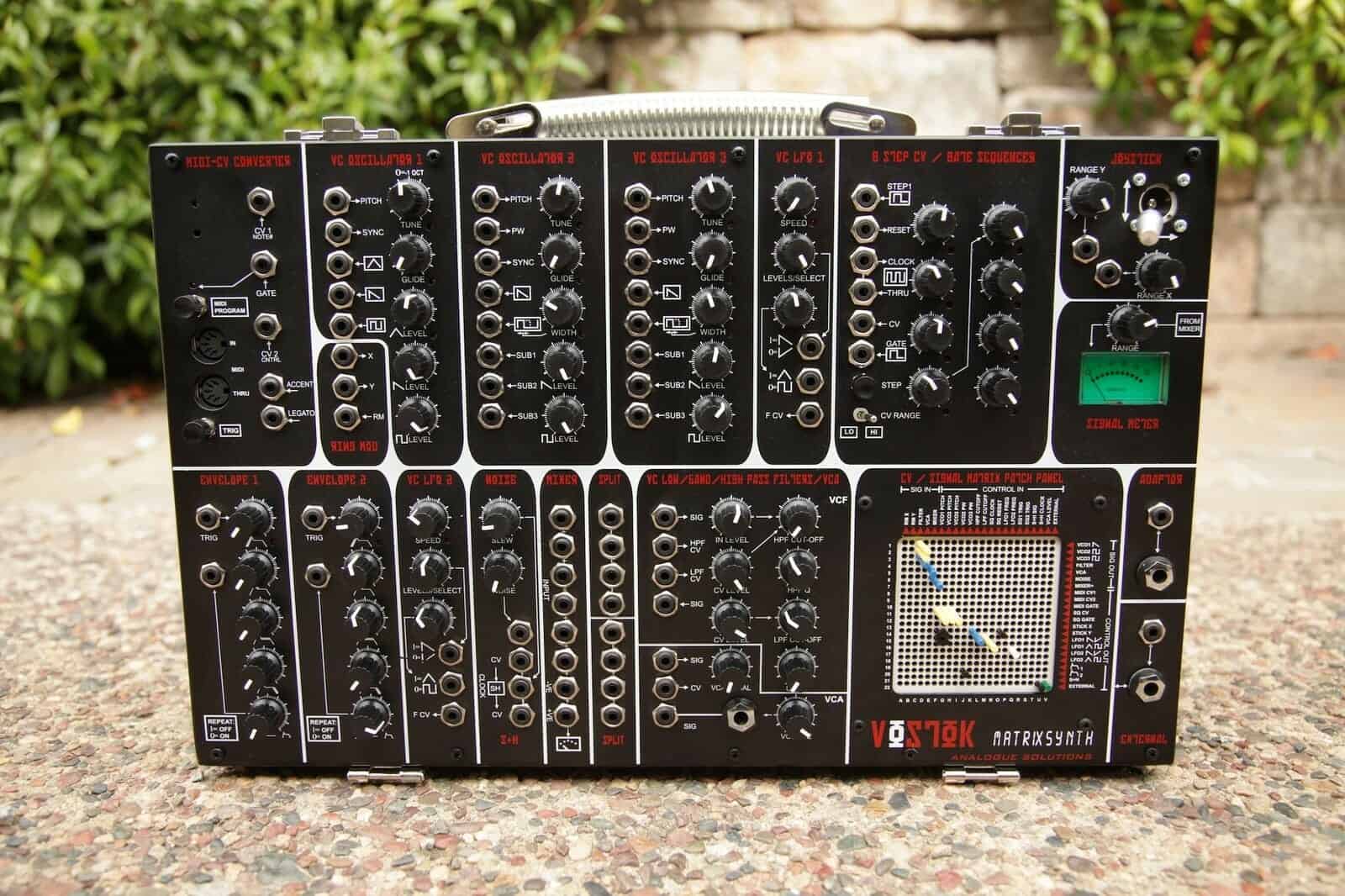
The Vostok synth sequence in In Motion is a simple, octave-jumping sequence that riffs on D throughout the song. Despite only playing one note, the sequence uses LFO modulation to create interesting movement that brings the sequence to life, and adds a sense of motion to the composition (heh).
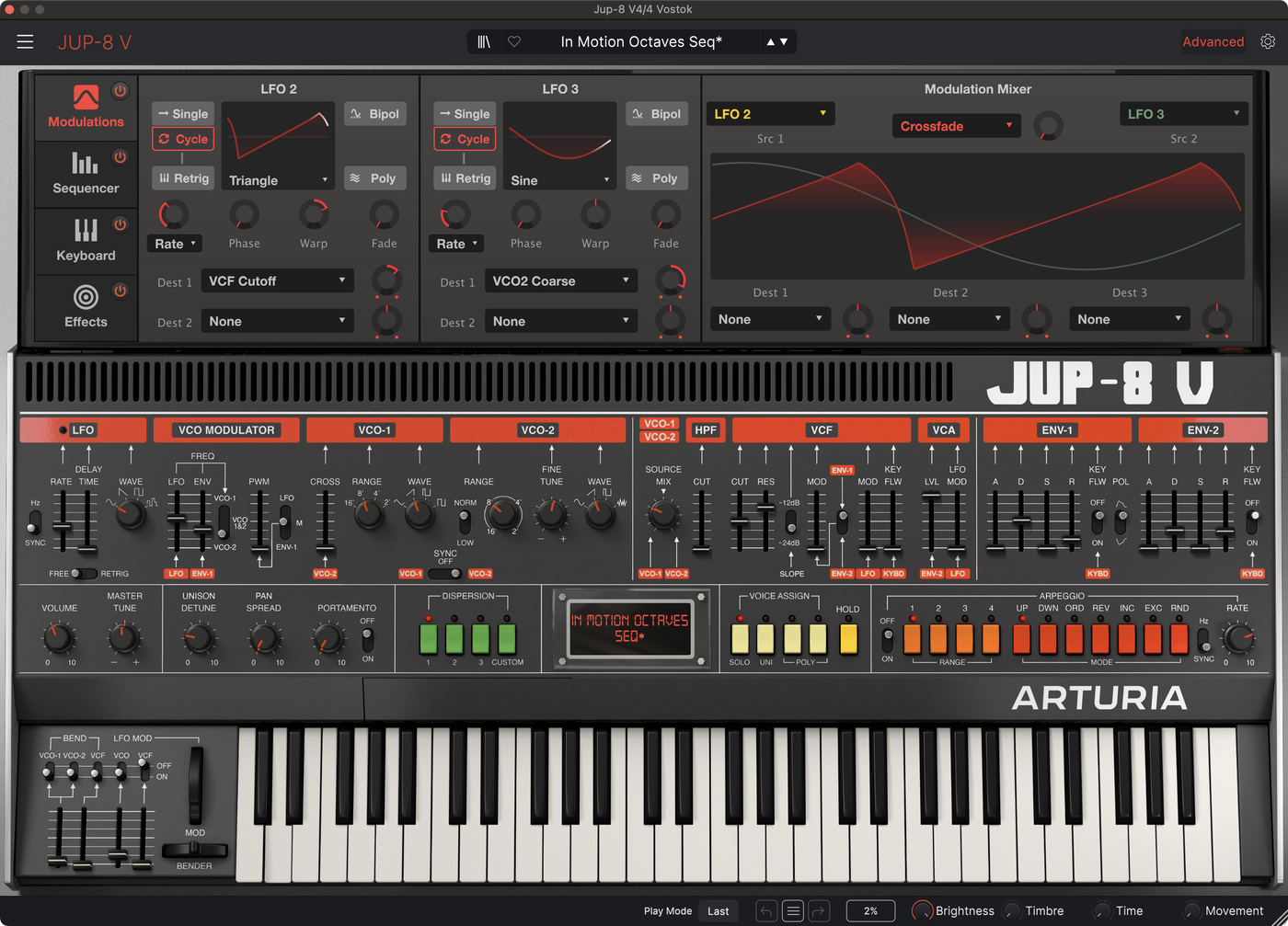
I recreated the patch using Arturia Jup-8 V4, as it has loads of LFOs. My patch modulates the filter with a skewed bar-length triangle wave from LFO 2, and modulates the oscillator sync with a 2-bar long sine wave from LFO 3. The modulated oscillator-sync causes the sound to slowly become thinner as it’s modulated.
- Sequence 00:17
- w/Modulation 00:17
- w/Beat 00:33
Melodic Plucks
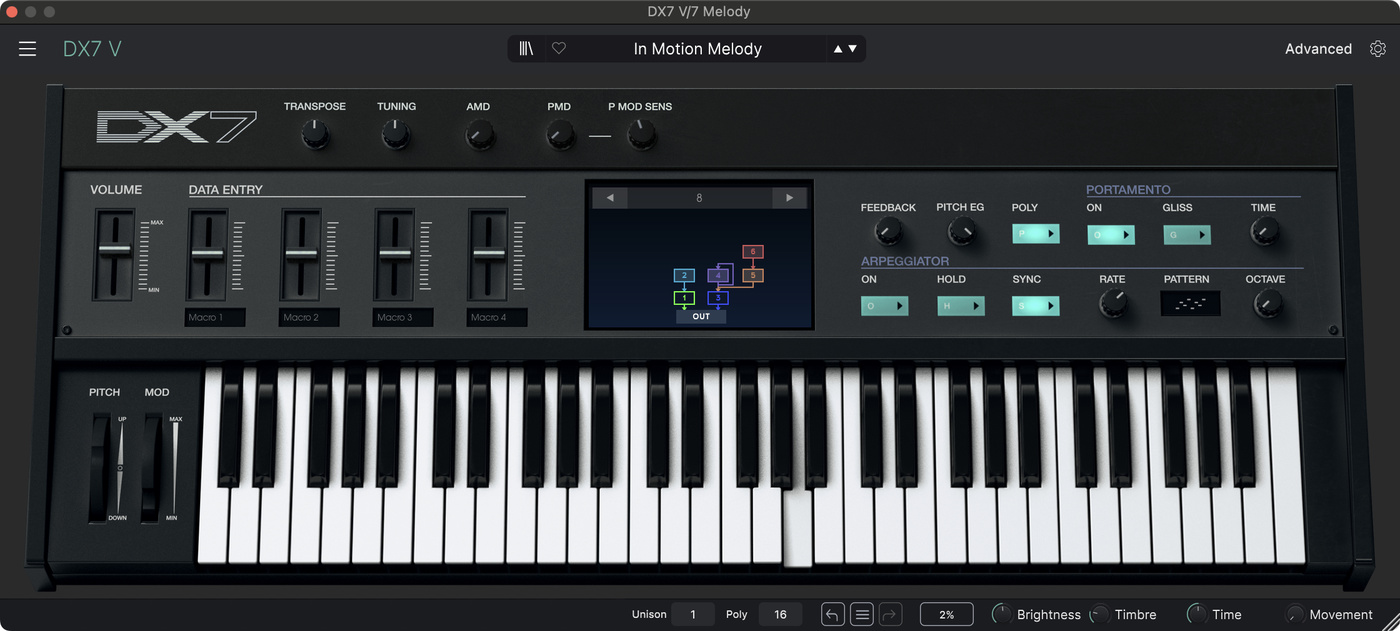
The main melody of In Motion is played on a synthetic plucked sound that sounds a little like a piano. Unfortunately, the stems don’t offer any clues as to where this sound came from. To my ears, it has an FM-like character, so I recreated it using a custom Arturia DX7 V patch. I’m aware that using a DX7 emulation in a Trent Reznor remake is mildly sacrilegious (he hates them), but at least I didn’t use a factory preset.
This is the most ambient track on In Motion, so add plenty of reverb and delay. I also used the Grain Delay effect in Ableton Live to add some glitchy, granular character.
- DX7 Dry 00:15
- DX7 w/effects 00:19
Korg Lead
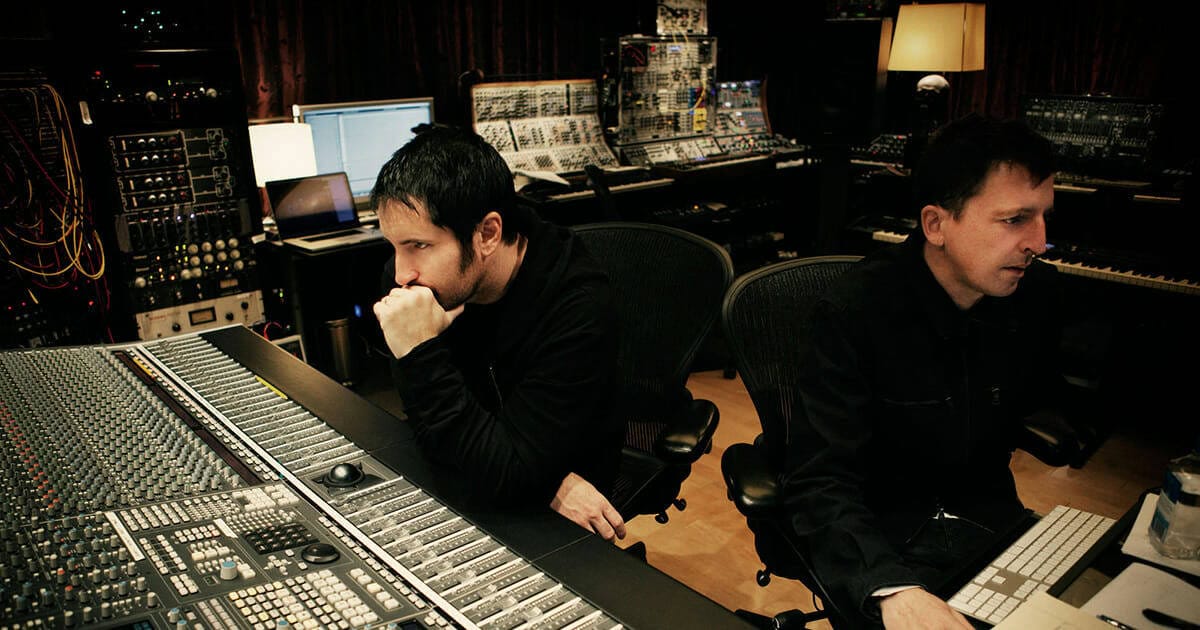
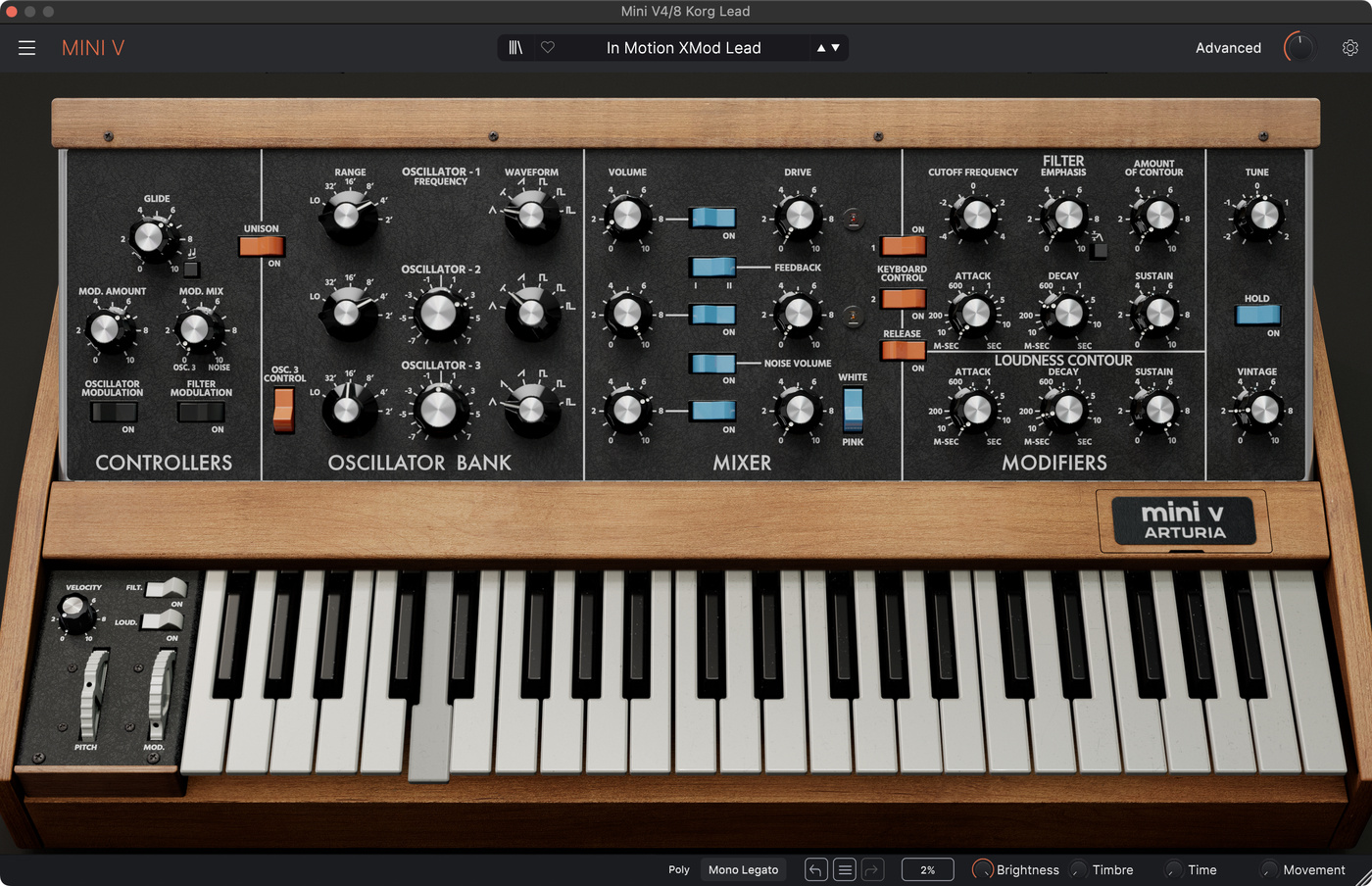
At the 1:13 mark, a synth lead enters, playing a sustained melody that follows the bassline progression. The stem is called Korg, so I think the sound was created on Trent Reznor’s Korg MS-20, which can be seen below, between his Arp Odyssey and Swarmatron. The lead patch uses two oscillators, a quiet triangle wave playing the root note and a louder sawtooth wave tuned up 4 semitones so that it plays the major 3rd of every implied chord.

The patch also uses cross-modulation, which means that one oscillator is used to modulate another oscillator’s pitch. Using an oscillator to modulate pitch, instead of an LFO, results in audio-rate modulation, which can sound buzzy or metallic depending on the modulation amount.
Because the modulating oscillator’s rate is controlled by the keyboard, higher notes result in faster modulation than lower notes, which can result in different textures for different notes.
I recreated the patch using Arturia Mini V4, using VCO3 as the modulating oscillator. To add the cross-modulation, make sure OSC 3 has keyboard control enabled, set it to a 16′ triangle wave, then in the controllers section set the mod amount to between 6 and 7, modulating the oscillators.
For saturation, I used Soundtoys Decapitator, a plugin Trent Reznor uses and one that appears throughout this remake project. That said, Mini V4’s built-in Drive control can get good results on its own.
- XMod Lead 00:24
- w/Decapitator 00:24
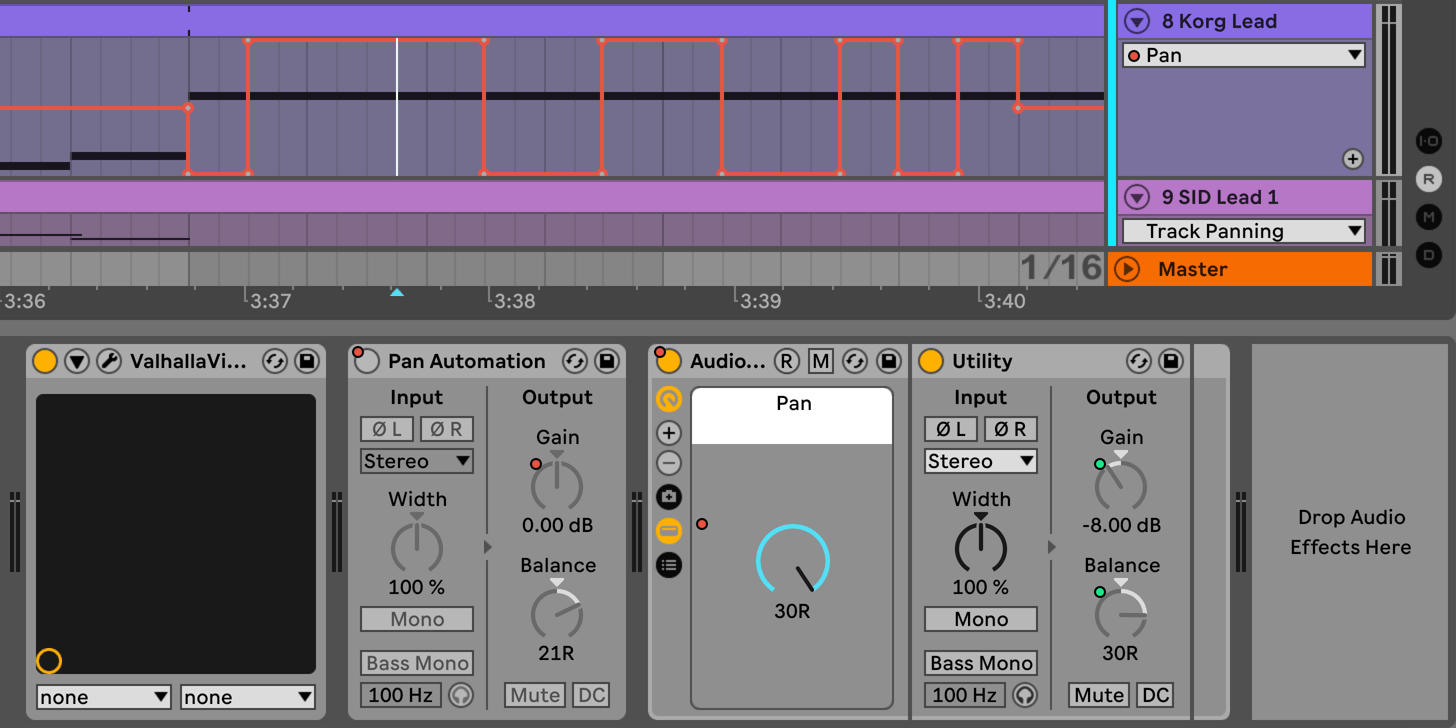
For the second half of the song, the melody develops a subtle panning effect and rhythmic pulse. I recreated the pulsing effect using Ableton Live’s Arpeggiator, which repeatedly retriggers a single sustained note to create a gated eighth-note feel. The panning movement isn’t perfectly even, so instead of using Auto Pan I automated the left-right movement manually to better match the original recording.
- Melody 2 (Panning Effect) 00:24
Outro Sequence
After the breakdown, a second modular synth patch is introduced. In the stems, this track is called Indi Synth; I’m not 100% sure, but this might mean that it came from the Access Virus Indigo. In this image of Trent’s studio, a similar Access Virus TI can be seen below his Vostok and Cwejman synths.

This sequence is interesting because it doesn’t play a repeating pattern. Instead, it plays a stream of notes that never repeat. The sequence may have been created by using sample-and-hold & quantizer modules to generate a random sequence, but again, I’m not 100% sure.
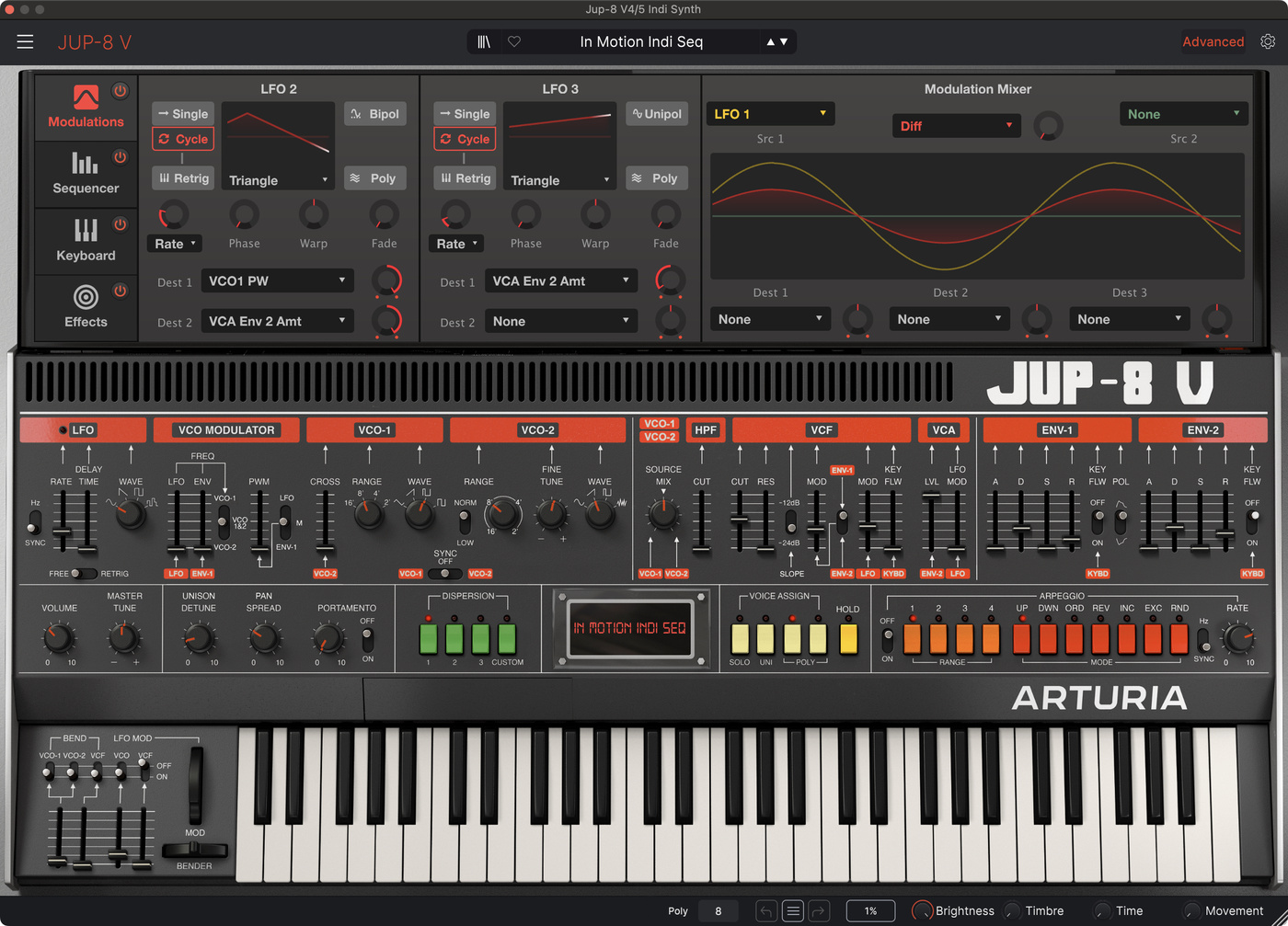
I recreated the sound using Arturia Jup-8 V4, this time with LFO 1 opening the filter, LFO 2 modulating the square oscillator pulse-width and LFO 2 and LFO 3 both controlling the VCA envelope amount at different rates. This creates tons of movement that combines with the random sequence to create a very organic-sounding patch that sounds unique on each repeat with minimal input.
- Sequence 2 00:24
- Sequence 2 Modulated 00:24
Chip Leads & Arpeggios
In Motion makes heavy use of the Elektron SidStation, a hardware synth module built around the Commodore 64’s SID chip, a favourite with chip-tune artists. The SidStation was Elektron’s very first hardware instrument, released back in 1999.

To recreate all of the SidStation-inspired sounds in my remake, I used Arturia Jup-8 V4 exclusively. It’s not as faithful as a dedicated chip synth, but you can get surprisingly close by working in mono mode and sticking to simple saw, square, and PWM waveforms.
There are two SidStation leads in In Motion; the first is the gliding lead that plays at 3:30. This patch uses a thin pulse waveform; my Jup-8 V4 patch has pulsewidth set to 60% (in manual mode) which creates a thin sound. For the glide, I have Portamento set to 160ms, and there’s also a small amount of LFO vibrato in this patch.
- SID Lead 1 00:11

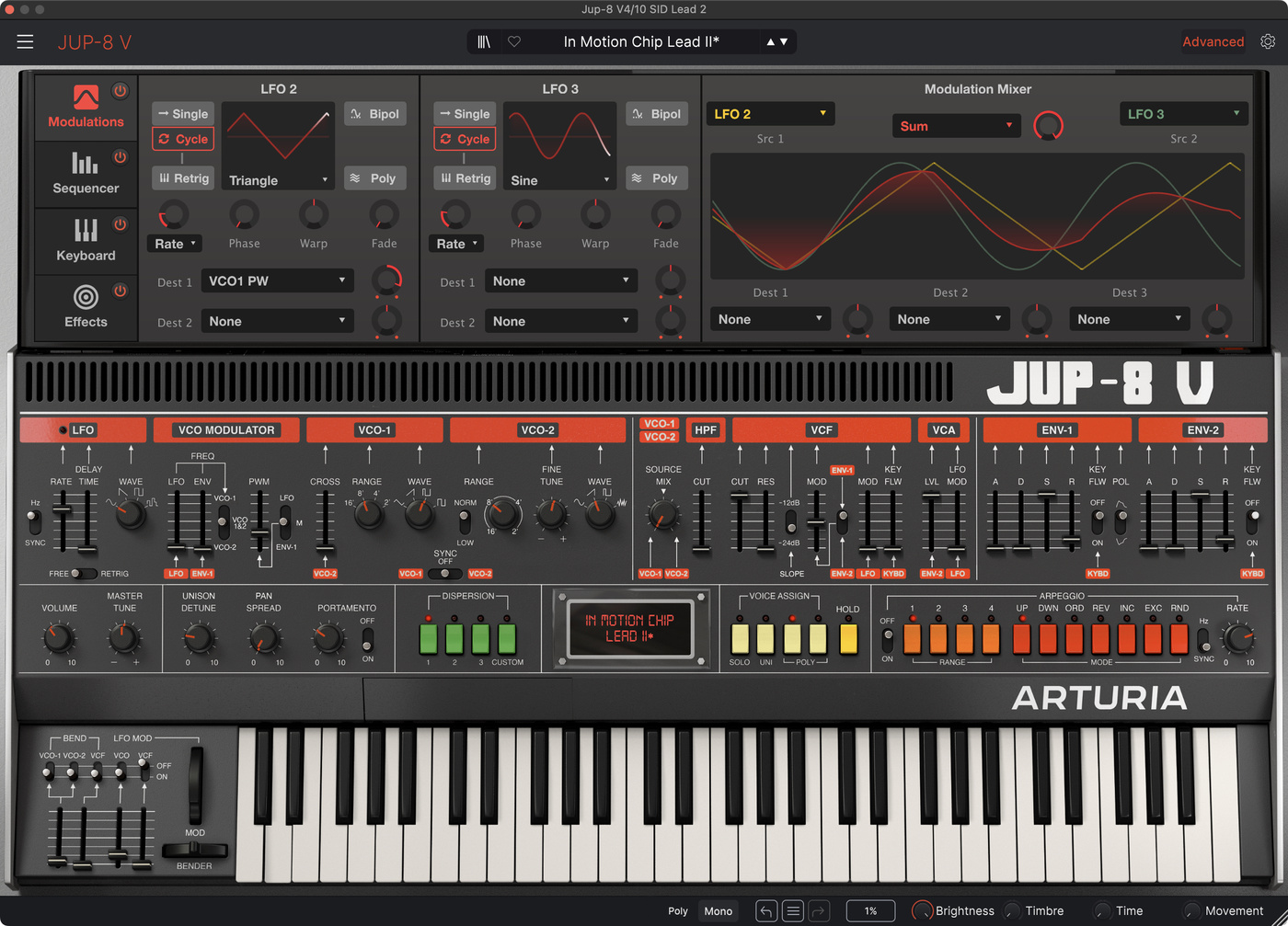
A second lead has the pulse width manually changed as part of the performance, which creates a super-thinned sound in certain parts of the melody. I used Jup-8 V4 again, but this time with LFO PWM coming from the advanced panel’s LFO2 as well as automation to the main pulsewidth control.
- Sid Lead 2 00:19
The SidStation is also responsible for the fast arpeggios that appear throughout the track as background textures and transition effects. These were likely created using the SidStation’s built-in arpeggiator, which allows individual arpeggiator settings for each of the SID chip’s three oscillators. This lets you create wild, highly complex arpeggios by layering up to three different simultaneous arpeggiator times and patterns.
These parts are largely free-time and extremely intricate, making them surprisingly difficult to recreate using a traditional arpeggiator. Instead, I used nine more instances of Jup-8 V4 with the arp patterns manually written out in Ableton Live’s piano roll. The patches use a mix of sawtooth, square and thin pulse waveforms. I added some manual volume automation to fade sounds in and out.
- Sid Arp 1 00:17
- Sid Arp 2 00:17
- Sid Arps Layered 00:17
- Sid Arps 3 & 4 00:18
- Sid Arps Layered 00:18
- Sid Transition 1 00:09
- Sid Transition 2 00:09
- Sid Transition Layered 00:09
Guitars
Finally, there are five guitar tracks in In Motion, and the first two make use of a guitar sustainer. The most popular guitar sustainer is the eBow, which I used for my remake; however, it’s possible that a Fernandes or Sustainiac guitar could have been used for the original recording of In Motion.
To stop the eBow from sounding too bright, I rolled the tone knob on my guitar all the way down and palm-muted the strings while using the eBow. These tracks double the melody played by the FM pluck parts. One eBow track is clean, and the other has light distortion.
- Guitar 1 (eBow Clean) 00:17
- Guitar 2 (eBow distorted) 00:17
The third guitar plays the same melody, but with aggressive tremolo picking and plenty of overdrive. The fourth and fifth guitars consist of aggressive guitar noise. For these tracks, I stacked Ableton’s Pedal device in Fuzz mode with Soundtoys Decapitator to create a more abrasive texture.
There’s some aggressive EQing on these tracks to clean up the noise produced by the distortion, as well as some stereoization to make the guitar tracks nice and wide.
- Guitar 3 (Tremolo) 00:18
- Guitar 4 (Noise 1) 00:17
- Guitar 5 (Noise 2) 00:17
Closing Thoughts
That’s all the main sounds of In Motion covered, phew! Below are some additional things I learned while putting together this remake:
- It’s a very dry mix with only a small amount of short reverb. Compared to all of the other remakes I’ve done, this is easily the one with the least amount of reverb. During the final mix, I frequently found myself turning the reverb levels down.
- There are no dedicated chord tracks in In Motion. Even the harmonic content mostly comes from interval layering within the bassline and lead sounds.
- There’s also no snare, the drum beat is just a 909 kick, offbeat 909 hi-hat, some modular synth hi-hats and sub-bass hits towards the end. This makes the track more suitable to play in the background of a film scene. The melodic layers are interesting, but the beat never gets distracting.
- Modulated sequences are a big part of the sound of In Motion, and show how thoughtful modulation can bring otherwise stale sequences to life.
Further Reading
Below are links to the interviews that I mentioned in this article:
- Drowned in Sound: Trent Reznor discusses The Social Network soundtrack. Discussion of the film, its influences, and the scoring process.
- Keyboard Magazine: Process and Purity. Discussion of Trent’s studio setup and favourite software instruments (as of 2005), including GForce Oddity and impOSCar.

wow! thank you, such a detailed and well organised explanation, and very nice work done for the cover!!
Thanks!
this is helping a lot with my viva voce in school! – thank you!
Wow – this is amazing. Thank you for sharing.
Is it possible to share the equing and plugin chain and settings used for the guitars, which sounds absolutely amazing.
This is extremely well researched, documented, written and packaged, thank you!
Absolutely love this soundtrack and having experimented very slightly with synth engineering it blows my mind you managed to recreate In Motion so well.
Amazing job!
Thanks for your articles.
This is awesome. I’m pretty new to synths, but always enjoy reading your posts. Super impressive and a great resource for learning from the greats.
Glad to hear it!