
How Vangelis Created Tears in Rain from Blade Runner

Blade Runner was released in 1982; it was directed by Ridley Scott and featured an almost entirely electronic soundtrack by Greek composer and synthesizer maestro Vangelis. The film became a cult classic and one of the most influential science-fiction films ever made. In 2017 it received a direct sequel, Blade Runner 2049.
Vangelis started his career with the prog-rock band Aphrodite’s Child before composing soundtracks for films. Following the success of Chariots of Fire in 1981, Vangelis was hired to score Blade Runner. In contrast to the uplifting, rich sound of Chariots of Fire, he composed a dark, moody, often ambient soundscape for Blade Runner.
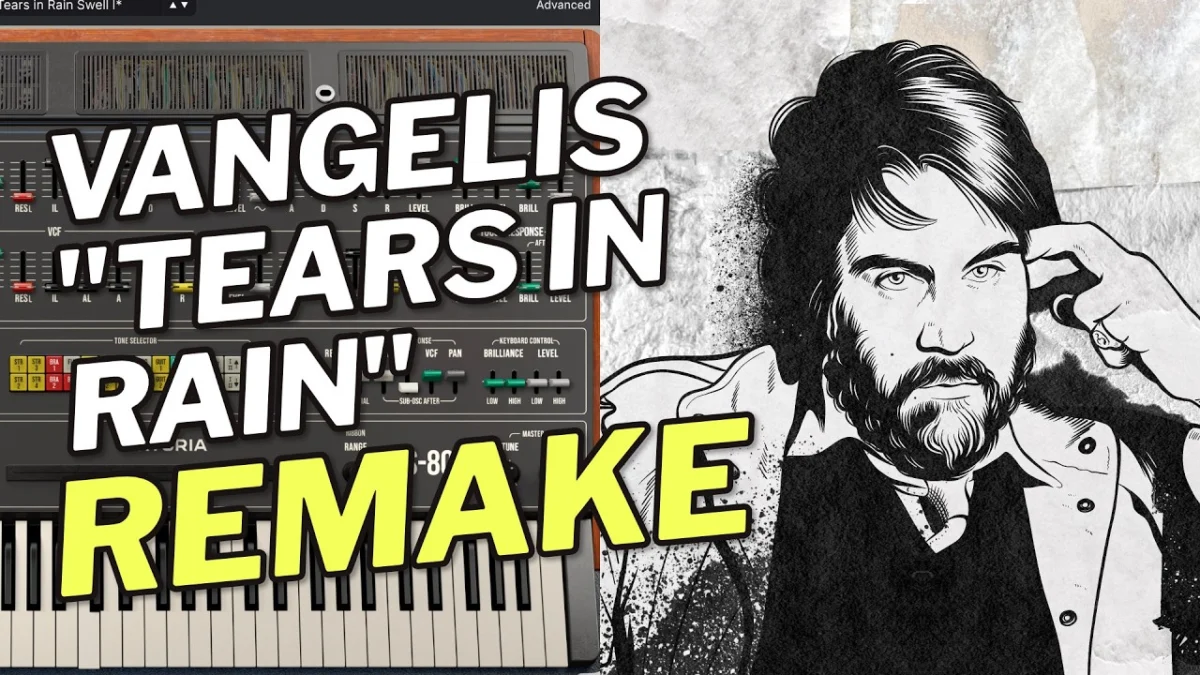
In this article, I’ll look at the synths used in the song Tears in Rain, which plays during the film’s final scene, as Rutger Hauer’s android Roy Batty gives his iconic “all of these things shall be lost…” monologue. The 2017 sequel, Blade Runner 2049, features a faithful reprise, retitled Tears in the Rain, by Hans Zimmer & Benjamin Wallfisch. Here’s my full remake of the original:
Vangelis Synths
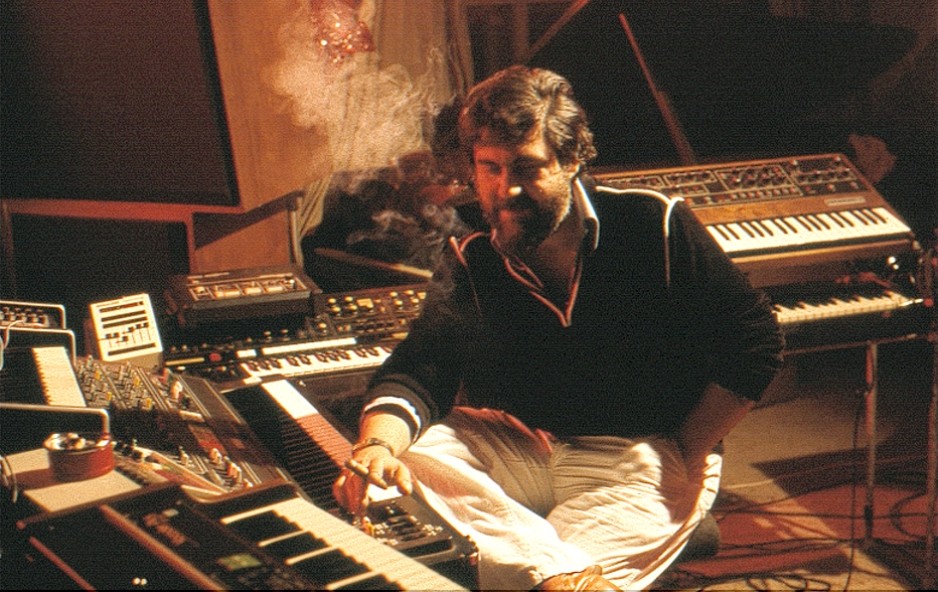
Vangelis had his own music studio, Nemo Studios in London, which was built around his improvisational approach to composition and performance, which he viewed as inseparable processes. While working on Blade Runner, he filled his studio with video monitors and would improvise directly to new footage as it arrived, performing cues in real time rather than composing them separately on paper.
This was also before the widespread adoption of SMPTE timecode, so much of the score had to be synchronised manually. Some of the more ambient passages were performed freely to picture rather than to a metronome. His tape-based recording system was also inherently noisy, so he relied on dbx noise reduction and kept overdubs to a minimum.
He first adopted the Yamaha CS-80 on his 1977 album Spiral and frequently praised it in interviews for its expressive playing controls. The instrument became closely associated with his music and remained a central part of his setup throughout the late 1970s and 1980s.
Rhodes Melody
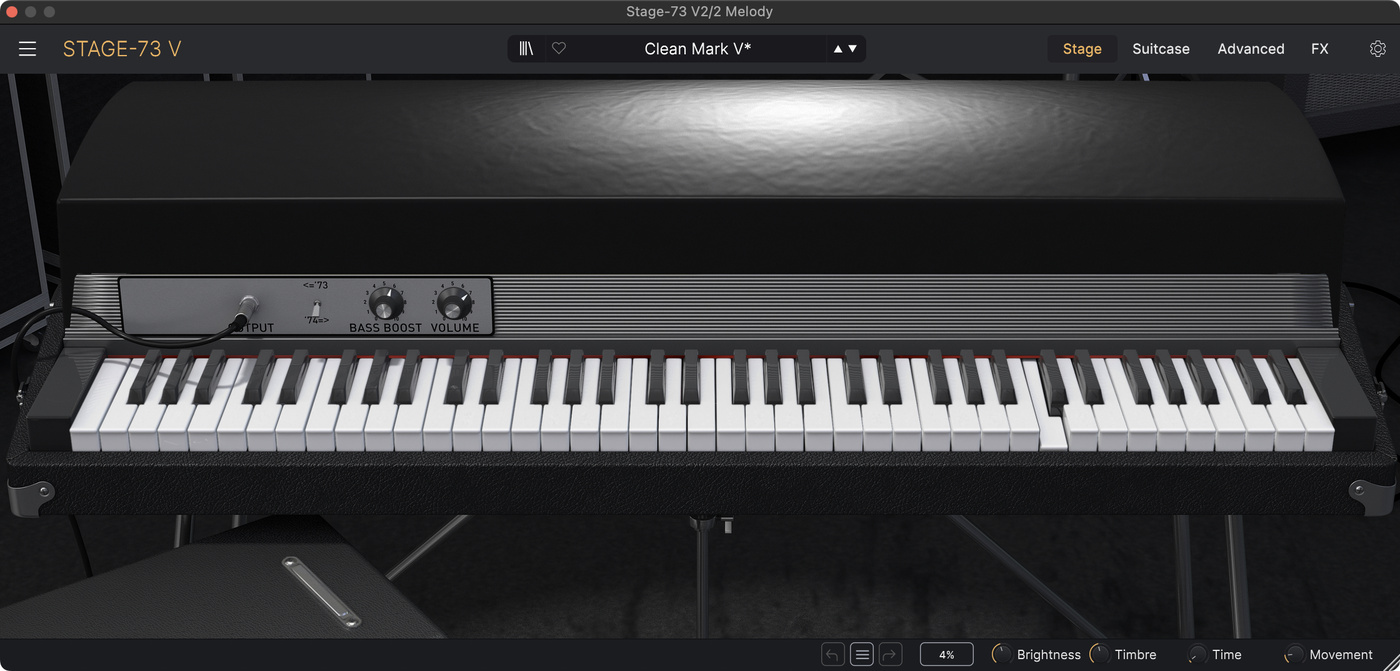
The melody of Tears in Rain is played on Vangelis’ Fender Rhodes electric keyboard, which he had modded with an onboard graphic EQ. I used the Arturia Stage-73 plugin with the default Clean Mark V preset for my remake. The original sound has a chorus effect, which I recreated using Ableton’s Chorus-Ensemble device in Ensemble mode.
- Rhodes Dry00:14
- Rhodes Chorus00:14
- Rhodes Reverb00:14
VP-330 Strings
The chords of Tears in Rain were played on the Roland VP-330’s lush string synth sound. The VP-330 was primarily marketed as a vocoder, but it doubled as a string machine with excellent string and choir sounds.
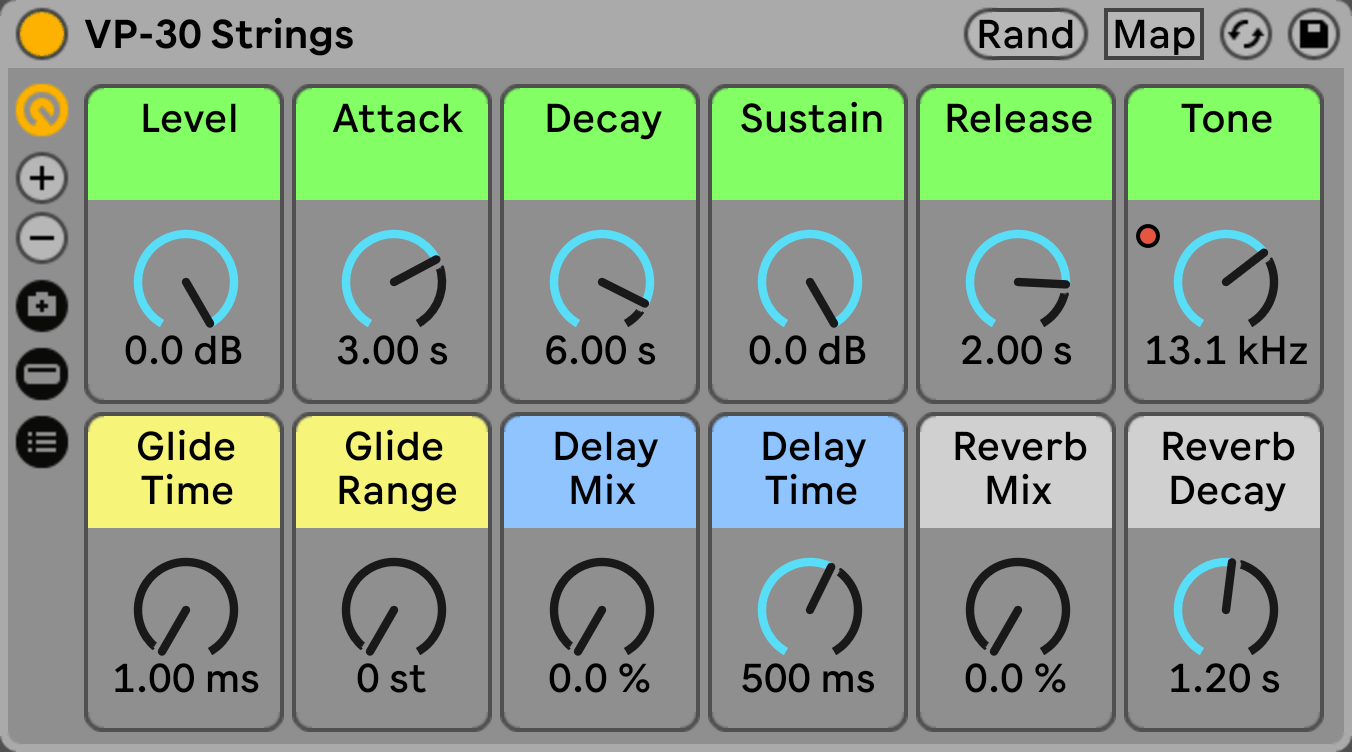
For my remake I used the Ableton Live VP-30 Strings rack from my own VP-30 pack, which I created by sampling a vintage VP-330 mkII. I automated the tone control and volume throughout the piece to keep the strings evolving and expressive. Vangelis may have recorded the string part while riding the VP-330’s tone fader during recording.
- Strings Dry00:40
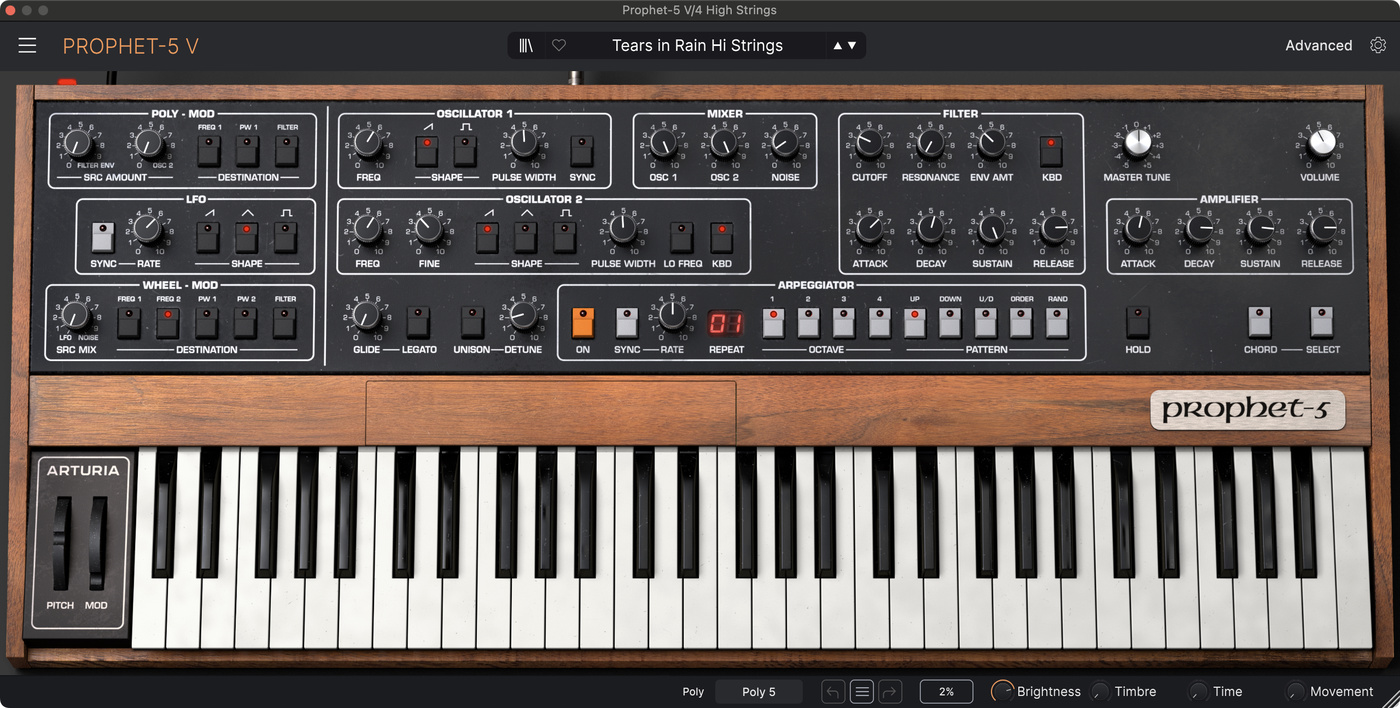
There’s also a higher strings sound which plays at certain parts of the song, which I recreated using Arturia Prophet-5 V. My patch uses the LFO and mod wheel to apply vibrato to only one of the oscillators, creating rich, natural oscillator chorusing. I also added Prophet-5’s chorus effect as well as some stereo widening in Ableton Live.
- High Strings00:23
CS-80 Brass
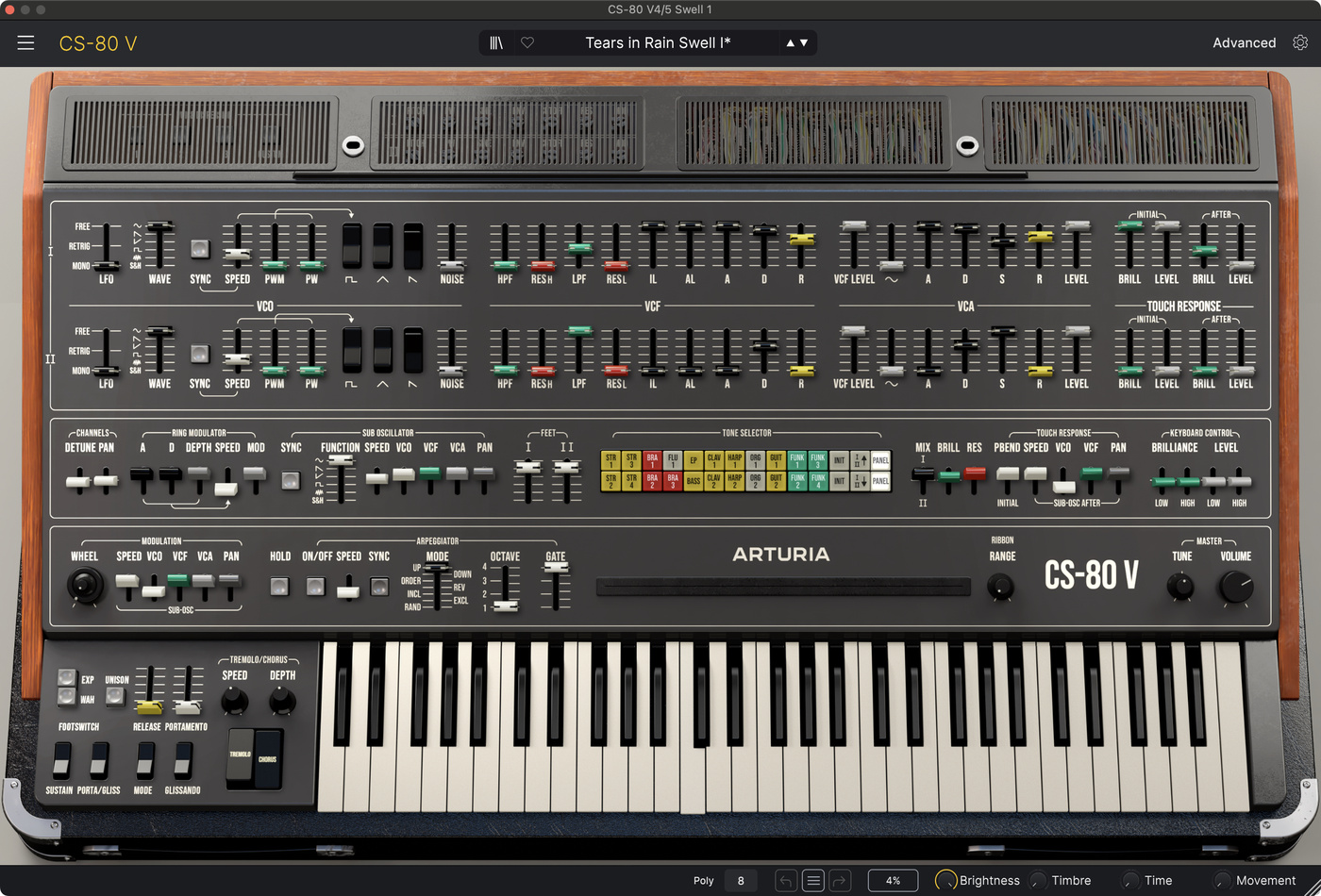
The brassy swells come from Vangelis’ Yamaha CS-80, which was his favourite synthesizer, to the extent that he reportedly owned four of them at one point. The CS-80 was revolutionary for its expressive performance controls. Unlike many synthesizers of the era, it featured velocity sensitivity and polyphonic aftertouch, allowing the brightness and volume of individual notes to respond to the player’s touch. For a highly improvisational musician like Vangelis, this made the instrument feel much more alive and responsive than contemporary synths such as the Prophet-5.
The CS-80’s velocity and aftertouch response can be adjusted using the Initial and After faders on the far right of the panel. If you listen closely to the original recording, you’ll hear the brass sound subtly changing in brightness and intensity from note to note, giving the performance an almost orchestral quality. For my remake, I created a custom patch in Arturia CS-80 V.
Another distinctive feature of the CS-80 was its large ribbon controller, which could be used for dramatic pitch bends and gliding effects. You can hear these descending slides towards the end of Tears in Rain. In Arturia CS-80 V, the ribbon controller can be controlled using a MIDI keyboard’s pitch-bend wheel.
- CS Brass00:18
- CS Brass High00:14
- CS Slide00:12
Blade Runner Reverb
The Blade Runner soundtrack has a huge, cavernous reverb sound that drenches most of the tracks, giving the otherwise dry-sounding CS-80 an epic sound. Vangelis’ reverb effect of choice was his Lexicon 224, which he used from 1980 onwards.
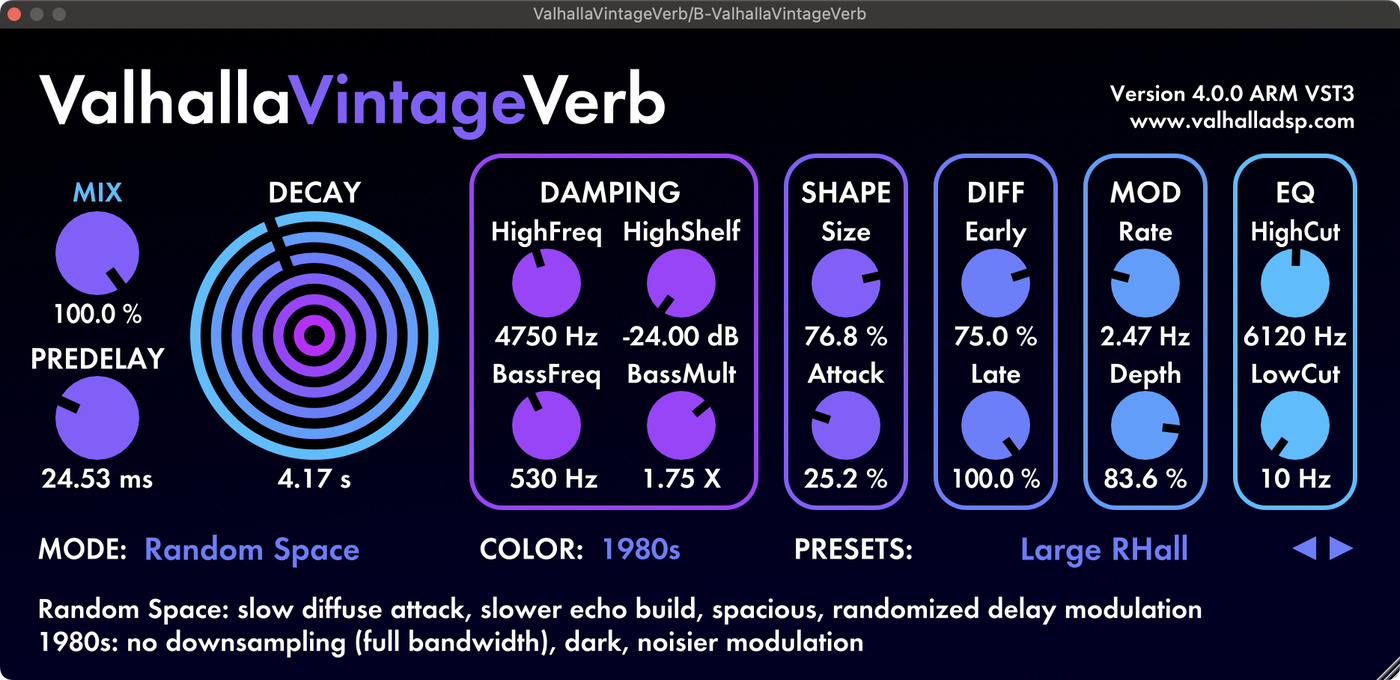
For my remake, I used Valhalla VintageVerb on one effect send and Ableton’s Delay device with a Space Echo-style setting, and then routed all of the tracks through them for massive ambience. Using send/delay tracks for reverbs rather than inserts (one plugin per track) mirrors how reverbs were used in studios in the ’80s, and tends to result in a more cohesive sound.
Further Reading
Vangelis’ work on Blade Runner has been well documented, and below I’ve listed some great resources for further exploration.
- The official Nemo Studios website is an invaluable trove of Vangelis information, including all the gear he used.
- Electronics & Music Maker interview from December 1984 where he discusses the CS-80 and improvisation.
- Reverb.com’s The Synth Sounds of Blade Runner with Justin DeLay.
- Ali Jamieson’s Replicating the Blade Runner Soundtrack article, with an extensive list of songs that sample the soundtrack.
- FACTmagazine’s Do Androids Dream Of Electronic Beats? video looks at the influence of Vangelis’ soundtrack on electronic music. Killer title too!
- Revisiting Vangelis: Sonic Citation and Narration in the Score for Blade Runner 2049. A longform article looking in-depth at how Vangelis’ musical ideas influenced the sound of Blade Runner 2049.
- SoundWorks Collection: The Sound of Blade Runner 2049. A short documentary looking at the 2049 soundtrack and its Vangelis influence. Worth watching for the clip of Hans Zimmer and Benjamin Wallfisch playing a Yamaha CS-80.
Free Presets
 Thanks for reading! The Arturia CS-80 V and Prophet-5 V presets used in my remake are available for free download below.
Download Presets
Thanks for reading! The Arturia CS-80 V and Prophet-5 V presets used in my remake are available for free download below.
Download Presets
Plugins Used
The following plugins were used in this article. Some links are affiliate links, which help support Reverb Machine.
- Arturia CS-80 V4
- Arturia Prophet-5 V
- Arturia Stage-73 VProphet-5 V and Stage-73 V are both included in Arturia V Collection Intro.
- Valhalla VintageVerb
Remake Project
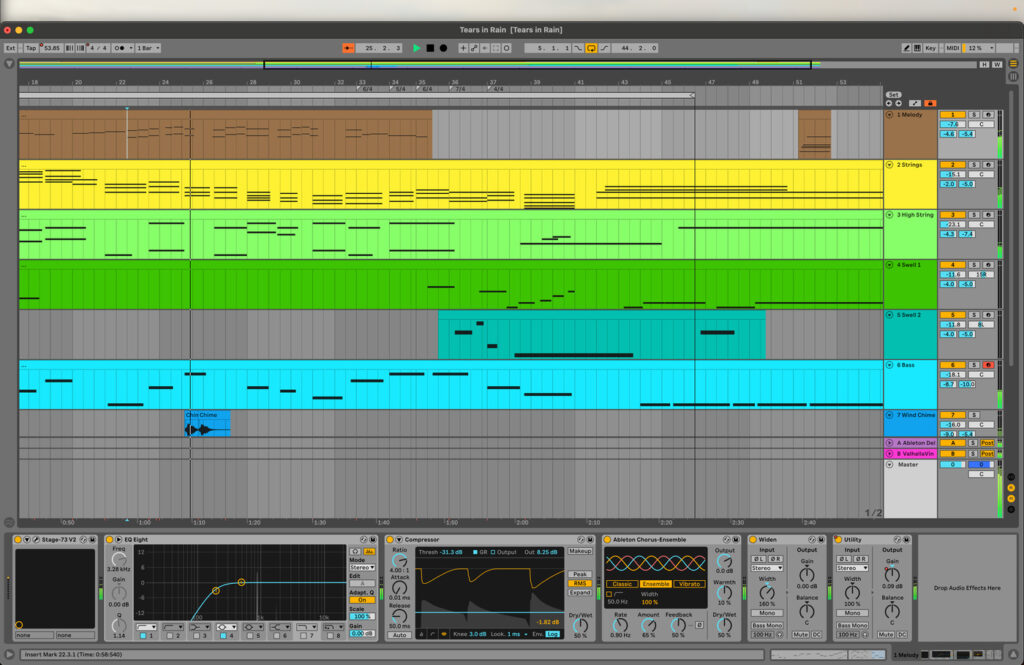
Explore the Tears in Rain remake for yourself with the Ableton Live Project, which includes the synth design, MIDI, automation, arrangement, effects, and custom VP-330 instruments used throughout the remake.
Requires Ableton Live 11+ and third-party plugins. All tracks are frozen, so you can still explore the projects even if you are missing plugins. See below for the full plugin list.
VP-30

The VP-330 strings in this remake were created using the VP-30 pack, sampled from a vintage Roland VP-330 mkII.
View Pack
Many Thanks
thank you
You’re very welcome Wang!
lovely – and thank you for taking the time to do both video and the text breakdown. Arturia should sponsor your!
Appreciate that! Arturia have hired me a few times for sound design work, so they’ve been great to collaborate with.
Such a great insight into Vangelis’ sounds, such a generosity to share with us you experience and time putting this together.
Much gratitude to you for a great article and knowledge.
Thanks so much! I have been searching for an article like this for… decades! My bucket list contains the recreation of Vangelis signature sounds. Very helpful indeed!
Great content – thank you
Great work as usual, and I always look forward to you postings. Thanks
Glad to hear it!
Thanks à lot for your tribute dedicated to thé King of sourds
RIP Vangelis
I
Very nice Vangelis elegy !
The CS-80 brass sounds are quite nice. I’m still going though the new CS-80 V4 presets. I don’t remember hearing these brass sounds. I tried in vain to recreate a patch I made from the previous CS-80 version replicating the settings. I presume you built it from scratch and experience. I’m expecting your sound banks for the new plugins.
Francoise (alias FranceWise)