
How Beach House Created She’s So Lovely
She’s So Lovely is a track from Beach House’s 2015 album Thank Your Lucky Stars, a surprise release that was announced just eight days before it came out, only a few months after Depression Cherry. While Depression Cherry had a lush, expansive sound, Thank Your Lucky Stars leaned into a more intimate, stripped-back sound reminiscent of their earlier work on their self-titled debut and Devotion.
She’s So Lovely is one of my favourite Beach House tracks, with hazy production, beautiful chords and lyrics, and a sparse arrangement built from just a few instruments. Here’s my full remake:
Yamaha PS-20 Organ
The keyboard part in She’s So Lovely comes from the Yamaha PS-20, one of Victoria Legrand’s favourite keyboards and one that’s been used on every Beach House album. Specifically, she used the PS-20’s Organ 2 preset, playing chords in the left hand while the melody, which doubles the vocal, sits in the right hand.
For my remake, I used my RM-20 pack, which samples the Yamaha PS-20 to recreate its sounds for Ableton Live, Decent Sampler, and Kontakt. I’m using the Ableton Live Instrument Rack with the Organ 2 patch loaded.
- RM-20 Dry00:00
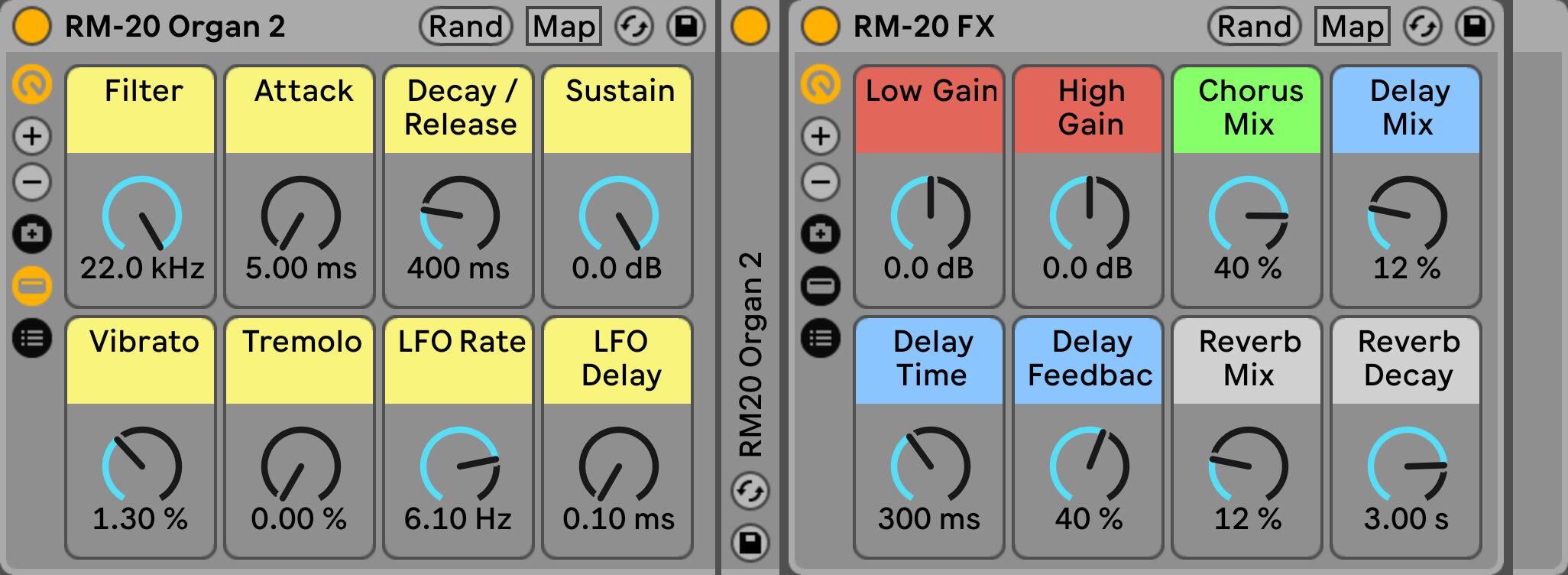
The PS-20 is a mono synth, so to fill out the stereo image, like in the original song, I ran the patch through a chorus ensemble, iZotope’s Ozone Imager, and a touch of extra widening from Ableton’s Utility.
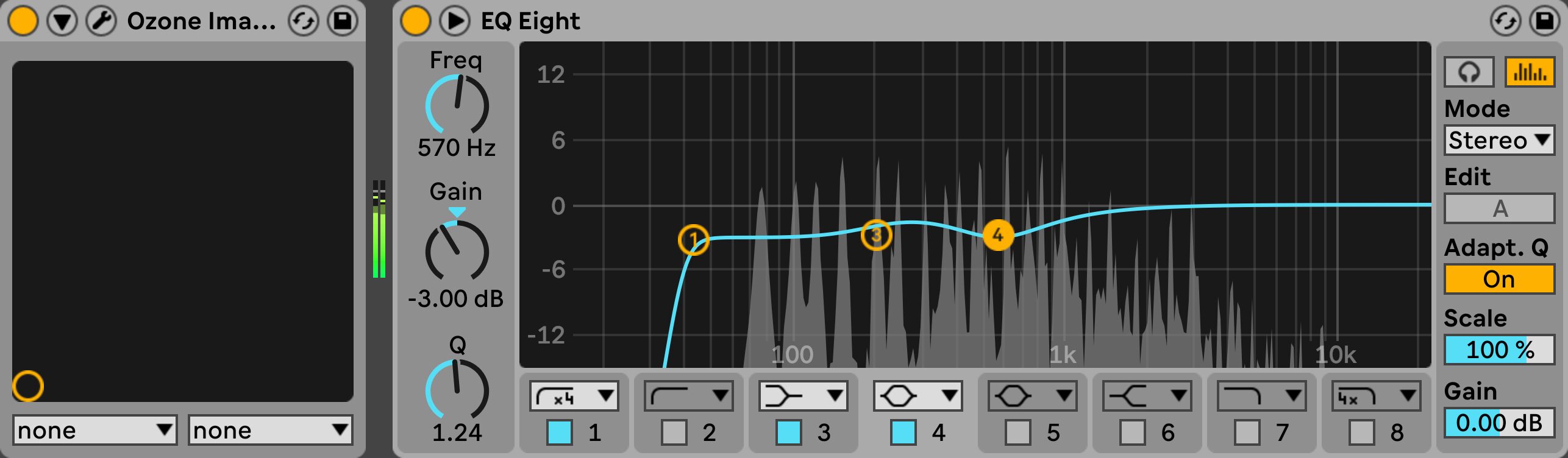
I also used EQ Eight to clean up some low-end mud: a low shelf taking around 3 dB off the bottom end, and a bell cutting a further 3 dB at 570 Hz to deal with some boxiness.
- RM-20 Processed00:00
Dreampop Production
She’s So Lovely, and much of Thank Your Lucky Stars, has a hazy, unfocused sound that feels like a callback to Beach House’s earlier, lower-fidelity albums. Part of that comes from the fact that there’s no bass instrument in this track, and even the organ’s left hand is playing chords rather than a bassline. Without anything anchoring the low end, the song loses some cohesion down there.
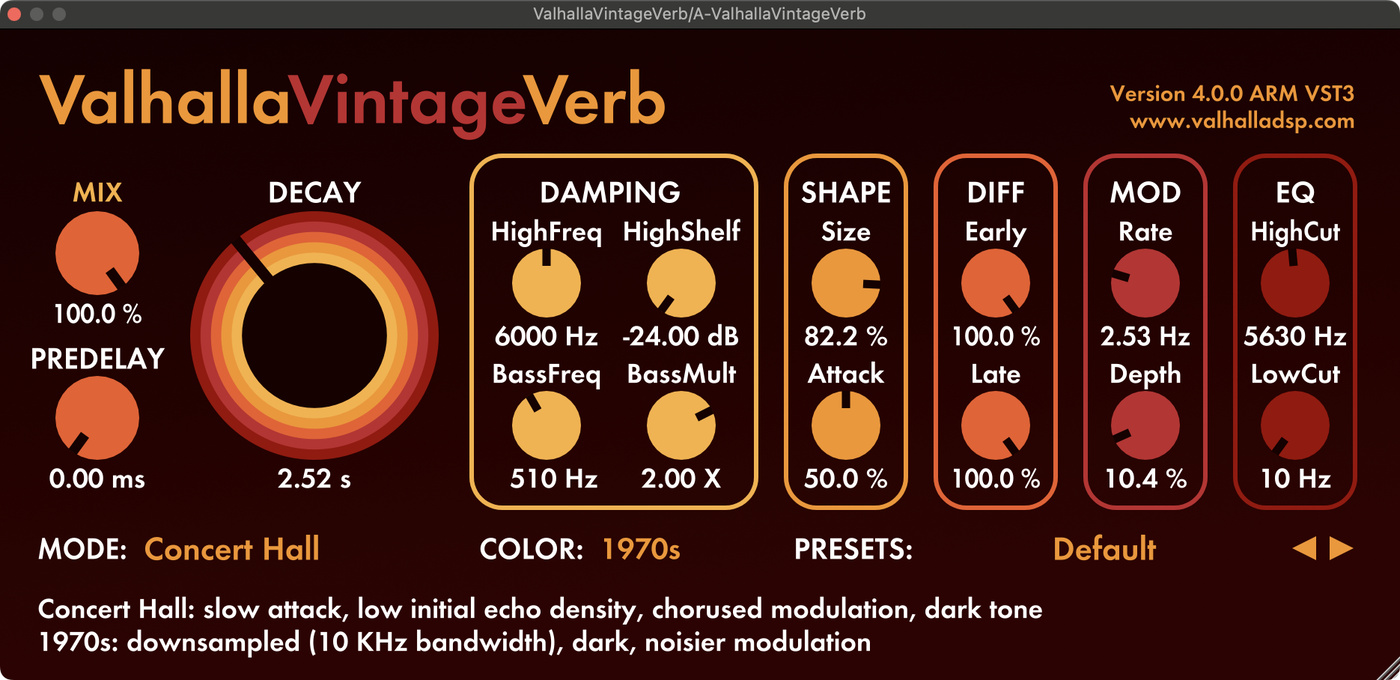
That quality is compounded by the huge amount of reverb across the track, which feels like a Beach House signature. For my remake, I routed every instrument via sends to a single return track with Valhalla VintageVerb. I started from the default settings and lowered the high cut to darken the sound, brought the modulation down to 10%, increased the bass multiplier slightly, removed the pre-delay, and lowered the decay time.
I also recorded four guitar parts for the remake, including a slide guitar part, all relatively simple, all with light chorus and delay effects.
Drums
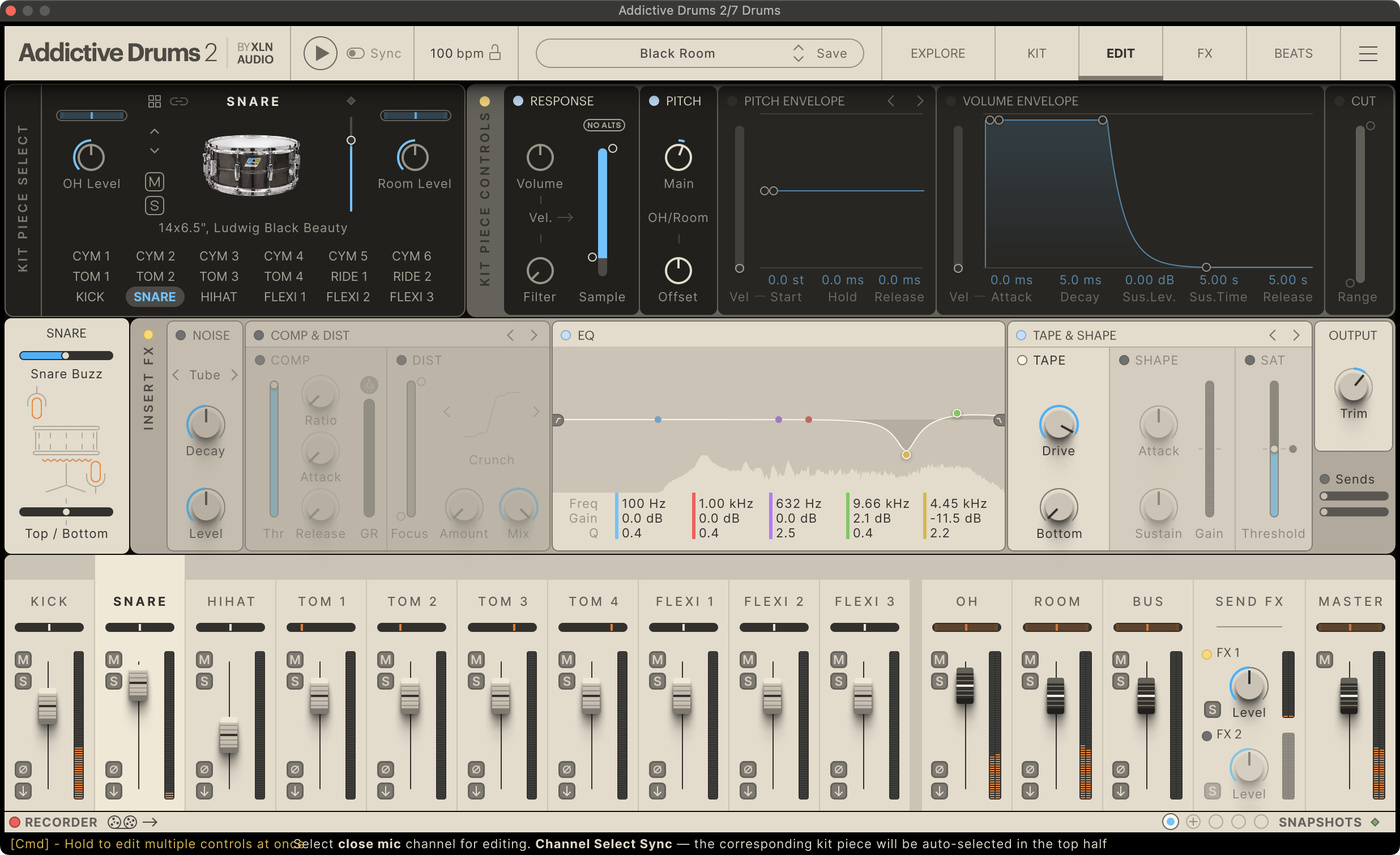
The drums in my remake come from XLN Addictive Drums. For the kit sound, I started from the Black Oyster pack’s Black Room preset, and started by lowering the volume of the kick drum in the mixer. For the snare, I used the Ludwig Black Beauty sample, EQ’d to cut back some of the high end so it sits further back in the mix rather than cutting through.
To push the entire drums track further back in the mix, I added a low pass filter in Ableton Live at 5.7 KHz to remove high-end, followed by Valhalla VintageVerb set to a high mix (40%) and low-medium decay (1 second). I also added Glue Compressor after the reverb to make the effect even more pronounced.
- Drums Dry00:00
- Drums Processed00:00
Chord Theory
Despite its simplicity, She’s So Lovely has some beautiful harmonic touches. A few subtle chord changes are enough to catch your ear without disturbing the dreamy atmosphere.
She’s So Lovely is written in G♯ minor, the relative minor of B major. This means the two keys share the same notes, but by treating G♯ minor as the tonal centre, the song takes on a darker, more melancholic character. The intro is built around a sustained G♯m chord, and the verses follow a G♯m | C♯m | F♯ | G♯m progression that firmly establishes the key.
- Chords only00:00
- Chords w/melody00:00

This article can be viewed with either accompanying music notation or MIDI piano roll diagrams.
At the line “Castles in the sand, money in your hand,” the harmony is E | D♯7. The keyboard’s left hand only plays a D♯ major triad (D♯ F𝄪 A♯), while the right-hand melody supplies the C♯, completing the dominant seventh chord.
In G♯ minor, the diatonic V chord would normally be minor, D♯m. Here it’s major instead, with the third raised to G (or F𝄪 if you want to be precise). That raised note creates a much stronger pull back to G♯ minor, and because it sits outside the key, it catches the listener’s ear.
- Chords only00:00
- Chords w/melody00:00

At “From the way that her eyes are shaped and it’s making me sick,” the chords are A | G♯m. In G♯ minor, the chord built on the second degree would normally be A♯dim. Instead, Beach House use an A major chord, lowering the root by a semitone and creating a chromatic chord outside the key. It catches your ear without sounding completely unrelated to the surrounding harmony.
A major chord built on the flattened second degree even has its own name: the Neapolitan chord, although this isn’t a textbook use of it.
- Chords only00:00
- Chords w/melody00:00

RM-20²

The organ sound in this remake was created with RM-20, my sample-based recreation of the Yamaha PS-20. The pack includes the original PS-20 sounds sampled for Ableton Live, Decent Sampler, and Kontakt.
View PackPlugins Used
The following plugins were used in this article. Some links are affiliate links, which help support Reverb Machine.
Remake Project

Explore the complete Ableton Live remake, including the Yamaha PS-20 organ, layered guitars, drum processing, and chromatic chord changes.
Requires Ableton Live 11+ and third-party plugins. All tracks are frozen, so you can still explore the projects even if you are missing plugins. See below for the full plugin list.
Get the full Ableton Live project for this remake, including stems and MIDI plus access to a full year of remake projects on Patreon.
Get the Project