
How Frank Ocean Made Pyramids
November 3, 2026

Pyramids is regarded by many as one of the standout tracks of Frank Ocean’s 2012 debut album, channel ORANGE. Clocking in at almost 10 minutes, it features a wide range of sounds, including epic Mellotron choirs, funky synth bass lines and warm pads over hip-hop beats. The song is built around two distinct sections, which I’ll refer to as Side A and Side B, joined by a transition. To top it all off, the outro features an extended guitar solo performed by an uncredited John Mayer.
I originally remade Pyramids back in 2020, but that version relied on Arturia Mini V3 and CS-80 V3, both of which have since been replaced by version 4. The old presets don’t work in the new versions, so I’ve rebuilt the remake, and I used the chance to get a lot closer to the original this time.
I also had some help: guitarist and producer Seán Murray recorded and mixed the outro solo, originally played by John Mayer. Here’s the full remake:
Production Details
Pyramids was written by Frank Ocean and Malay, with production credits shared by the two in addition to Om’Mas Keith. In a 2012 Gearspace forum post, Malay wrote that the main synths and keyboards used on channel ORANGE were a Roland Juno-106, a Wurlitzer, a B3 organ and a Rhodes. Software plugins used on the album include the Arturia Collection, Native Instruments Battery and GForce M-Tron. He also says he sends his tracks from his audio interface through a stereo pair of Neve 1073s, because “any software based stuff has to leave the computer and hit some kind of circuit board“, presumably to add analog warmth.
On the production of Pyramids, Malay wrote:
“I use all of the Arturia analog remakes… On that particular song the lead synth was actually from Omnisphere (played live [through] the chain I described previously). I created the main chop with some analog bell type sound off an original Juno-106 and some choir sounds from the Mtron. Bass was live, [the] high pad sounding thing during the transition from side 1 to side 2 was [an] ebow on my Strat. The pad on side 2 is an Oberheim OB-8… Hmm, oh yeah, the arpeggiator thing is done on the Arturia CS-80”
Below I’ll go through each of the sounds that make up Pyramids, looking at where the original sound came from and how to emulate the hardware synths using software plugins. I’ve used Arturia V Collection plugins to recreate all the synths, although they are later versions than the ones originally used on channel ORANGE.
Side A: Sample
The first sound you hear in Pyramids is a chopped up Mellotron sample layered with synth bells. This was the hardest part of the remake to get exactly right, as the sample has a few different Mellotron sounds densely layered.
To recreate the sample, I used GForce’s M-Tron Pro IV, an updated version of the plugin Malay mentioned. It has a new interface but uses the same samples that would have been available in the original plugin.
My recreated sample is made up of four Mellotron layers, each on its own track. The Choir 2 sound plays the high female choir notes, and Choir 1, mixed lower, plays the full choir chords. The 15 Choir patch is mixed lower again and plays the lowest choir notes, which form a sort of bassline, while MkII Violins adds the strings.
- Male Choir 00:19
- Strings 00:19
- Layered Sample 00:22
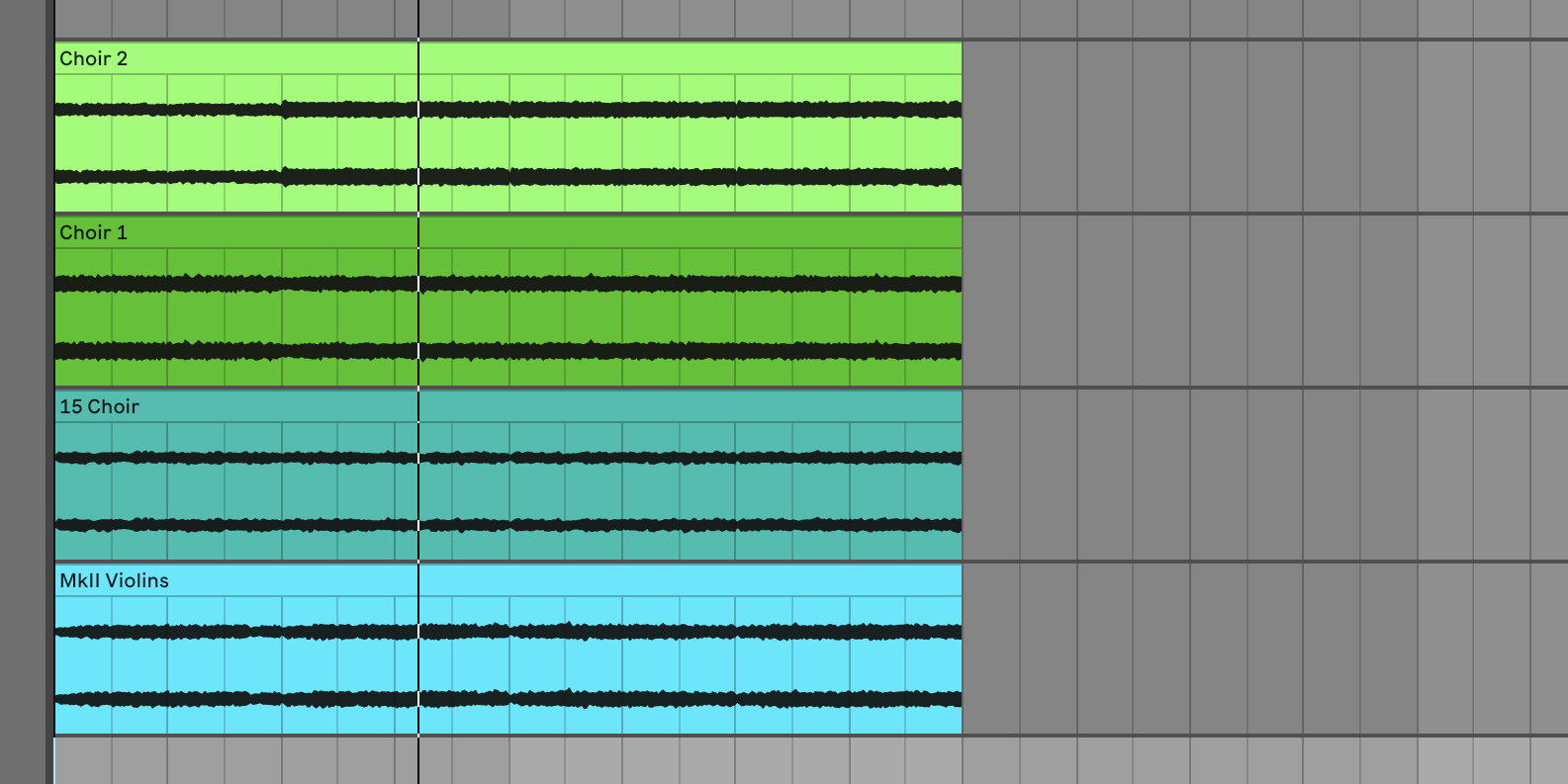
I don’t think this is exactly how Malay made the original, and he probably used fewer tracks, but splitting it up made the sample easier to rebuild and mix. I recorded full chords with all four tracks, then bounced the result into a single Simpler so I could retrigger it to recreate the chops.
- Chopped Sample 00:21
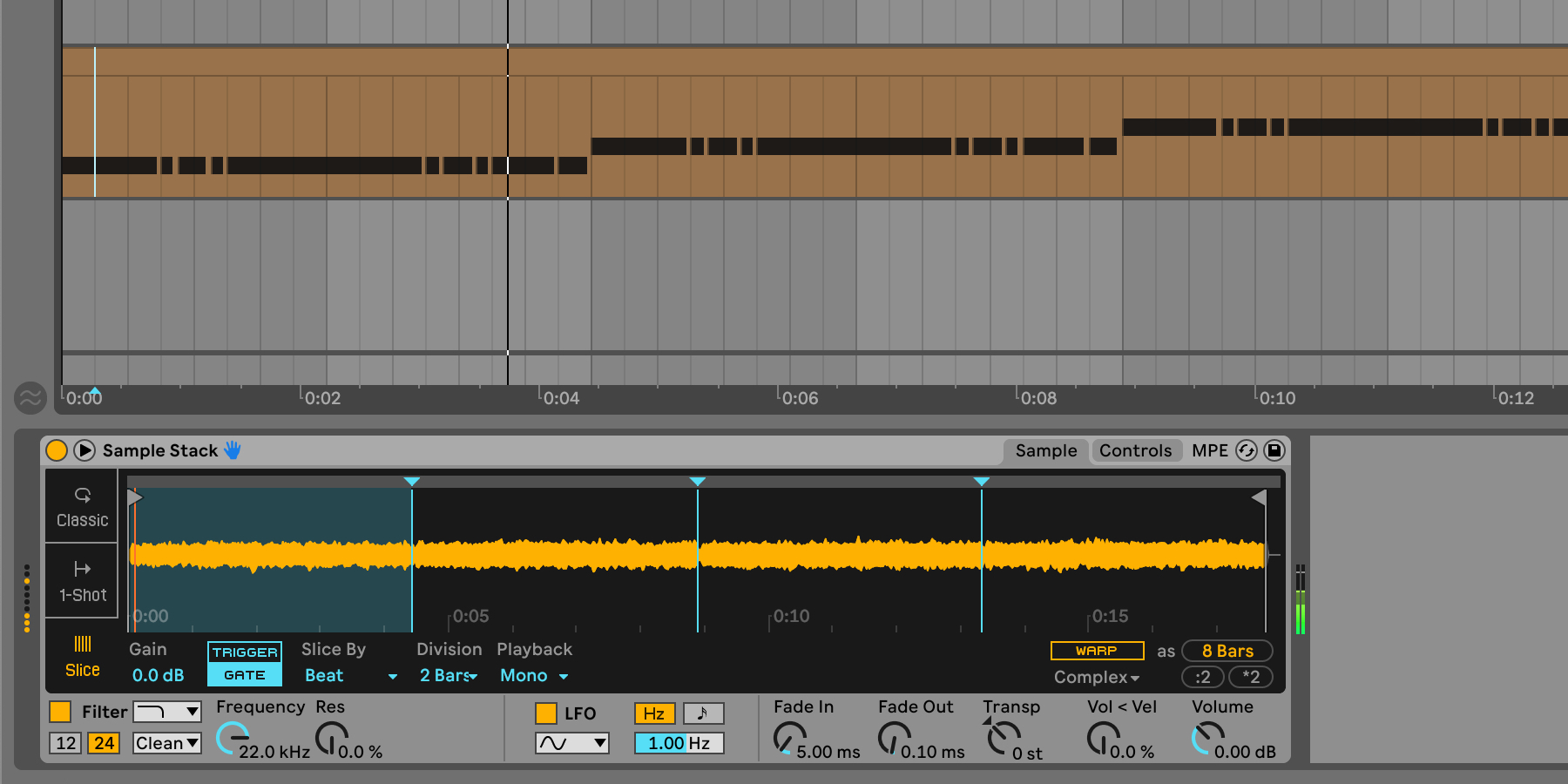
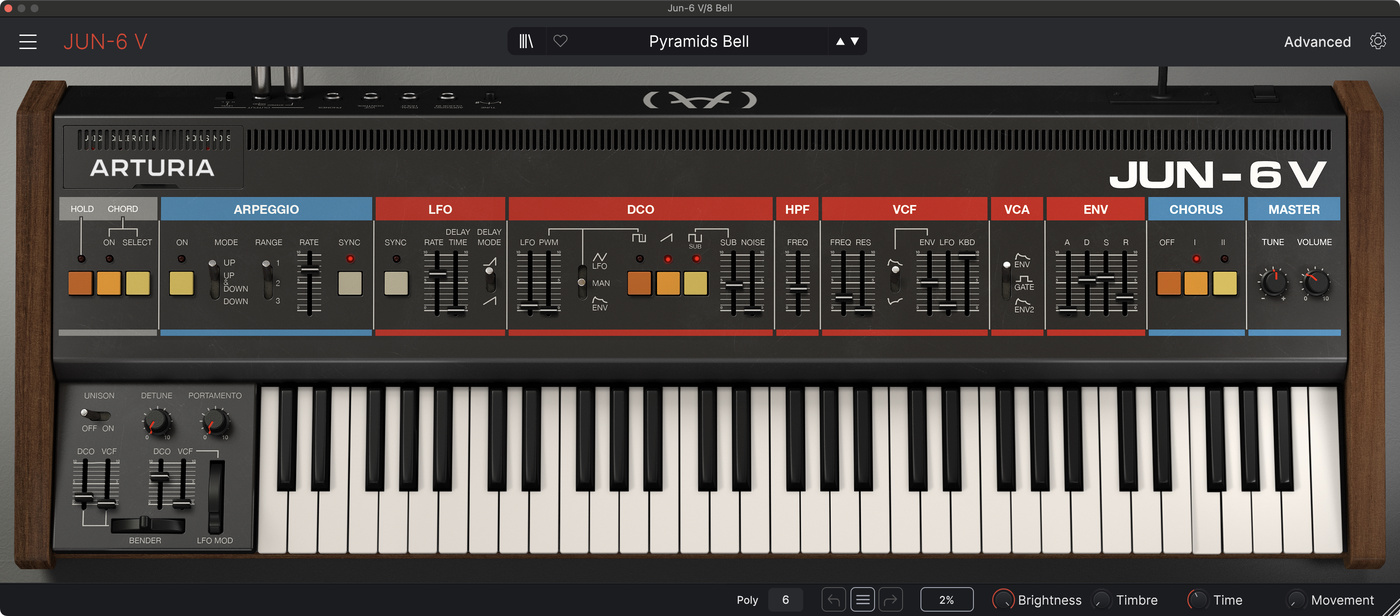
Malay says the bells came from an original Juno-106. I recreated them with Arturia Jun-6 V, a software emulation of the Roland Juno-6, the 106’s predecessor, layered with a sine wave from Ableton’s Operator. Here’s the layered sample, the chopped version, and the chopped sample with the bells added:
- Sample w/Juno Bell 00:21
Side A: Synths
Malay states in the Gearspace post that the EDM-style lead at 1:11 comes from Omnisphere. For the older version of my Pyramids remake, I went through the lead presets in Omnisphere until I found the one that matched, FM Danceline Lead. Here’s what the original preset sounds like:
- FM Danceline Lead 00:20
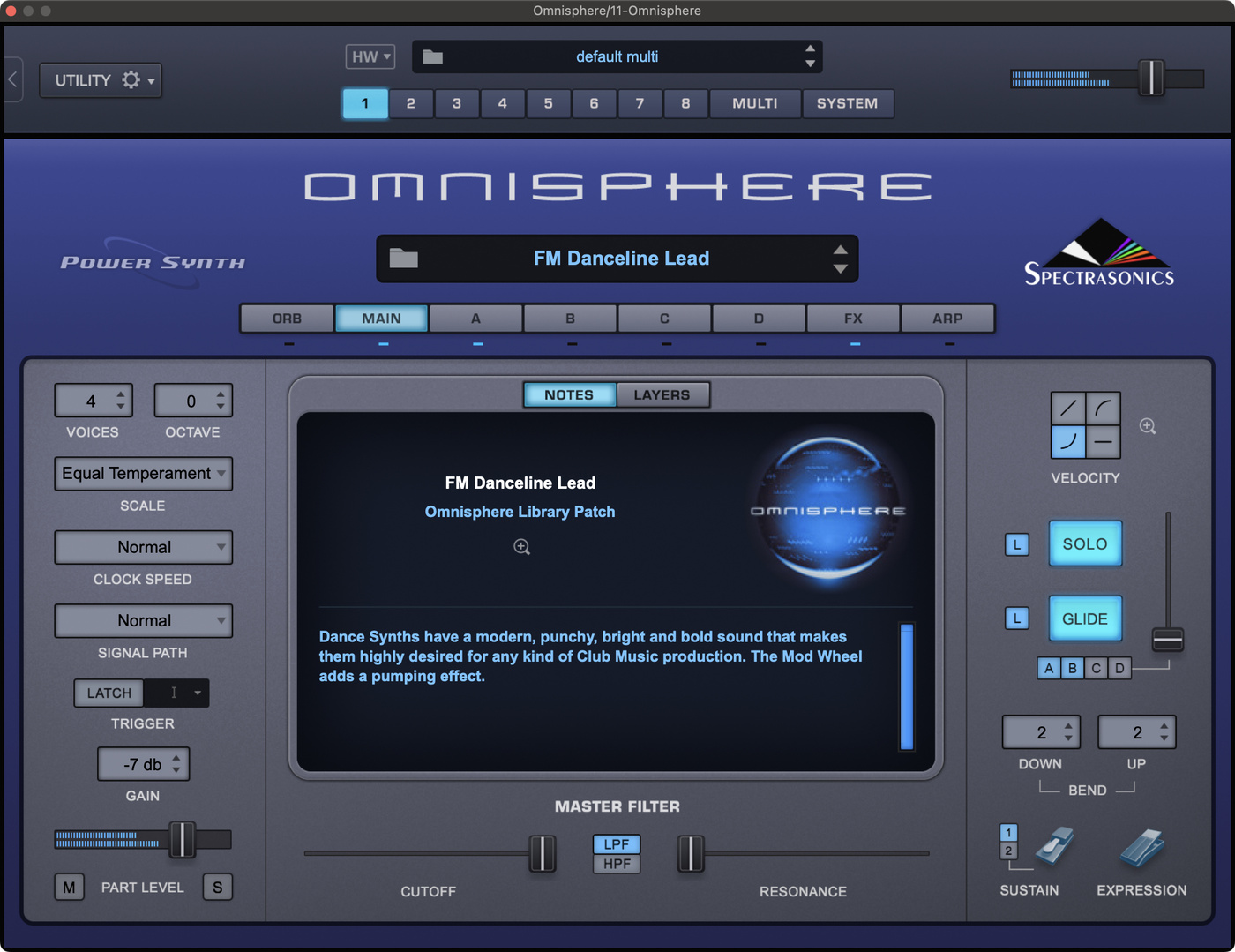
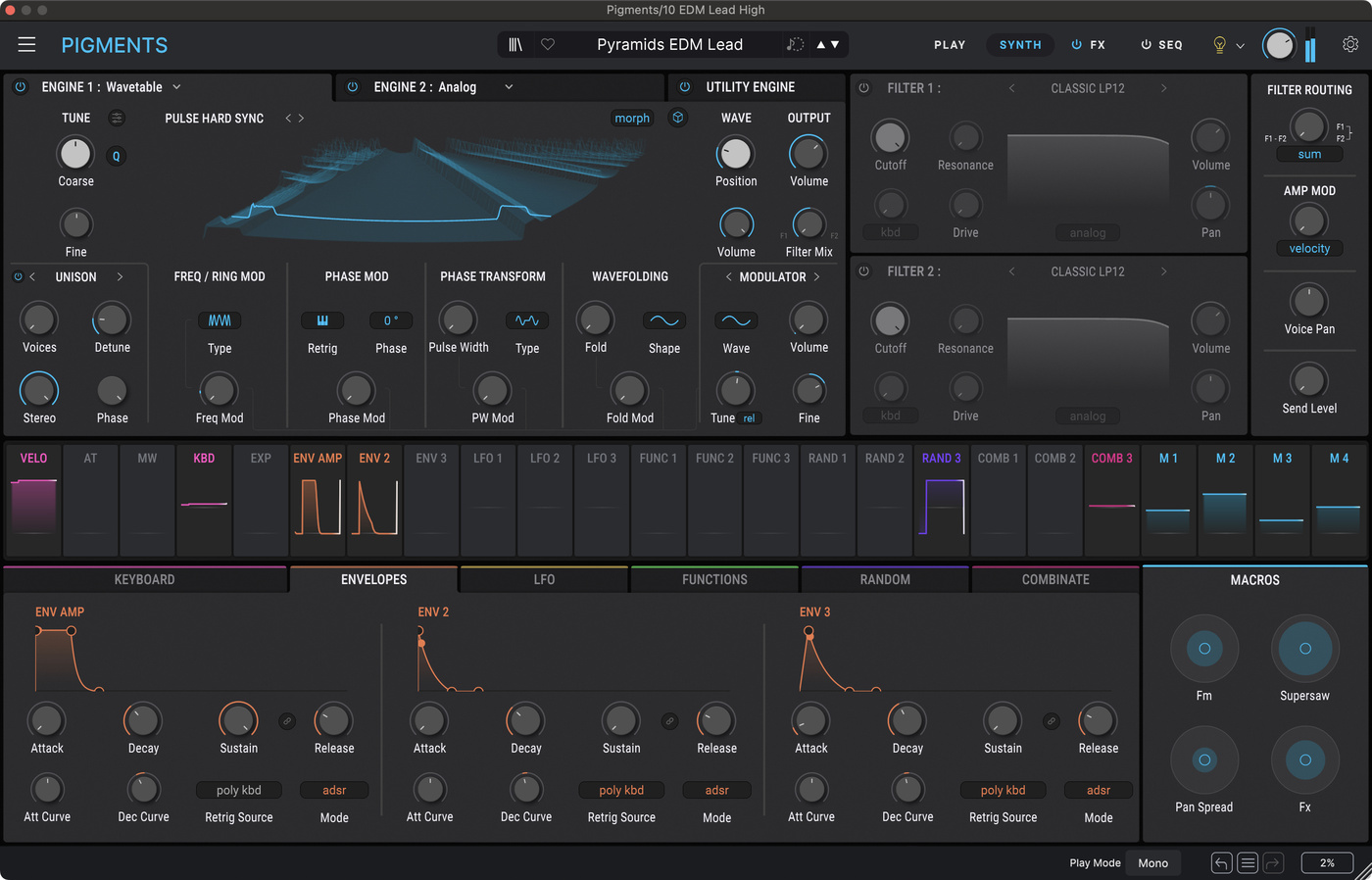
I wanted to keep the synths in the remake project Arturia-only, so I rebuilt this preset in Arturia Pigments. The original is a really cool preset, and it uses a small amount of FM to add some rough, slightly atonal harmonics. The modulating oscillator is tuned up by two and a half steps, which creates just enough inharmonicity to give the sound its distinctive character. There’s also some modulation that slightly alternates the panning between left and right for each played note. Here’s my recreated preset, with and without the FM:
- With FM 00:20
- Without FM 00:21
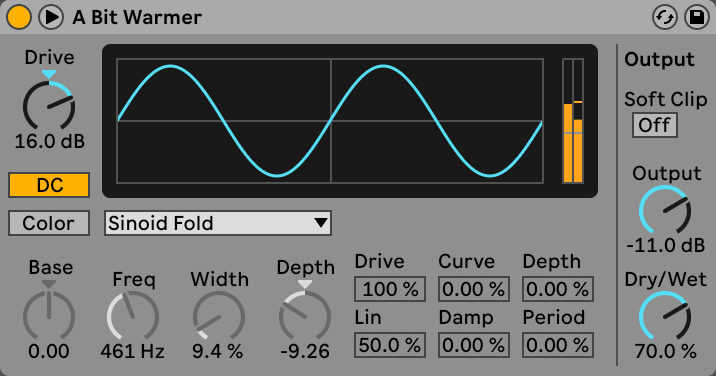
The sound in Pyramids is slightly more saturated. Malay ran the Omnisphere sound through his hardware signal chain, including a stereo pair of Neve 1073s. For my remake, I ran the preset through Ableton’s Saturator using a warmer preset, with the Drive pushed up to +16 dB.
- Saturated 00:20
The original preset is layered with a supersaw, which is most noticeable in the sides channel, over a large bass sound. I added the supersaw in Pigments’ second engine so that both engines are triggered together, and recreated the corresponding bass part using Arturia OP-Xa V.
- EDM Lead Final 00:20
CS-80 Arps
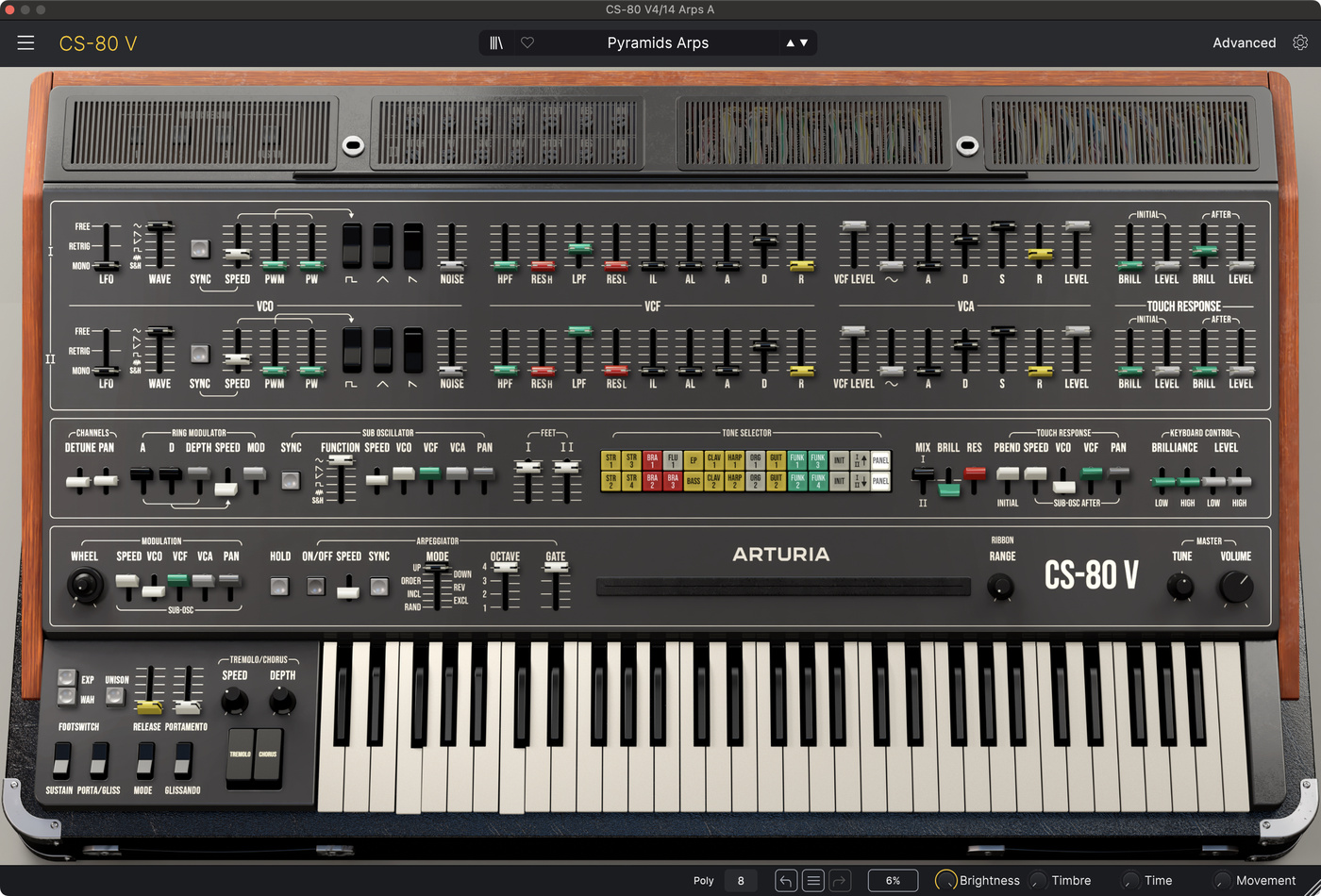
Malay says the rapid arpeggiator sounds were made with the Arturia CS-80 V4. As channel ORANGE came out in 2012, he would have been using version 2 of the plugin, which can no longer be run, so I rebuilt the patch in the current version 4.
It’s a simple patch: a single sawtooth wave on the upper I panel, with the low-pass filter set to 212 Hz. The pattern comes from CS-80 V’s built-in arpeggiator, running at 11.2 Hz over a four-octave range. There’s also some dotted 1/8th note delay that I added using CS-80 V4’s onboard effects. Just hold a chord and the arpeggiator does the rest.
- CS-80 Arps 00:10
Chunky Bass
The funky bass that enters with the main drum beat was likely played on a modern Moog synth such as a Voyager or Phatty. The basic recipe is detuned sawtooth oscillators spread across three octaves, 32’, 16’ and 8’ on a Moog-style synth.
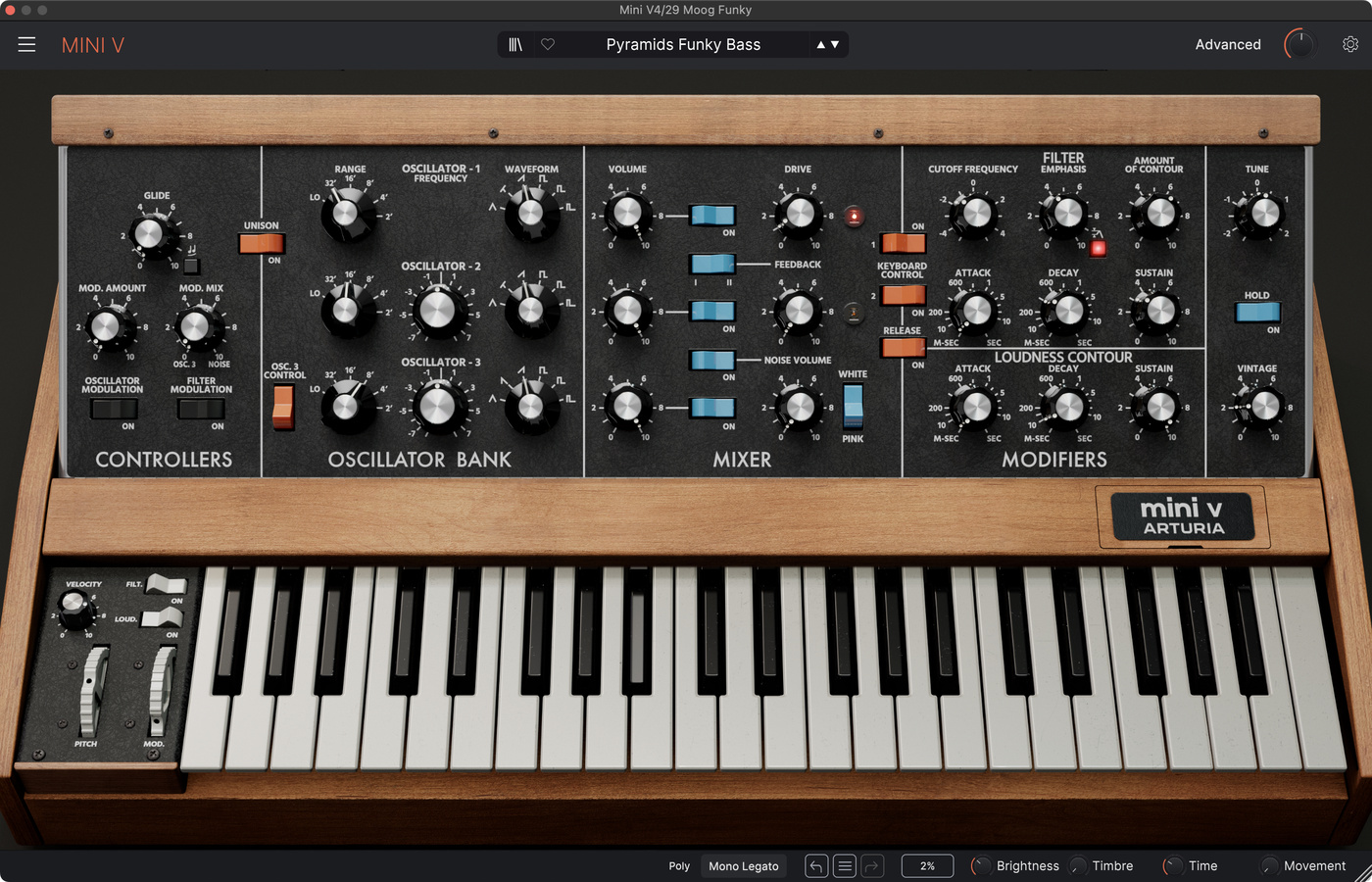
I recreated it in Arturia Mini V4, with the cutoff frequency at 195 Hz, filter emphasis at 4 and bass compensation switched on. The contour amount is set to 6 for a touch of pluck, with a decay of 465 ms and sustain at about 3.
- Bass 00:26
The Transition
At 4:26, the song transitions smoothly from Side A to Side B. The tempo and pitch both begin to fall, with the tempo dropping from roughly 149 BPM to 132 BPM, where it stays for the rest of the song. The pitch drops gradually by 2.3 semitones, creating a detuned sound similar to a reel-to-reel tape slowing down.
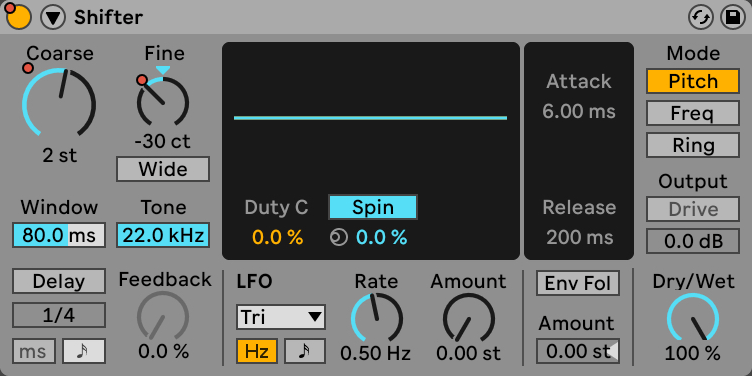
I’m not sure how this was done in the original recording, but my guess is a tape-style slowdown effect that affects tempo and pitch together. To recreate the effect in my Ableton Live Project, I used Ableton Live’s Shifter device, starting at 2 semitones +30 cents and gradually coming down to 0 semitones over 16 bars.
- Tempo Change, No Repitch 00:32
- Pitched Down 00:31
Side B: Synths
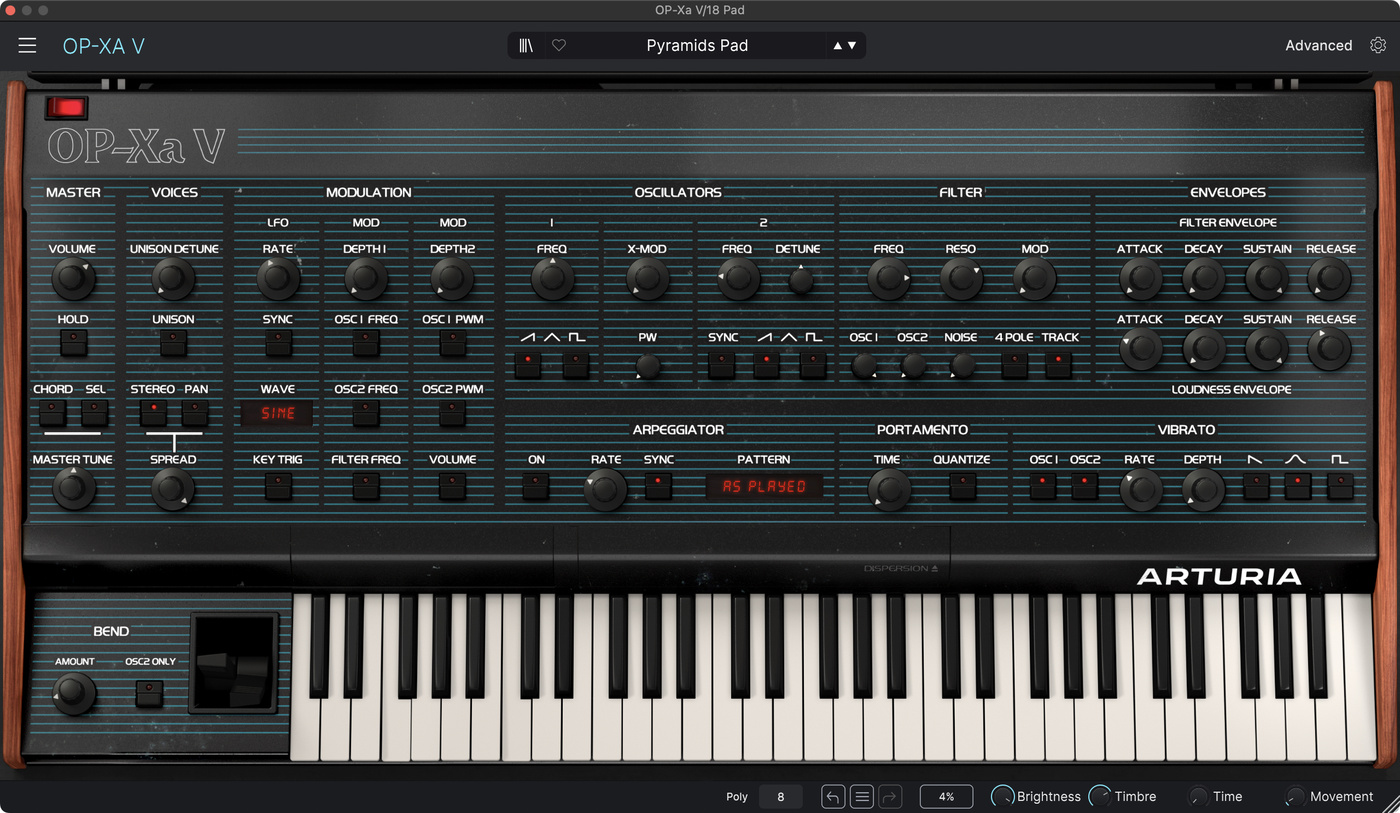
The pad that plays throughout Side B was originally recorded using an Oberheim OB-8, a vintage polyphonic synth from the early 80s. I recreated it in OP-Xa V, an emulation of the OB-8’s predecessor, the OB-Xa. The patch is a single sawtooth wave with the filter set to 700 Hz, keyboard tracking switched on and resonance at approximately 0.72.
- Clip 1 00:18
Gliding Lead
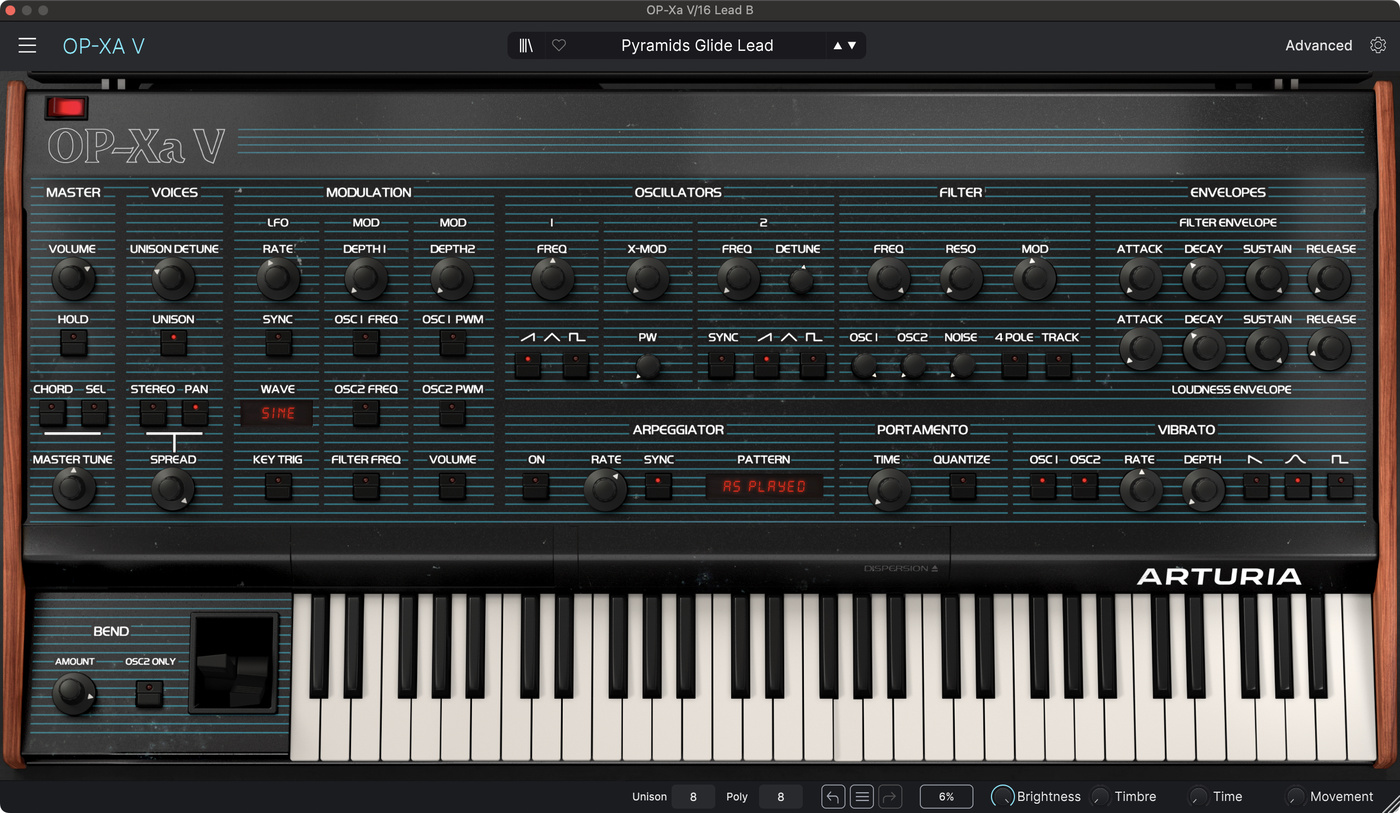
The lead that dominates the second half is a sliding synth sound, with the notes approached from an octave below. I recreated it using OP-Xa V, with the patch in unison mode, the unison detune set to 0.256, and the filters fully open. I used the pitch bend wheel to create the octave slides, with the bend amount set to one octave, and turned up the pan spread so the voices are distributed across the stereo field.
- Glide Lead 00:17
More Arps
The arps play throughout most of the second half, adding a subtle, shimmering high-end layer that sits nicely over the darker OB-8 pad. The pattern moves up and down across four octaves, but it’s quite detailed, so I programmed all the notes manually in the piano roll.
I recreated the sound using OP-Xa V, with lightly detuned sawtooth waves and a quick pluck created with the amp envelope sustain at zero and decay at 540 ms.
- More Arps 00:16
Trumpet
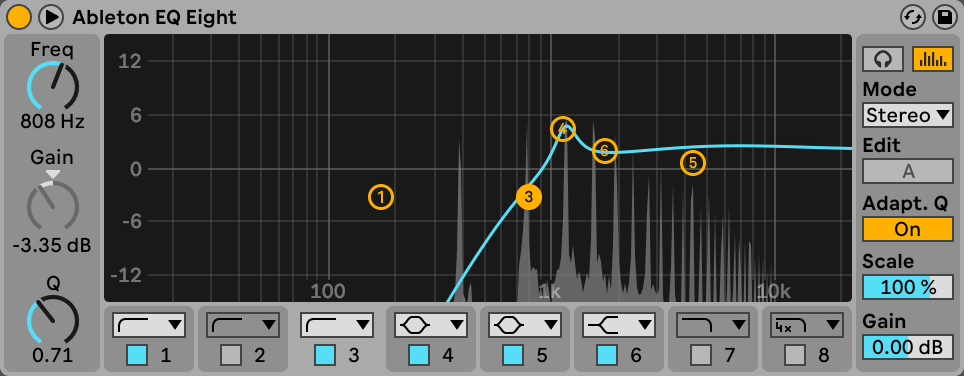
The second half also features a trumpet part. I made my own sample using a Spitfire Audio library, and the key to its thin tone is a high pass filter at roughly 808 Hz. I’m not sure where the original sound came from. There are brass players credited on channel ORANGE, so it could be a real trumpet, or it could have come from a rompler or a synth.
- Trumpet - No Filter 00:14
- Trumpet - High-Passed 00:14
Outro: Guitar Solo
The outro guitar solo was recorded by an uncredited John Mayer, who also performed the song live with Frank Ocean on his SNL appearance. For the remake, my friend Seán Murray recorded and mixed all the guitars, including the swells in the transition.
The solo is heavily multitracked, with reversed sounds, ambient swells and even some feedback and noise tracks. The feedback comes from a delay effect with the feedback turned up high enough that it begins to self-oscillate. Some of the licks have also been recorded in octaves, and towards the second half of the solo a rhythm part comes in with two guitars playing a triplet pattern.
Seán covers all of this in loads of detail in his full guitar solo breakdown, which you can watch here.

Discussion
Be the first to comment